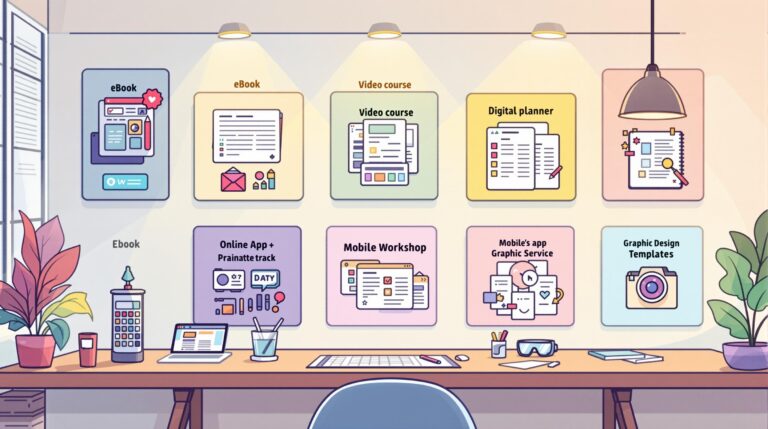


How To Sell Digital Products Online: A 5-Step Launch Checklist





Want to start selling digital products online but don’t know where to begin? Here’s a quick roadmap to turn your expertise into income with minimal upfront costs and no inventory hassles. Digital products like ebooks, templates, or online courses are scalable and can generate passive income. Follow these 5 essential steps to launch your first product:
- Pick Your Product : Choose a product that matches your skills and solves a problem. Examples include templates for beginners, ebooks for intermediate creators, and online courses for advanced sellers. Validate demand through Google ads, Amazon research, or niche forums.
- Build Your Product : Create high-quality content using tools like Canva (for visuals) or Figma (for templates). Test your product with a small group for feedback and ensure it’s easy to download and use.
- Set Up Your Store : Use platforms like Crevio, where an AI builds the storefront for you and handles automated delivery and secure payments. Aim for clear navigation, high-quality images, and transparent pricing.
- Market Your Product : Grow an email list with free incentives, share valuable content, and leverage social media to engage your audience. Highlight your product’s benefits with visuals and testimonials.
- Launch and Improve : Start with a soft launch to gather feedback or go big with a full launch. Continuously update your product based on customer input to keep it relevant and valuable.
Why digital products? They’re cost-effective, offer high profit margins, and give you access to a global audience. Ready to start selling? Let’s dive into the details.
How to Sell Digital Products – A Beginner’s Guide
Step 1: Pick Your Digital Product
Choose a product that aligns with your skills and meets market demand. This is the first step in our 5-step checklist for launching a digital product.
Popular Digital Product Options
Your skill level often determines the best product to create:
| Skill Level | Best Product Options |
|---|---|
| Beginner | Templates, Printables, Digital Art |
| Intermediate | Ebooks, Stock Media, Website Themes |
| Advanced | Online Courses, Membership Sites, Coaching |
Once you’ve identified products that fit your abilities, check if there’s demand for them. For example, Amira, a lawyer-turned-coach, made $67,375 in a month selling legal templates. Similarly, artist Danny Gregory has earned $45,000 from his paid newsletter since 2021.
How to Check Market Demand
Here are a few simple ways to see if your idea has potential:
- Search Ads: Look for Google ads related to your product idea. If companies are paying for ads, it’s a good sign there’s interest.
- Amazon Research: Check the bestselling books or products in your niche. Negative reviews can reveal gaps in the market.
- Forums: Search for niche-specific forums (e.g., “Forum:YourNiche”) to see if people are actively discussing your topic.
“When doing any kind of business, there’s a HUGE difference between what you believe, and what you know. And here’s the ugly truth – what you believe means nothing.” – Pat Flynn
Once you confirm demand, focus on creating something that leverages your skills.
Align Your Product With Your Skills
To create a successful product, consider your experience, the problem you’re solving, and the resources you’ll need:
-
Evaluate Your Experience
Choose a product that fits your current skill set. Beginners might start with templates or printables, while more experienced creators can develop courses or coaching programs. -
Solve a Specific Problem
Address a clear need. For instance, photographer Jamo earned $10,309 in 2022 by selling stock photos that businesses needed for professional branding. -
Factor in Resources
Think about the time and tools required. Templates are quick to make and maintain, while membership sites require ongoing content and community management.
AI tools like ChatGPT can help brainstorm niche ideas and validate their potential. By combining your expertise with proven demand, you’ll increase your chances of success.
Step 2: Build Your Product
Once you’ve chosen a product idea, it’s time to create it using the right tools and maintaining high standards.
Choose the Right Tools
Select tools that make the design process smoother and allow for effective teamwork.
| Product Type | Recommended Tools | Key Features |
|---|---|---|
| Visual Products | Canva | AI design tools, templates, collaboration |
| Digital Templates | Figma | Real-time teamwork, design systems |
Canva is perfect for those starting out, offering features like Magic Write and Magic Edit to simplify visual design. For more advanced needs, Figma provides real-time collaboration, making it ideal for larger, more complex projects.
Focus on Quality
To ensure your product stands out, address the following:
- Understand your audience’s needs and design the product around those.
- Create content that’s clear, useful, and worth the price.
- Test your product with a small group to gather honest feedback.
This process helps refine your product and align it with market expectations.
Get Ready for Delivery
When preparing your product for delivery, keep these points in mind:
- Organize files with clear, easy-to-understand names.
- Ensure the files work seamlessly across different devices.
- Provide clear instructions for downloading and using the product.
These steps ensure a smooth experience for your customers.
Step 3: Set Up Your Store
Choose Your Platform
Pick a platform that handles secure payments and delivers digital products automatically. Crevio is a great option: you describe what you want to sell and its AI builds the store for you. It starts free with a 5% transaction fee, falling to 2.5% on Pro and 1% on Business.
Key features to look for in a platform:
- Automated delivery system : Crevio ensures customers get download links and access credentials right away.
- Flexible payment options : Set up both one-time purchases and subscription plans to increase your revenue streams.
After choosing your platform, shift your attention to creating a storefront that grabs attention.
Design Your Store
Your store’s design matters – a lot. Visitors form an opinion in just 50 milliseconds. Focus on these key elements to make a strong impression:
| Design Element | Purpose | Impact |
|---|---|---|
| Clear Navigation | Makes it easy to find products | 30% of visitors use search features |
| High-Quality Images | Highlights product value | Can raise conversion rates by 40% |
| Mobile Responsiveness | Works seamlessly on all devices | A must for today’s shoppers |
Ask Crevio for the layout you want and it will build it, product descriptions and all. Refine the pricing and call-to-action copy from there — it keeps your branding consistent across pages, which helps build trust with visitors.
Set Up Payments
Once your store design is ready, it’s time to configure payment settings to ensure smooth transactions. Crevio integrates with Stripe, offering support for multiple currencies, subscription management, secure payment processing, and automatic tax calculations.
“A smooth shopping experience differentiates loyal customers from abandoned carts.”
To boost conversions, enable guest checkout for impulse buyers and display security badges to reassure shoppers.
Step 4: Plan Your Marketing
Now that your product is ready and your store is live, the next step is to attract visitors and increase sales through smart marketing strategies.
Build Your Email List
Start growing an email list by offering incentives like free ebooks, discount codes, or access to exclusive webinars. Use clear opt-in forms on your website to make the sign-up process easy. Once subscribers join, send regular newsletters filled with practical tips and industry news before introducing your product. Platforms like Crevio can write and send these campaigns for you. Focus on creating content that builds trust and keeps your audience engaged.
Share Useful Content
Content marketing is a great way to show your expertise and earn trust.
“When you can get your potential customers to see what they’ll get before they buy it, they’re more likely to buy. This is especially true if your product is a digital product.” – Ivory Mix
Create content that highlights your product’s benefits, shares behind-the-scenes details, provides actionable advice, and features customer testimonials. For example, if you’re selling a digital course, publish blog posts or social media updates addressing common questions in your niche. Including screenshots or video previews can also help potential buyers feel more confident about their purchase. Use this trust to connect further on social media.
Leverage Social Media
Social media is a powerful tool for promoting digital products. Focus on platforms where your audience spends the most time. Share engaging visuals, post during peak activity hours, and use Instagram Stories, Reels, or Live sessions to showcase your product. Be sure to respond quickly to comments to keep the conversation going.
Keep an eye on your platform’s analytics to see which posts perform best and adjust your strategy to maximize results.
Step 5: Launch and Improve
Choose Launch Type
The way you launch your digital product can make or break its success. A soft launch lets you test the waters with a smaller group of early adopters. These users can share feedback and help you spot and fix problems before going big.
If you’re going for a full launch , create a detailed timeline with specific goals. Timing is everything, and a well-thought-out plan can give you a strong start.
Get Customer Feedback
Once your product is live, it’s time to gather feedback from users. Make it easy for customers to share their thoughts through different channels. Research shows that 63% of consumers want companies to listen better.
| Feedback Channel | Best Use Case | Response Time |
|---|---|---|
| Email Surveys | After a purchase | Within 24–48 hours |
| In-app Widgets | Real-time user experience | Immediate collection |
| Social Media | Engaging with the community | Monitor daily |
| Customer Support | Solving specific issues | Within 12 hours |
“Leveraging customer feedback is key to aligning your product with market needs and customer desires.”
– Ruben Buijs, Digital Consultant
Make Updates
Take what you’ve learned from customer feedback and turn it into action. Create a system to organize feedback, prioritize urgent updates, and track performance metrics to keep improving your product.
Act quickly on critical feedback – 60% of consumers say they’d buy more if businesses made changes based on their input. Consistent updates not only keep your product relevant but also increase customer satisfaction.
Conclusion: Start Selling
You’ve got the steps laid out – consistent effort and delivering value will be the key to your success. Following a structured launch process helps you achieve those early sales wins. Each phase lays the groundwork for a strong digital product business.
The digital market continues to grow, offering plenty of opportunities. Success lies in improving continuously and staying tuned to your audience’s needs. Using a platform that handles delivery and payment automatically can make the process even smoother.
“The most successful digital product launches combine thorough preparation with agile response to market feedback. It’s not just about the initial release – it’s about building a sustainable business through constant refinement.”
– Axel Grubba, Founder of Crevio
Related posts