
Unclaimed: Are you working at Mixpanel?
Mixpanel Reviews: 4.6/5 — Highly Rated
Mixpanel is an analytics platform used by companies to improve user engagement and boost retention through features such as behavior tracking, funnel analysis, and A/B testing with the intent of streamlining the user experience.

| Capabilities |
AI
API
|
|---|---|
| Segment |
Small Business
Mid Market
Enterprise
|
| Deployment | Cloud / SaaS / Web-Based, Mobile Android, Mobile iPad, Mobile iPhone |
| Training | Documentation |
| Languages | English |
Compare Mixpanel with other popular tools in the same category.

I really love the user interface of the software. It is very easy to use and one can easily extract insights to get to know about the overall activities which are happening on the app and use this to grow the app.
Not really anything specific. But, it sometimes delays showing the data which hampered the real-time data analysis. It would be an issue for those who would like to know the app's performance on a real-time basis.
We are in the business of providing news through memes. We wanted to see the different metrics like post views, likes, shares etc. to get a better understanding of whether the people are loving our app or not. Mixpanel provides all this data which helps us to get the data easily from one software. Now, we don't need to go on other software to get the same data.
- Very quick to get started - especially if you have a development team in-house. I think for us, we were up and running in a few hours (with some essential first events) - I feel that I am, for the first time, able to do good, data-driven product management - There are very few questions on the data I have that I can't answer with Mixpanel. Its highly configurable
- It feels like statistical data does not work so well with Mixpanel. With that, I mean data that is not an event from Users - for example, how long an upload takes,... - It would be great if Mixpanel could also send surveys to customers directly in-app. For example, NPS surveys or similar...then the NPS score could be directly linked to the user in Mixpanel...allowing quite powerful analytics
- Making better, data-driven decisions - Understanding product and feature usage and reacting to it in real-time - Making our actions and objectives more quantifiable
Easy to learn, easy navigation, multiple filters to narrow down metrics of experiments, customizable according to time, and many data metrics, different types of charts to refer to like funnels, charts etc.
Nothing as such, sometimes data inaccuracy happens, but that is a rare case. It takes time to learn initially, like a week or 2, but once somebody is thorough with the basics then it is easy to operate every day.
Measuring the success of experiments of our product, measuring data by knowing the dropoffs at every stage, it also tells about user engagements at every step by time, number of sessions and also the geography of the users.
The graphical representation and variety of filters
Sometimes, it's difficult to understand what the feature or new feature is about
Availing us at Free Now to compare results of A/B testing
Almost everything about Mixpanel is spot on. It lets you analyze your customer's entire journey while they use the product. It's the best product visualization and analytics tool out there, allowing you to create funnels, trendlines, and retention charts within just a few minutes. They have the best docs to learn product analytics; once you have learned what events and properties are, it just takes a day or two for anyone to master visualization using mixpanel. There is a ton of customization in almost all the charts. Within just a few weeks of implementing Mixpanel with your product, you'll have customer insight that no other tool will be able to provide you with this ease.
I'm not too fond of three specific things about Mixpanel. One is the price point. It's freakishly expensive and can be a severe bottleneck if the number of events grows. Every time you think of adding a new event to Mixpanel, you will have to decide if it is essential because otherwise, you'll be just using up the allotted event count of the package you are using. Secondly, dashboards could have been a lot better; there is minimal interactivity in dashboards, and Mixpanel could learn from Tableau regarding dashboard capabilities. Thirdly, they sunsetted their customer communication division back in 2020, I don't know why they did it, but it is a severe feature gap in Mixpanel now. Mixpanel already has all the customer journey data. It could easily be used to communicate with customers. Because the feature is unavailable, you need to send the same data to another tool like Clevertap or braze to communicate with your customers. Maintaining two third-party applications and ensuring data is always synch can sometimes be time-consuming and painful for your analytics team.
Mixpanel helps us understand our customers and their product journey like no other tool can, which has benefitted us immensely. Every product manager uses it daily to know how their feature is doing and how customers interact with their product. It has allowed us to gauge the impact of new features we roll out and make decisions about scaling up or down the feature. It helps us to constantly measure the health of the features that have been live for some time. It also helps us be proactive; if there is any unusual dip in any funnels or trendlines, we know something has broken in the product app without customers telling us about it. This way, we are always ahead of the curve in fixing any critical bugs.
Nice reports and filters and very user-friendly. Easy to layer filters and see your data
I don't dislike anything at the moment. I'll update my review as I use it more
Track app enagement and usae
Mixpanel is undoubtedly the best tool for product analytics, especially if you have a SaaS platform. I use it in every project. Its 4 types of reports allow you all the flexibility to show complex data in a simple way. Its interface and ease of use, unlike other tools, makes the learning curve incremental and virtually anyone on the team with minimal knowledge can get the most out of it.
Previously there was a solution to send in-app messages and emails from the platform itself. The truth is that I liked it a lot, but I understand the decision to eliminate it because it was practically a different product. There is nothing I don't like about it.
I can extract the data I want from my software and easily display it in attractive charts and dashboards that the whole team can use and understand. Used in conjunction with Segment, the results and ease of implementation are incredible.
The UI is super intuitive - even with a ton of data I am able to pull the insights I need to inform decisions. But the best part is my ability to easily share those insights with others.
Sharing insights is an important part of my company's MixPanel experience. The permissions settings are tucked away and often forgotten about. I ran into a situation where I created all my insights & dashboard but didn't want to share until they were complete. When it came time to share I had to individually go into the permissions for each insights to invite. A bulk share/invite users to view all the things I created would be useful
Tracking usage of our clients on our product. Before MixPanel this data and information was blind to us. Now we can rely on actual numbers vs. qualitative data and feedback on usage.
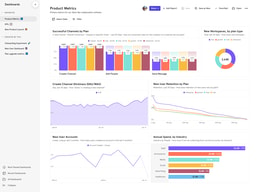
Mixpanel automatically tracks events and properties such as device info, app version, session length, app updates and geolocation data. Their dashboard is informative and quickly generates graphs/charts with our custom property filters.
No complaints regarding their service. Although adding user properties is straightforward, some events triggered by iOS users don't have their properties in place.
We constantly check trends and DAU/MAU via Mixpanel. Their service made it easier to get a birds-eye view of what's happening on our app and where the most traction is. We heavily rely on Mixpanel events while testing new features with a set number of users. These events help us decide the changes to make before publicly releasing said feature.
The visualization tools on MixPanel are easy to use, colorful, and simple in look but able to communicate large amounts of complex data in a simple format. It's also straightforward to pipe data into the tools.
This is a given, but obviously the initial overhead setup required to have helpful dashboards is very time consuming but a necessity for a tool of this type. Mixpanel makes this process much easier but still will always be a pain point.
Mixpanel allows me as a user to visualize complex data in easy to digest formats. We are trying to be a more data-driven company and MixPanel is helping us succeed.
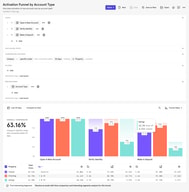
Mixpanel is our number one tool, helping to build and perfect successful marketing funnels. It makes it very easy to see where we loose most conversions and what steps require improvement. It also enables us to calculate critical metrics and KPIs, and assess the effectiveness of our campaigns.
Mixpanel has a huge list of features, which is not a disadvantage really, but it takes time and effort to make the most out of it.
Tracking user journeys from the first touch. Analysing and continuously improving our marketing funnels. Assessing the effectiveness of marketing campaigns, running tests and experiments.
Easy UI, great UX and a very polished product.
Some things you would like to see simpler, like for example, easily being able to see time spent on pages.
Product analytics
the best part of mixpanel is this help to understand the focused sales target
it takes time to login and download report
the best part of mixpanel is this help to understand the focused sales target sometime is get frozen while using and frequent logout on idle mode
The structure of analytical reports and their visual representation makes Mixpanel easy to use and explain even to a complete outsider. So far, it's miles ahead firebase+Google analytics, and certain integrations make it a lot better option for me in comparison to Amplitude.
If only I knew from the very beginning that I better keep my tracking plan simple - that would've substantially improved the accuracy of reports overall. Some tips on that would be awesome.
I use Mixpanel to create reports, funnels and flows mostly. It helps us find where conversion to key activity drops, how come we are selling better this month and so on. Sometimes it serves as healthy substitute to sql database, when I need to find user or cohort specific information.
Very easy to understand and navigate through, not as complicated as some of the other tools, helps me keep track of my day to day tasks. 100% recommended to business owners and their employees
Nothing really, so far my experience on mixpanel has been positive. I've been using it almost every work day since I got employed at the company I currely work for, so far so good! :)
Mixpanel has eliminated the need to keep referring back to my manager for my daily work performance, I just check the charts and know exactly where I stand daily
the easy way of using the original data what we get from this in just one click and the features of mixpanel
dislike is an nothing but should add moe features to bucket the data
the data what i didnt get from any where mixpanel gives me
Implementation is effortless, and the free plan allows you to do many things.
I cannot find any downside about Mixpanel.
Thanks to their analytics, I can understand how users use my software and how to optimize my software to make it more accessible for my users.
I love how easily it integrates with Braze and how easy it is to use and manipulate the data.
Nothing that I can think of. It's a great tool.
Having all my LCM data in one spot alongside our custom attributes and custom events makes it so easy to dissect our campaigns and know what is working and what is not.
The charting options are so intuitive and easy to use. It's very quick to get valuable insight. Our dashboards are shared across the business and in company demos
Discovery and sharing of dashboards is not very easy. It's also unclear how cohorts work - this could be improved. We've also had problems with test data getting into production.
It allows us to see exact user behaviour in our app. This allows us to know exactly the journeys users are taking which allows us to make valid business decisions.
Having experience with various analytics tools, I would say that Mixpanel is the most user-friendly and dev-friendly! It's a very complete system, and for me, as a developer, it's a pleasure to work with.
We were using their built-in module for messaging that was later sunsetted. Had to replace this functionality with a different service, which went pretty smoothly since Mixpanel has a good number of integrations available.
We are using Mixpanel as a primary analytics tool in multiple web and native apps.
The UI and UX of the product and the ease with which we can use the different features
Can be slightly overwhelming in the beginning
Helping us understand our user behaviour and letting us be more data informed in our decisions
Dashboard templates are useful to achieve great visualizations without having a lot of knowledge on what data we want to explore. The documentation has been of great use.
The downsides of using mixpanel are probably the few amount of reports you can create on the free plan and the big gap there is with the paid plan. However, the value it offers is worth it.
We wanted to track how many hours students were using our platform and on which courses they were spending the most time. We also used that information in order to benefit hard-studying students.
It was so easy to implement it and see results immediately
The location of the events is not correct for some of the events.
We are capable to analyse traffic in mobile app as quick as newer before. Mixpanel is making things obvious.
Easy to setup one time and then use it for a long time the amount of insights one can get from this for product is amazing we are able to know exactly what user did and behaved
sometimes identity layer can be a pain to setup sometimes it is easy to miss an important metric not getting tracked due to client side adblocker setup people can end up adding lots of unwanted metrics
getting the product and user insights as to how users are behaving we come to know how the product is behaving since last few months and weeks we come to know where are the spikes
The ease of use to connect external API's like Segment. The ability to create multiple dashboards. The beautiful design.
Mixpanel offers a lot of graphs. It is not always clear to me when to choose one graph over another. Guidance, advice, or sharing best practices would be very valuable here.
Internal business metrics of how our SaaS product is used. Share reporting with the team internally, without the need to build complicated graphs ourselves. We are a pretty small IT-team.
Mixpanel enables us to track a lot of events on our app, and consequently develop and measure important metrics based on these events. This has given us a deeper level of insight into how users interacted with the products that we never used to have.
Mixpanel requires some technical know-how to implement. For less technical teams or users, this can pose a challenge to utilizing mixpanel to its full potential.
Mixpanel allows us to track events as user actions on our app. In tracking these events, we can measure key metrics around product engagement, activation, retention, growth and so on. By doing this, Mixpanel helps us ensure that we're actively monitoring metrics that matter, and working to improve them.
Mixpanel is most user friendly tool out their without compromising on the complex data processing features
So far haven't got across any downsides of Mixpanel
We are analysing our product usage and marketing funnel and use various reports to under It
It's full customization capabilities. You can add fields relevant to your business and edit them as you grow.
Sometimes data doesnt get recorded, I would suppose that it is due to one time server issues
To understand how my users interact and to inprove my product accordingly.
Easy to switch from other tools, easy to consume dashboards and easily to share information. Makes data transparent within the organization and helps make data-driven decisions
Integration processes are always tough, and mixpanel's no exception, even though the support and tools provided along the processes managed to circumvent any issues with it
Having visibility over key metrics from our client's activity with our webapp, allowing us to understand behaviours and use those inputs to for roadmap decisions
I like the fact that MixPanel is fast and reliable. It helps me during my investigation to easily track customers' geolocation. With MixPanel, I easily detect customers trying to hide their geolocation.
Honestly, I don't have any dislikes. MixPanel is organized. I just wish there will more features that allows one to track people's address when using their bank cards to withdraw cash and not just the country.
Well I work as a Financial Crime Investigator in a FinTech company and with MixPanel, I can easily track customers that use mismatching geolocations that doesn't align with what they signed up with. For instance, a customer can sign up with a UK address but after checking their last 6 months location with MixPanel, I will notice that the customer is not within the EU/EEA region maybe in Nigeria or in Iran {a sanctioned /High risk country }. Generally, MixPanel has helped me to comply with my company internal rules and regulations . MixPanel has helped me to spot redflags and take action by evicting bad customers based on their geolocation and other red flags. With MixPanel, the rationale and outcome after investigation makes more sense and i'm more convinced that I'm not making a mistake.