

Unclaimed: Are you working at Adobe Experience Manager?
Adobe Experience Manager Reviews: 4.0/5 — Solid Choice
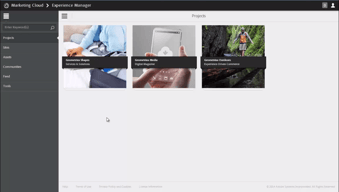
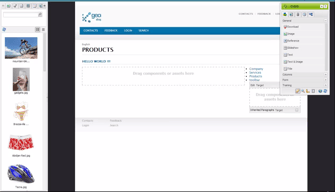
Adobe Experience Manager is a cloud-based content management solution to help businesses create websites, mobile applications, and web forms. The AI-enabled platform lets content creators create, manage, and deliver marketing content to customers using machine learning algorithms. Additionally, it enables content designers to create, modify or publish web pages using the in-context WYSIWYG interface and drag-and-drop functionality.

| Capabilities |
AI
API
CLI
|
|---|---|
| Segment |
Small Business
Mid Market
Enterprise
|
| Deployment | Cloud / SaaS / Web-Based, On-Premise Linux, On-Premise Windows |
| Support | 24/7 (Live rep), Chat, Email/Help Desk, FAQs/Forum, Knowledge Base, Phone Support |
| Training | Documentation |
| Languages | English |






Compare Adobe Experience Manager with other popular tools in the same category.

AEM has a relatively intuitive interface that makes it easy for users to create and manage content, even without prior experience.
AEM can be complex to learn and use, especially for users with no prior experience with CMS or DAM systems.
Overall, AEM helps me to create and manage better digital experiences for my users. This benefits me by improving engagement, conversion rates, and brand reputation

The modularity and scalability of this tool is awesome. Various technologies Apache Sling, JCR, Java, HTL makes this tool powerful and the OOTB features specially the core components are awesome and cover almost the basic needs of content authoring/creation for your portal, informatic website of eCommerce sites. Content pages, Images and videos putting all the things together at once place is best feature of a CMS.
I have been using this tool since 2014 as a developer. The thing which I dislike here is, the new features that come in this tool have some bugs, that later fixed by Adobe using various Hot fixes. But as the new version 6.5 comes in the market the things are more stable.
Content creation for website, portal and eCommerce site. Uploading images directly from the creative suite to Adobe Experience Manager. Caching mechanism to cache the static content on CDN to lower the load of the server. Publishing content from AEM to social media. Design the social media posts in AEM. User-based access control to distribute the work and permission. Create headless content for Mobile Apps
The features and user friendlyness of editing content is best and I have not seen in any other CMS such an easy editing
The overall product is great and I couldnt find anything less but if we can have a quick loading and better SEO aspects it will be an added bonus
Our website requires frequent updating so with the Adobe experience it is easy to manage and update the content as well as Digital assets.

Most powerful cms capabilities. Integration with Adobe suite and other digital suites. Personalization capabilities. Digital asset management. Availability for implementing it on-prem, manages service or cloud service.
AEM licence and setup is costly. Version upgrades are complex in on-prem and managed services but easy in AEMaaCS. Customer support is painful.
Web content system hosted for customer which offers multiple investment options. Asset processing based on workflows and publishing assets to third party.

It is no doubt a effective tool to manage and organise online content and reach to customers in hassle free manner with unified solution.
As per my experiences concerned, it is going awesome but it could be more user friendly if digital guide experience is improved.
I am using adobe experience manager for my firm's online assets management and it provies us control over flood of digital contents available on different digital platforms.

I like best hosting code and creating responsive templates and User-friendly for Marketing platform
Nothing to say from my end. If Anything I would be mentioned
For creating responsive pages without code knowledge we can able to manage

AEM is best cms tool and its main advantage is you can easily integrate AEM with any Adobe products like Adobe analytics, campaigns.
May be they can try to make better documentation on AEM Forms.
AEM has solved a lot of problems by giving its core components adding aem forms as separate. I have worked on every aspects of aem as a developer. It's a best framework to create applications, website and many more.
Ease to use,Ease of Implementation,Customer Support,Ease of Integration,Frequency of Use,Number of features
Frequency of Use ,Sometimes it creates problem
Web content Management
It does everything faster.It s the best software suite for all officials.
Initial set up takes a little time but after that it's very good.
Picture load takes a little time.
the best thing is its always up to date so that i don't have to manually manage it. plus it keeps all the data at one place with perfect segregation so it is easy to locate what you are looking for
it just needs strong internet to be up to date
it is solving the issue of managing the date and make it available wherever and whenever
It is quite helpful to use Adobe Experience Manager to put several channels online. It makes it simple to construct dynamic web pages using tags and aids in keeping things organized.
In Adobe Experience Manager, linking documents and PDF files can occasionally be challenging. Learning how to manage pages and use specific program aspects successfully may take time.
Adobe Experience Manager simplifies complex operations like page design, site migration, and quick site upgrades. It also has safeguards that guarantee only qualified people carry out particular duties.
Adobe Experience Manager is the perfect web content management system. The tools in this program will let you experience the ease of creating, updating websites etc.
Adobe Experience Manager is difficult, especially for a beginner with minimal computer resources. Also, the cost of this program is high and will be best paired with big companies
Since Adobe Experience Manager is cloud-based, the data stored is secured. Also, it is customizable to everything you want your data or reports to be presented.

It allows us to create, manage, and publish content across various channels and devices. Its interface and powerful editing capabilities make it easy for content authors and marketers to deliver engaging experiences. AEM makes the work easy!
AEM is a feature-rich and robust platform, but its extensive capabilities can make it complex to implement and configure. We also encounter cache issues when publishing the pages.
It tackles the issue of content fragmentation by providing a centralized platform where users can create, manage, and publish content across multiple channels. It also simplifies the complexity of delivering personalized experiences, which is very helpful to power users.

AEM is very flexible. It is easy to use, and the UI is user-friendly. It will help the editor create a custom website meeting the requirements.
I don't have any critics in terms of the product itself. It really depends on how to properly use or implement the AEM in web development.
It solves the flexibility issue and speed up the web content management, especially the asset management.

Fast content and page creation. It also has many features to choose from, especially the Adobe Experience Forms, which will help you build your forms automatically. AEM is one of the best CMS platform that you can use.
We seldom encounter downtimes, but the technical support group is always supportive and quickly resolves our issues. We also encounter some caching issues but the support team is always there to support us.
Website maintenance is one of the big factors that Adobe Experience Manager contributes. Additionally, it also helps us manage our assets in a centralized environment called Digital Assets Management (DAM).
Data accuracy, features and support documentation
Sometimes Adobe Workspace takes a really long time to load and tends to crash when left open for too long
We are able to accurately track our customers data and make decisions based on the user behaviour

Its robust architecture and the way it solves major issues in website building and managing digital assets modules. With AEM cloud further has added advantages for maintaining the different environments, and integrations have even become easier.
There is nothing major disadvantage as such if you consider all the factors. Adobe should only make its products available for even small scale industries to solve their issues.
It's majorly solving the problem of easy-to-use, building websites, and managing their digital assets. The workflows module helps out in solving complex tasks.

Its comprehensive suite of tools, data-driven insights, marketing automation capabilities, and seamless cross-channel experiences. Adobe Experience Cloud provides a seamless and consistent customer experience across devices and touchpoints
Its extensive functionality makes it complex and overwhelming for users who are new to the platform. It may require a significant learning curve and ongoing training to fully utilize all the features and maximize its potential
Ineffective Personalization: Delivering relevant and personalized experiences is crucial in today's competitive landscape. Adobe Experience Cloud provides powerful segmentation and targeting capabilities, leveraging customer data and machine learning algorithms to deliver tailored content and experiences across channels. This helps businesses overcome the challenge of ineffective personalization and improve customer engagement and conversion rates.

Adobe Experience Manager is a great platform to manage different content efficiently. It helps to manage the websites and forms etc which you build. It is simple to use.
I have a great experience with it, so no dislikes or doubts. I did not find any difficulty in using it. It is a good management service that helps in building websites and also manages them.
Adobe experience manager helps in making the mobile applications, creating the web sites, and making the forms. It manages the contents and provides good services in that.

It offers a user-friendly interface, intuitive workflows, and powerful authoring tools, making it easier for teams to collaborate and maintain control over their content.
High cost of the solution prices out small business.
We are able to manage multiple sites for clients.
I like the flexibility the platform offers to users such as myself.
I don't like that some feature requests to Adobe takes a very long time before it gets resolved or sometimes not even considered.
AEM helps us manage our website content

Intuitive Interface Flexible Content Management Seamless Multi-Channel Delivery Robust Digital Asset Management Scalability and Performance Integration with Adobe Creative Cloud Analytics and Personalization
Complex implementation and configuration Steep learning curve High cost Customization challenges Resource-intensive Dependence on Adobe ecosystem Potential compatibility issues with upgrades
AEM has helped me by providing centralized content management, enabling personalized experiences, facilitating multi-channel delivery, streamlining workflow and collaboration, offering powerful analytics and optimization capabilities, ensuring scalability, and integrating seamlessly with the Adobe ecosystem. These benefits have improved my productivity, enhanced customer engagement, and streamlined my management of digital experiences.
- Easy Content management. - Drag and Drop components for new Webpage designing. - Content can be easily replicated across multiple pages. - Multi-locale management.
- AEM Reports. - Build deployment and management can be improvised.
We worked on a Website based on sound content and rich images. Asset management and content management service gave us an edge in managing that content without frequent deployments.
Latency Tables Rolling Calculations Retention Tables Churn Tables Panel Drop-downs Color Palettes
Auto Tracking Mode for Advertising Analytics
Solving issues in many industries like currently we are using the cloud for the Bridge cloud project and Public cloud we are using. Works awesome for us.

What I like about Adobe Experience Manager is the Touch UI is user-friendly and easy to navigate, even for new users.
The downside of Adobe Experience Manager is none. This is only based on my experience.
Business problems that Adobe Experience Manager solves are by creating a website using the Master Template created in AEM.

Easily building components, managing article/blog pages and all kind of digital assets
Nothing. It might be expensive for small companies
Generating creative landing pages less than a day
With this program, we can quickly and rapidly produce and update content for distribution via our website, social media, and mobile apps. Additionally, AEM permits us to produce individualized client encounters via audience segmentation and content customization according to user choices and actions. The ability to design and implement automated workflows is one of my favorite features of AEM because it has helped us immensely in streamlining and simplifying the content development, approval, and publication processes. In addition, we have produced high-quality content while maximizing its dissemination across numerous channels because of its interoperability with Adobe Creative Cloud and other applications. This has allowed us to make real-time changes to the material, which has improved the efficiency of our advertising.
The complexity of AEM makes it a powerful tool, but it can be difficult to utilize for those with no prior experience. The learning curve for designing one-of-a-kind workflows may be quite steep. In addition, the cost of the tool may be unjustifiable for some businesses, making it unsuitable for purchase.
Our corporation would not be where it is today without AEM, which has allowed us to create a more individualized experience for our customers and boost the efficiency of our marketing efforts. Through customized content and service, we saw an increase in client retention and ROI. And because it works with other Adobe products, we've learned more about our customer's habits and adjusted our marketing tactics accordingly.
Always have great experiences with Adobe! I love their products.
Nothing, highly recommend Adobe products
Organization and content creation

Multisite management, translation management, digital asset management, workflows, mobile responsive design.
Higher license cost, design/editing bugs
Seamless website management, multilingual site management, translation management, asset localization and translation, web experience management.

What I like about AEM is the interface and usability; it offers a cohesive and intuitive UI that allows you to build a Website, add components, personalization and targeted experiences, review analytics, and more efficiently because its products work perfectly well.
The only downside of AEM is that the target audiences are those big companies, and pricing for small businesses can be overwhelming. However, if you can find a financial solution, it will simplify a lot of work.
It's helping in a cretion of new content, publishing automation, reducing publishing efforts and internationalization and localization of content using an external app integration.