
Unclaimed: Are you working at LastPass?
LastPass Reviews: 4.5/5 — Highly Rated
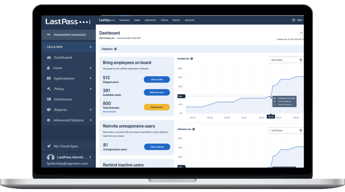
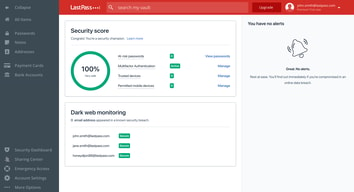
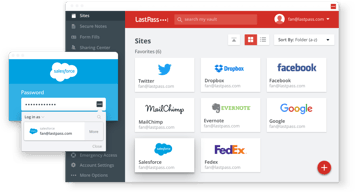
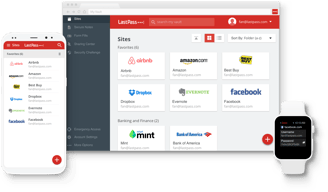
LastPass is a popular and easy-to-use password manager with premium features and great security tools and multiple account recovery options. Adding an advanced layer of security, the platform offers multi-factor authentication and time-based one-time password protection, dark web monitoring, a one-to-one authenticator, and secure notes. LastPass also offers effective pricing, with a freemium plan that covers extensive features and tiered plans with more robust security features and tools.
| Company | LogMeIn, Inc. |
|---|---|
| Year founded | 2003 |
| Company size | 1001-5000 employees |
| Headquarters | Boston, MA, United States |
| Social Media |

| Capabilities |
API
|
|---|---|
| Segment |
Small Business
Mid Market
Enterprise
|
| Deployment | Cloud / SaaS / Web-Based, Desktop Chromebook, Desktop Mac, Desktop Windows, Mobile Android, Mobile iPad, Mobile iPhone |
| Support | 24/7 (Live rep), Chat, Email/Help Desk, FAQs/Forum, Knowledge Base, Phone Support |
| Training | Documentation |
| Languages | English |






Compare LastPass with other popular tools in the same category.
I rave about how easy it is to sign in and share passwords at work. Having personally used a password manager for years, I was excited to get staff set up with the system
It has proven difficult to get some staff on-boarded due to technical skill or competency
Gone are the days of lost or forgotten passwords. It's also so easy to share vital passwords with management via shared folders.
So easy to log into apps, websites on all of my devices.
I have found no downsides to using LastPass.
I no longer have to keep 3 pages of notes for all the passwords I have to keep up with.
Simple, easy, effective tool - and being able to use as an app or extension makes it truly functional. The interface, app, etc. are very easy to use - I've used "enterprise" tools that are way too "full featured" which means people aim to never use them! Having a single solution that encourages people to not just protect corporate data but also better address online security in their personal lives, is phenomenal.
In the family version, having to clone existing passwords to shared folders is a pain. Moving them would have been ok, but wasn't an option. (If you're starting from scratch, that's not an issue)
Primarily, creating secure and unique passwords for every site or app that you need. Secondarily, being able to share those to family-members or colleagues, as appropriate.
easy to use can be used by several people
sometimes it appears when I do not need it
An easy way to share passwords with your colleagues

LastPass keeps all my passwords, log-in information, and personal digital details safe, secure and available from anywhere. For instance, if my phone was lost or stolen while traveling, I would only need to log into my LastPass account, where all my personal and business information is stored for easy retrieval. I keep the details of my passport, credit information, and even health information so that in the event of an emergency, I have immediate access from anywhere in the world. Most importantly, I only have to remember ONE password. I have used LastPass since 2012 and recommend it to all my clients.
I cannot think of anything I dislike about LastPass. The service has been continually improving, and I'm pleased with it.
I am a web designer, and I store hundreds, if not thousands, of passwords and details about my sites. I can also share passwords securely with my clients through the system.
I like that I can share credentials with my team in a secure environment, without compromising the safety of our systems.
The computer app does not communicate too well with all my web browsers.
Sharing credentials and sensisitive information with my team quickly, including any possible updates.
Provisioning accounts through azure active directory ease of use and security for the users..
Setup with users who already have accounts caused issues with provisioning accounts and conversion did not work.
Single sign-on using office 365 credentials instead of individual user passwords.

Makes it easy to generate good passwords, and identify and fix past bad practices. The availability across many platforms, and integration with browsers and apps, makes passwords easily available when needed.
It is sometimes a bit balky on Android phones, particularly older versions of Android. And there are occasional cases where it is confused by the form and doesn't fill on or swaps username and password fields when filling in.
LastPass helps me maintain good security across many accounts, and makes it easy to access the passwords across the many machines I use. It encourages best practices.
I like how easy it is to select the correct login and have the password default to sites I access using multiple user IDs.
Some fields in some of the browser-based applications I use will have the LastPass icon link when they shouldn't. This can cause problems when using these applications.
I access many sites throughout the day with unique user IDs and passwords and LastPass allows me to work more quickly and efficiently as I am not scrambling and searching for user ID and password to the varying sites.

Easy to use, It secures my all password Option to save multiple credentials for one tool Option for shared folder and acess
sometimes logged out in to use autofill.
Now, I don't need to remember multiple passwords. In my organisation, i have multiple tool to use and it's difficult to remember all the passwords.
I LOVE that I no longer have to write down and store my passwords. I LOVE that I can install the application on multiple devices, which always allows me access to important websites.
On occasion, LastPass does not automatically launch the website with the user name and password pre-populated.
LastPass prevents password vulnerability and eliminates a user from using the same password for multiple websites.

I like being able to manage 100's of DIFFERENT passwords in one place and being able to share those passwords securely with my team
That if you lose your master password you are 100% screwed
centralized password management and secure sharing of those passwords.

My partner and I have multiple accounts and memberships that we share but are in only one of our names. Last Pass Families makes it super easy to share login information for these accounts. Also, I like the peace of mind knowing that should something happen to one of us, the other is able to access account information easily. Plus it has made it incredibly easy to create very intricate passwords that are much more secure.
The Android app (on tablets specifically) isn't as reliable and does not consistently prompt to autofill login info on Chrome
Managing passwords; creating very difficult passwords to improve security.
When using the business plan, you can share passwords with colleagues.
When I needed to add a license recently, the new checkout page was not user-friendly and I had to go back to the old UI.
Adding security to every external service which requires passwords.
I like the seamless syncing across devices. The one-click password generator. The prompt to save new / updated passwords, and the proactive warning if an account is compromised.
It occasionally stops auto-filling on my Android devices, but I suspect that this is caused by Android updates, and not LastPass.
It allows me and my users to employ complex and unique passwords without having to worry about remembering them.
It's extremely useful to have all of your passwords in an encrypted platform like LastPass, so that you can access them wherever you are and that not only saves time but gives you peace of mind.
I don't have any dislike of LastPass yet.
Having all the passwords that I need for my business in one place and knowing that they are safe and secure.

I've been using Lastpass since 2010 when I started to work in IT while finishing my BS in Engineering. I've been using it since to have a single, secure, and simple system to store my passwords. Now it helps me generate passwords, lowering the number of decisions I need to make, while being able to move between Apple, Windows, and Chrome ecosystems while teaching.
The only thing I don't like about Lastpass is that it reminds me to change passwords that have been in leaks. Honestly it's another strength. I just get annoyed because I don't have time to change a bunch of passwords when I'm trying to load a site.
Now that passwords need to be frequently changed across platforms, it allows me to have multiple passwords instead of one across sites. I feel more secure in my digital presence.

The best thing I find about Lastpass is the cross-platform integration and ease of use on all platforms. Regardless of if I'm on iOS, Windows, or Mac, the Lastpass software works seamlessly and allows me to easily log into the sites I need to while making sure I'm secure.
The biggest issue I have is the variable nature of how LastPass remembers sites. I'm pretty sure it's a website issue, but sometimes LastPass gets confused about which login screen to show. Other than that the product is quite user friendly and easy to use.
They solve the problem of complex passwords and the problem I have remembering them. I don't want to reuse passwords as we all know that's an issue from a security perspective, but remembering all of them is a huge challenge.
I can not only work from anywhere, but can technically use any computer while maintaining the security of my client/personal files.
Sometimes, when I keep the browser open overnight, the quick link option doesn't work. Meaning I have to copy & paste website link and password to log in. Also, it would nice if when sharing a password, i can allow the other person to update the password and have that reflect in my LastPass account as well. To be clear, I would like this option, I'm suggesting that it was a permanent/singular feature. Websites require password updates every so often and it would be convenient due to this.
Easy to share passwords with our office staff. Easy to generate different types of passwords. Easy to store passwords and access.
LastPass integrates nicely across mobile and desktop platforms. I have had zero issues with saving and maintaining and generating new passwords. This has helped me be more secure online without having to duplicate or remember passwords and login credentials.
The only knock I'll give LastPass is the slowness on my Apple device. Rather than being fully integrated into the web browser, it transfers me to the LastPass app. However, we're talking a couple seconds. It's a small trade off for the convenience of highly secure logins.
LastPass solves my issues reusing old, unsecure passwords. It delivers complex passwords and remembers them at the moment I need the info. I also do most of my shopping online so LastPass manages all my payment cards in an easily accessible manner.

The ability to share passwords with differnt members of the family, while keeping some private or between me and my wife.
Certain apps don't work with LastPass or apps that worked in the past stop working. There is no easy to find way to get them working again. Sometimes they start to work again after some time. I'm sure that this is a moving target for LastPass, as other developers are always improving security of their apps, but it is an occasional frustration.
My important personal and business accounts now use much more sophisticated passwords because I use LastPass. Also, I no longer duplicate passwords across sites/apps, so if one is compromised, the others are still safe. That's great peace of mind.
I love that I can take LastPass just about anywhere I need to (mobile, desktop, etc.). I am never without my passwords and the safety that brings. I've used other apps but none compare to LastPass.
I haven't found anything so far that I dislike. The ability to choose more secure passwords is maybe the best feature of the app. I do get annoyed sometimes at having to login securely, but that is what makes the app so perfect. The security is top-notch.
I have so many passwords to remember, and without LastPass, I'd be stuck with pieces of paper or some other very insecure product. My performance has increased because I don't need to hunt for a password. LastPass remembers it for me.
I love the easy access to all my passwords and knowing that if something happens my information will be accessible by who I choose. The fact that I can randomize all my passwords and not have to remember them or write them down is so amazing.
Sometimes the app popping up and keeps coming up when when you try to close it.
The struggle in the office is that the owner has passwords for all the different accounts and suppliers and we don't want to constantly pull up a password list from the front each time we need a password. With Lastpass we can set it up on each computer and access the passwords we need right away without the headache.
Thank goodness for Last Pass. I must admit I was reluctant to set up an account for years but now I am so glad I did it. There were just so many passwords for different things and passwords that had to be updated regularly, I was starting to lose the reason! I love that every password I have now is secure, unguessable and different from the others. The chrome extension is brilliant and it all just works.
I have found it a little tricky to share passwords with my suppliers, such as web developer. I might be doing something wrong, but that didn't always work. Also the Last Pass Authentication app doesn't work for me.
Security, safety, time, hassle.
I love the integration across all my devices and the ease of use to add and update user IDs and passwords. I also appreciate the security features that guard my accounts and notify me of duplicate or exposed passwords.
Not much to dislike about Lastpass other than possibly the sharing feature is cumbersome for those who do not have LastPass accounts and have to set one up before seeing the shared information.
In my position, I have well over 300+ user IDs and passwords to keep track of, and LastPass does this for me very well. It also lets me know when information is found in the darkweb if passwords are stale, too easy, and so much more.
I've used LastPass both personally and professionally. It is very secure, user friendly, and the support has been great. You can keep things well organized and I love using the app.
An update a while ago made it difficult to use the browser plugin. I did have to restart my personal account and wished there was a better way to recover my passwords, but I'm also glad it was difficult (or impossible) to easily get that information.
Keeping my personal information secure and organized.n Also, it makes logging into apps and websites fast. I appreciate the secure passwords it also generates and the knowledge I've gained from their articles.
It's incredibly fast & intuitive to create and save new passwords. Autofill works well across mobile and desktop.
The transition from free to paid was a little rough - plenty of warning time, but it was an unplanned expense. Thankfully it's once a year!
I don't remember any passwords, and therefore would always use the same few across accounts (not secure!). LastPass eliminated that issue for me.
Cannot live without it in this age of required unique and hard-to-remember passwords for dozens of sites! I appreciate the password monitoring features and the reminders to improve repeated passwords as well. Makes me so much more secure!
Recently began suggesting form fields that do not need suggestions (and I do not know how to turn off), but the overall pros far outweigh the minor inconvenience.
Cannot live without it in this age of required unique and hard-to-remember passwords for dozens of sites! I appreciate the password monitoring features and the reminders to improve repeated passwords as well. Makes me so much more secure!
It's easy to use and has extensions for all major browsers for a more seamless experience.
Overall, there is not much I dislike, sometimes the autofill feature will not work, but that is rare.
I have many passwords and it helps me keep track of them and audit them to make them more secure.
LastPass keeps me accountable on having secure password.
The length of time LastPass is available on mobile app
Being able to have over 100 passwords