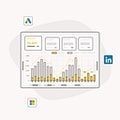
Marketing analytics software is a category of technology that enables businesses to collect, measure, and analyze data from their marketing activities across channels and campaigns. Rather than relying on fragmented reports from individual platforms or manual spreadsheet analysis, marketing teams use analytics software to consolidate performance data into a unified environment where trends, patterns, and opportunities become visible at a glance.
At its core, marketing analytics software transforms raw data from advertising campaigns, website interactions, email programs, social media efforts, and other marketing initiatives into actionable insights that inform strategic decisions. These platforms typically combine data aggregation, visualization, attribution modeling, and reporting capabilities to give marketers a comprehensive understanding of how their investments translate into measurable business outcomes such as leads, conversions, and revenue.
The demand for marketing analytics software has accelerated as the number of available marketing channels has expanded and as leadership teams increasingly expect marketing departments to demonstrate clear return on investment. With budgets under constant scrutiny, marketing professionals need reliable tools to prove which campaigns and channels deliver results and which consume resources without proportional returns. Marketing analytics software provides the measurement infrastructure that makes this accountability possible.
The complexity of the modern customer journey further underscores the need for dedicated marketing analytics software. Prospects rarely follow a linear path from awareness to purchase. They may encounter a brand through a social media post, later click on a paid search ad, visit the website multiple times, and finally convert after attending a webinar. Without analytics software capable of tracking and connecting these touchpoints, businesses are left guessing about which efforts actually influenced the outcome. Marketing analytics software solves this challenge by stitching together cross-channel data to reveal the complete picture of how marketing drives growth.
Why Use Marketing Analytics Software: Key Benefits to Consider
Marketing analytics software addresses several critical needs that modern marketing organizations face as they scale their operations and pursue data-driven strategies. The ability to measure, attribute, and optimize marketing performance is no longer optional for competitive businesses. The key benefits of marketing analytics software include:
Comprehensive Performance Visibility Across Channels
One of the most significant advantages of marketing analytics software is the ability to see all marketing performance data in a single location. Instead of logging into separate platforms for paid search, social media, email, and website analytics, marketers can access consolidated dashboards that present a unified view of campaign performance. This cross-channel visibility eliminates the need to manually aggregate data from disparate sources and reduces the risk of drawing conclusions based on incomplete information. When every channel’s contribution is visible side by side, teams can quickly identify which initiatives are performing well and which require adjustment.
Accurate Marketing ROI Measurement
Marketing analytics software enables businesses to calculate the true return on investment for their marketing spend with a level of precision that manual methods cannot achieve. By connecting campaign costs with downstream outcomes such as leads generated, pipeline created, and revenue closed, these platforms provide clear metrics that demonstrate whether marketing investments are producing profitable results. This ROI measurement capability is essential for justifying marketing budgets to executive stakeholders and for making data-informed decisions about where to increase or decrease spending.
Faster Identification of Underperforming Campaigns
Without marketing analytics software, underperforming campaigns can continue consuming budget for weeks or even months before anyone notices the problem. Analytics platforms provide real-time or near-real-time performance monitoring that enables marketers to spot declining metrics early and take corrective action before significant resources are wasted. Automated alerts and anomaly detection features further accelerate this process by notifying teams when key metrics fall below established thresholds.
Improved Cross-Team Alignment and Communication
Marketing analytics software serves as a shared source of truth that aligns marketing, sales, and leadership teams around the same data and definitions. When everyone in the organization references the same dashboards and metrics, conversations about marketing performance become more productive and less prone to disagreement over conflicting numbers. Standardized reporting also simplifies the process of communicating results to stakeholders who may not be deeply familiar with marketing operations. Clear analytics reports help bridge the communication gap between technical marketing practitioners and executive decision-makers.
Data-Driven Budget Optimization
Marketing analytics software provides the quantitative foundation needed to allocate budgets based on evidence rather than intuition. By analyzing historical performance data across channels, campaigns, and audience segments, marketers can identify the most cost-effective strategies and shift resources toward the tactics that produce the highest returns. This optimization cycle becomes increasingly effective over time as more data accumulates and patterns become clearer.
Who Uses Marketing Analytics Software
Marketing analytics software serves a diverse range of professionals and departments within organizations of all sizes. While marketing teams are the primary users, the insights generated by these platforms inform decisions across the business. The teams and individuals that use marketing analytics software most frequently include:
Marketing Managers and Directors
Marketing managers and directors rely on marketing analytics software to monitor the overall health of their programs and make strategic decisions about resource allocation. These professionals use dashboards and reports to track performance against goals, identify emerging trends, and justify their strategies to leadership. For marketing directors responsible for multiple teams or business units, analytics software provides the high-level visibility needed to ensure that all marketing activities are aligned with organizational objectives and contributing to growth targets.
Performance and Growth Marketers
Performance marketers and growth teams are among the most intensive users of marketing analytics software. These professionals are directly accountable for metrics such as cost per acquisition, conversion rates, and marketing-sourced revenue. They use analytics platforms to run experiments, compare channel performance, and continuously optimize campaign execution based on real-time data. Growth marketers in particular rely on the ability to track the full funnel from initial click through to conversion and beyond, using analytics to identify bottlenecks and test hypotheses about how to improve results at each stage.
Data Analysts and Marketing Operations
Data analysts and marketing operations specialists use marketing analytics software as a primary data source for building models, creating custom reports, and maintaining the accuracy of the organization’s marketing data infrastructure. These team members often work with the more technical capabilities of analytics platforms, including data exports, API integrations, and custom attribution modeling. Their work ensures that the insights generated by the software are reliable and that the data feeding into dashboards and reports is clean and correctly mapped to business outcomes.
Executive Leadership and Finance Teams
While executive leaders and finance professionals may not interact with marketing analytics software on a daily basis, they are important consumers of the insights it produces. CMOs, CFOs, and CEOs use executive-level dashboards and summary reports to evaluate whether marketing spending is generating adequate returns and to inform high-level strategic decisions about investment priorities. Finance teams rely on marketing analytics data during budgeting cycles to validate marketing’s contribution to revenue.
Different Types of Marketing Analytics Software
Marketing analytics solutions vary in their scope, specialization, and approach to data analysis. Understanding the different types available helps businesses select a platform that matches their specific measurement needs and organizational maturity:
-
Cross-Channel Marketing Analytics Platforms: These comprehensive solutions aggregate data from multiple marketing channels into a unified analytics environment. They are designed for businesses that run campaigns across paid search, social media, email, display advertising, and other channels and need a single view of performance across all of them. Cross-channel platforms typically include pre-built integrations with major advertising and marketing platforms, automated data normalization, and customizable dashboards that allow users to compare metrics across channels using consistent definitions. These tools are particularly valuable for organizations that have outgrown the native reporting capabilities of individual platforms.
-
Marketing Attribution Software: Attribution-focused analytics solutions specialize in determining how different marketing touchpoints contribute to conversions and revenue. These platforms go beyond basic last-click attribution to offer multi-touch attribution models that distribute credit across the various interactions a prospect had before converting. Advanced attribution tools may include algorithmic or data-driven models that use statistical analysis to determine the incremental impact of each touchpoint. Businesses with complex customer journeys spanning multiple channels and extended timeframes benefit most from dedicated attribution software.
-
Marketing Dashboard and Reporting Tools: Dashboard-focused analytics solutions emphasize data visualization and reporting rather than deep analytical modeling. These platforms excel at pulling data from multiple sources and presenting it in visually clear, easily digestible formats that can be shared with stakeholders across the organization. While they may not offer the attribution modeling depth of specialized analytics platforms, they provide the reporting infrastructure that many marketing teams need to communicate results effectively and monitor campaign performance in real time.
Features of Marketing Analytics Software
Marketing analytics platforms offer a range of capabilities designed to help businesses measure, understand, and improve their marketing performance. The specific feature set varies across solutions, but most platforms include a core set of standard capabilities alongside more advanced features that address sophisticated analytical needs.
Standard Features
Data Aggregation and Integration
The foundation of any marketing analytics platform is the ability to collect and consolidate data from multiple sources. These platforms offer pre-built connectors to advertising platforms, email marketing systems, social media channels, CRM software, web analytics tools, and other marketing technologies. Data aggregation features automatically pull performance metrics from these sources on a scheduled basis, normalize the data into consistent formats, and store it in a centralized repository. This integration layer eliminates the need for manual data collection and ensures that all analysis is based on current, comprehensive information.
Campaign Performance Dashboards
Marketing analytics software provides customizable dashboards that display key performance metrics for active and completed campaigns. These visual interfaces typically include charts, graphs, and summary tables that allow users to monitor metrics such as impressions, clicks, conversions, cost per acquisition, and return on ad spend at a glance. Most platforms allow users to filter dashboards by date range, channel, campaign, audience segment, or other dimensions. The ability to create role-specific dashboards ensures that different stakeholders see the metrics most relevant to their responsibilities.
Marketing ROI and Spend Analysis
Dedicated ROI tracking features connect marketing expenditures to downstream business outcomes. These tools aggregate spend data from advertising platforms and marketing programs, then map that investment against metrics such as leads generated, opportunities created, and revenue attributed to marketing. Spend analysis capabilities help marketers understand cost efficiency at the channel, campaign, and tactic level, making it straightforward to identify where marketing dollars produce the strongest returns and where spending may need to be adjusted.
Automated Reporting and Scheduling
Marketing analytics platforms include reporting features that allow users to generate structured reports on demand or on a recurring schedule. Automated report delivery eliminates the time-consuming process of manually compiling data for periodic reviews. Most platforms offer templates for common report types and the ability to customize layouts, metrics, and visualizations to match specific requirements. Scheduled reports can be delivered via email to stakeholders who need regular updates without logging into the platform.
Conversion Tracking and Goal Monitoring
Conversion tracking features allow marketers to define specific actions that constitute valuable outcomes, such as form submissions, purchases, sign-ups, or content downloads, and then measure how effectively their campaigns drive those actions. Goal monitoring capabilities extend this by allowing teams to set performance targets and track progress toward them over time. These features provide the fundamental measurement framework that connects marketing activities to business objectives and ensures that teams remain focused on the metrics that matter most.
Audience and Segment Analysis
Marketing analytics software includes tools for analyzing how different audience segments respond to marketing efforts. Segment analysis features allow marketers to compare performance metrics across demographic groups, geographic regions, behavioral cohorts, and customer lifecycle stages. Understanding which segments are most responsive to specific campaigns or channels enables more precise targeting and more effective allocation of marketing resources.
Key Features to Look For
Multi-Touch Attribution Modeling
Advanced attribution modeling capabilities go beyond simple first-click or last-click attribution to distribute conversion credit across all the marketing touchpoints that influenced a customer’s decision. Sophisticated platforms offer multiple attribution model options, including linear, time-decay, position-based, and data-driven algorithmic models. The ability to compare results across different models helps marketers understand the relative contribution of various channels and campaigns more accurately. For businesses with complex, multi-step customer journeys, multi-touch attribution is essential for making informed investment decisions.
Predictive Analytics and Forecasting
Predictive analytics features use historical performance data and statistical models to forecast future marketing outcomes. These capabilities may include predictions about expected conversion rates, projected revenue from current pipeline, or forecasted performance of campaigns based on early indicators. Forecasting tools help marketing leaders plan more effectively, set realistic goals, and identify potential shortfalls before they materialize.
Custom Data Modeling and Advanced Segmentation
For organizations with mature analytics practices, the ability to build custom data models and advanced segmentation rules is a valuable differentiator. These features allow data analysts and marketing operations teams to create tailored analytical frameworks that reflect the unique characteristics of their business and measurement requirements. Custom modeling capabilities may include the ability to define proprietary attribution logic, create calculated metrics, build cohort analyses, and develop scoring systems that go beyond what out-of-the-box features provide.
Real-Time Performance Monitoring and Alerts
Real-time monitoring features provide up-to-the-minute visibility into campaign performance, allowing marketers to react quickly to changes in results. Automated alert systems notify users when key metrics experience significant changes, whether positive or negative. These capabilities are particularly important for businesses running high-budget campaigns or time-sensitive promotions where delays in identifying performance issues can result in substantial wasted spend.
Important Considerations When Choosing Marketing Analytics Software
Selecting the right marketing analytics platform requires careful evaluation of factors that extend beyond the feature list. The best choice for any organization depends on its data infrastructure, team capabilities, and strategic measurement priorities.
Data Integration Depth and Reliability
The value of marketing analytics software is directly tied to the quality and completeness of the data it can access. Before selecting a platform, businesses should evaluate the breadth and depth of available integrations with the marketing tools and data sources they use. Native integrations that are actively maintained tend to be more reliable than generic connectors. Businesses should also consider how the platform handles data discrepancies between sources, how frequently data is refreshed, and whether the integration architecture can accommodate new tools as the technology stack evolves.
Attribution Model Flexibility
Different businesses require different approaches to attribution depending on their sales cycle length, channel mix, and customer journey complexity. Marketing analytics platforms vary significantly in the attribution models they offer and the flexibility they provide for customizing those models. Organizations should assess whether a platform’s attribution capabilities align with their measurement philosophy and whether it supports the specific models needed to answer their most important questions about marketing effectiveness. The ability to compare results across multiple attribution models is particularly valuable for businesses still determining which approach best reflects their reality.
Implementation Complexity and Ongoing Maintenance
Marketing analytics software implementations can range from straightforward dashboard setups to complex projects requiring significant data engineering and configuration work. Businesses should realistically assess the technical resources available for implementation, ongoing maintenance, and platform administration. Platforms that require extensive tagging, custom tracking implementations, or manual data mapping demand more technical investment and introduce more potential points of failure. Organizations with limited technical resources should prioritize solutions that minimize implementation complexity while meeting their core analytical requirements.
Privacy Compliance and Data Governance
Marketing analytics platforms process substantial volumes of customer interaction data, making privacy compliance a fundamental consideration. Businesses must verify that any platform under evaluation supports compliance with applicable regulations such as GDPR, CCPA, and other privacy laws. Key features to assess include consent management, data retention controls, anonymization capabilities, and the ability to honor data deletion requests. As privacy regulations continue to evolve and browser-level tracking restrictions reshape data collection practices, the platform’s approach to privacy-compliant measurement becomes an increasingly important differentiator.
Marketing analytics software operates within a broader ecosystem of marketing and business technology. Several related categories of software complement and extend the analytical capabilities these platforms provide:
Marketing Automation Software
Marketing automation software handles the execution side of marketing, managing workflows such as email campaigns, lead nurturing sequences, and multi-channel campaign orchestration. When integrated with marketing analytics software, the two categories create a feedback loop where execution data flows into analytics for measurement and the resulting insights inform future automation strategies. This connection ensures that campaign decisions are grounded in performance data rather than assumptions.
Customer Relationship Management Software
CRM software tracks interactions with prospects and customers throughout the sales process and beyond. The integration between CRM and marketing analytics software is essential for understanding how marketing efforts contribute to revenue. By connecting marketing touchpoint data with sales outcome data stored in the CRM, businesses can measure the complete journey from first marketing interaction through closed deal.
Business Intelligence and Data Visualization Tools
Business intelligence platforms provide advanced data analysis, visualization, and reporting capabilities that extend beyond what most marketing analytics tools offer natively. Organizations with sophisticated analytical needs often use BI tools alongside their marketing analytics software to build custom analyses, combine marketing data with operational and financial data, and create executive-level visualizations that communicate marketing performance in a broader business context.
Customer Data Platforms
Customer data platforms collect, unify, and activate customer data from multiple sources to create comprehensive individual profiles. When used alongside marketing analytics software, a CDP strengthens the quality of analytical insights by ensuring that the underlying data is accurate, deduplicated, and enriched with information from across the customer lifecycle. This partnership is especially valuable for businesses that operate across many channels, as the CDP resolves identity fragmentation and provides the clean data foundation that marketing analytics software needs to deliver reliable measurement and attribution.