

Unclaimed: Are you working at Brex?
Brex Reviews: 4.7/5 — Highly Rated
Brex is a financial services platform built especially for startups and small businesses. The software allows users access to expense management tools and even the use of corporate credit card and rewards programs so businesses can manage finances more efficiently and save money through rewards and discounts on business expenses.

| Capabilities |
API
|
|---|---|
| Segment |
Small Business
Mid Market
Enterprise
|
| Deployment | Cloud / SaaS / Web-Based, Mobile Android, Mobile iPad, Mobile iPhone |
| Training | Documentation |
| Languages | English |

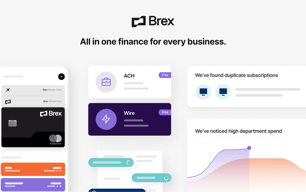
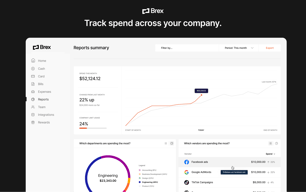
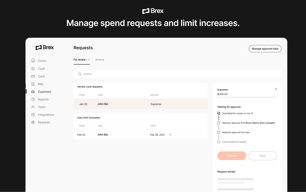
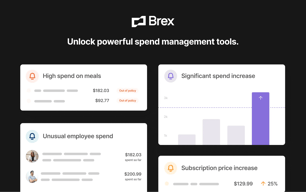
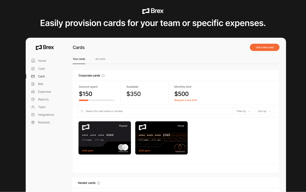




Brex gives away its expense management software at $0 per user, and in April 2026 it was acquired by Capital One for $5.15 billion. Both facts matter more than any feature comparison. The software is free because Brex earns on card interchange and treasury rather than seats — you are the payment volume. And the company that built its reputation on serving startups is now part of a large consumer bank.
- What it is: A corporate card and expense management platform covering cards, bill pay, reimbursements, travel booking, and spend controls.
- Best for: Venture-backed US startups and mid-market companies with meaningful cash balances and card spend.
- Pricing: Essentials $0 per user. Premium $12 per user monthly. Enterprise and Smart Card quoted. Verified July 2026.
- The honest catch: Eligibility excludes sole proprietors entirely and reportedly requires substantial cash on hand, so plenty of small businesses simply cannot open an account.
What Is Brex?
Brex is a corporate spend platform: it issues cards, enforces policy at the point of purchase, automates receipt capture and coding, handles reimbursements and bill pay, and pushes clean data into your accounting system. Its customer list runs to DoorDash, Airtable, OpenAI, ServiceTitan, and Lemonade, which tells you the intended profile.
Its original innovation was underwriting on company financials rather than a founder’s personal credit — no personal guarantee, no personal credit check, no collateral. For a founder who had just raised a round but had no business credit history, that solved a real problem, and it is why Brex became the default card for venture-backed startups.
The software genuinely is good. AI-powered policy rules, real-time reporting, multi-entity support, local currency wires, and a proper API are included even on the free tier. This is not a stripped demo — Essentials is a working product for a growing company.
How Brex Works
- Software free, money made elsewhere. Interchange on card spend and returns on deposits fund the platform.
- Cards with policy enforcement. Rules applied at authorisation rather than discovered in an expense report later.
- Bill pay and reimbursements. Included on Essentials, though the business account and bill pay carry separate fees.
- Multi-entity from the free tier. Up to two entities on Essentials, unlimited on Enterprise.
- Accounting and ERP integrations. Standard accounting on Essentials; customizable ERP and HRIS on Premium.
- Underwriting on business financials. No personal guarantee or personal credit check.
Brex Pricing
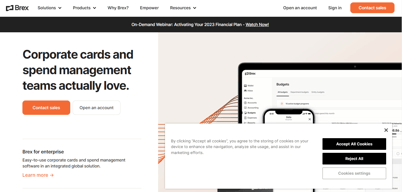
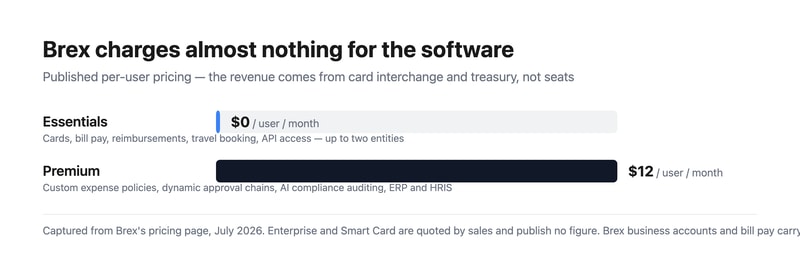
Captured from Brex’s pricing page in July 2026. The consent banner could not be dismissed for a clean screenshot, so the chart below is ours.
| Plan | Price | Entities | Notable |
|---|---|---|---|
| Essentials | $0/user/mo | Up to 2 (1 global) | Global cards, AI rules, accounting integrations, wires, travel booking, API, bill pay, reimbursements |
| Premium | $12/user/mo | US and international | Multiple expense policies, dynamic review chains, AI compliance auditing, ERP/HRIS, VAT documentation, live budgets |
| Enterprise | Quoted | Unlimited | Local card issuance, collections, named account manager, admin centre, implementation services |
| Smart Card | Quoted | — | Local-currency cards in 50+ countries, merchant controls, custom approvals |
What to understand about a free product:
- “Free” means the revenue comes from somewhere else. Brex earns interchange on every card transaction and yield on deposits held. That is a legitimate model and not a criticism — but it means Brex’s incentive is your card spend and balances, not your subscription. Evaluate it as a financial services relationship, not a software purchase.
- Essentials is genuinely capable. Cards, bill pay, reimbursements, travel, API access, and accounting integration at zero per-seat cost is a strong offer, and the reason many startups never upgrade.
- Premium at $12 buys governance. Multiple customizable policies, dynamic review chains, and AI compliance auditing are finance-team features. If one person approves everything, you do not need them.
- Separate fees exist. Brex notes that its business account and bill pay services carry additional fees, so the $0 headline covers the spend software rather than every service.
- Enterprise and Smart Card publish nothing. Both require a sales conversation.
Eligibility Is the Real Gate
More than price, eligibility decides whether Brex is available to you at all, and this is where prospective users are most often caught out.
- US-registered business entities only — C corporations, S corporations, LLCs, and LLPs. Sole proprietors, individual consumers, and unincorporated partnerships are not eligible.
- An EIN and a physical US business address are required to apply.
- Cash balances matter. Reported thresholds include roughly $50,000 in the bank for companies with professional investors and around $1,000,000 for bootstrapped companies to qualify for monthly payment terms, with higher figures cited for some account types. Treat these as reported rather than official, and confirm before planning around them.
- No personal credit check or personal guarantee. Underwriting rests on business financial strength, which is the genuine advantage for founders.
The practical summary: Brex is built for funded startups and established companies with real balances. A bootstrapped consultancy with irregular revenue is a likely rejection, and reviewers report exactly that outcome.
What Capital One’s Acquisition Means
Capital One announced its acquisition of Brex on 22 January 2026 and completed it on 7 April 2026, in a stock-and-cash deal valued at approximately $5.15 billion. This is confirmed by both companies’ own newsrooms and Capital One’s investor filings.
It is too early to say what changes, and it would be unfair to assume the worst. But it belongs in a buying decision for two reasons. First, Brex’s distinguishing characteristic has been a startup-friendly posture — underwriting on company financials, free software, fast onboarding — and that posture now sits inside a large consumer bank with different risk appetites and regulatory obligations. Second, Brex has previously narrowed who it serves, and eligibility policy is exactly the sort of thing an acquirer revisits.
None of that is a reason to avoid Brex today. It is a reason to avoid assuming today’s terms are permanent, and to keep your accounting data exportable.
Who Should Use Brex
- Venture-backed US startups. The clearest case, and the customer Brex was designed for. Free software plus no personal guarantee is genuinely hard to beat.
- Companies with meaningful card spend. The economics work because interchange funds the platform, so heavy card users get real software for nothing.
- Multi-entity businesses. Two entities on the free tier, and proper international support on Premium.
- Finance teams wanting policy enforcement. Premium’s controls are strong, and $12 per user is modest for that capability.
It fits poorly for sole proprietors and unincorporated businesses, who cannot open an account at all; for bootstrapped companies with modest balances, who face likely rejection; and for non-US businesses, since a US entity and address are required.
Honest Pros and Cons
Strengths
- The software is free and genuinely good. Essentials is a working platform, not a trial.
- No personal guarantee or credit check. Underwriting on business financials is a real advantage for founders.
- Strong reference customers. DoorDash, Airtable, and OpenAI among them.
- Multi-entity support from the free tier. Unusual at any price.
- API access included on Essentials. Which many competitors gate behind higher tiers.
- Premium is cheap for what it does. $12 per user for policy engines and compliance auditing.
Limitations
- Eligibility excludes many businesses. Sole proprietors outright; bootstrapped companies with low balances in practice.
- US-only. A US entity, EIN, and address are required.
- Ownership has changed. Capital One completed its acquisition in April 2026, and the implications are not yet known.
- Additional fees apply. Business accounts and bill pay are charged separately from the $0 software.
- You are the product in a real sense. Free software funded by your interchange and deposits aligns Brex with spend, not savings.
- Enterprise pricing is opaque. No published figures.
Brex Alternatives and How It Compares
- Ramp is the closest competitor and the most common head-to-head, also free at entry, with a strong savings-oriented positioning.
- Airbase targets mid-market finance teams wanting procurement, AP, and cards in one system.
- Zoho Expense is far cheaper for pure expense reporting and available to businesses Brex will not accept.
- SAP Concur is the enterprise incumbent, heavier and more expensive but with deep travel and compliance capability.
- Bill.com focuses on accounts payable rather than cards, and is often run alongside a card platform.
- Pleo and Spendesk are the European alternatives for companies without a US entity.
For a broader survey, browse our expense management directory.
The Verdict
If you qualify, Brex is remarkable value. A capable expense platform with cards, bill pay, reimbursements, travel booking, multi-entity support, and API access at $0 per user is not a trial or a loss-leader stub — it is a working product that many companies run indefinitely without paying a seat fee. Add underwriting that ignores your personal credit and requires no personal guarantee, and for a funded startup the case is close to unarguable.
The qualification is the catch, and it is a large one. Sole proprietors and unincorporated businesses cannot open an account at all. Bootstrapped companies with modest cash balances face reported thresholds — figures around $50,000 with professional investors and roughly $1,000,000 without are commonly cited — that exclude a great many legitimate small businesses. Before investing time in an application, confirm you meet the current criteria, because the most common disappointment with Brex is not the product but the rejection.
Understand the model, too. Free software funded by interchange and deposits is a fair trade, but it means Brex’s revenue rises with your card spend and balances rather than with your satisfaction. That is worth holding in mind when evaluating advice from any provider whose economics work that way — and it is the honest reason a comparison against Ramp, whose positioning leans on helping you spend less, is the one most companies should actually run.
Finally, note the ownership change. Capital One completed its $5.15 billion acquisition on 7 April 2026. Nothing observable has changed for customers yet, and it would be wrong to mark the product down for a hypothetical. But Brex’s appeal has always rested on a startup-friendly posture that now sits inside a large consumer bank, and eligibility rules are precisely what new owners tend to revisit. Choose Brex on what it offers today, keep your data exportable, and do not assume the terms are permanent.
FAQ
How much does Brex cost?
Brex Essentials is $0 per user per month and includes cards, accounting integrations, local currency wires, travel booking, real-time reporting, API access, bill pay, and reimbursements, with support for up to two entities. Premium is $12 per user per month and adds customizable expense policies, dynamic review chains, AI compliance auditing, ERP and HRIS integrations, and VAT documentation. Enterprise and Smart Card are quoted by sales. Brex business accounts and bill pay services carry additional fees.
Why is Brex free?
Because it makes money on card interchange and on returns from deposits rather than on software subscriptions. Every transaction on a Brex card generates interchange revenue, and balances held generate yield. This is a legitimate and common fintech model, but it means Brex’s incentives are tied to your card spend and cash balances rather than to a seat fee — worth understanding when comparing it against subscription-priced alternatives.
Who is eligible for Brex?
US-registered business entities including C corporations, S corporations, LLCs, and LLPs, with a valid EIN and a physical US business address. Sole proprietors, individual consumers, and unincorporated partnerships are not eligible. Reported cash requirements include roughly $50,000 for companies with professional investors and around $1,000,000 for bootstrapped companies to qualify for monthly payments. There is no personal credit check or personal guarantee.
Has Brex been acquired?
Yes. Capital One announced the acquisition on 22 January 2026 and completed it on 7 April 2026, in a stock-and-cash transaction valued at approximately $5.15 billion. Both companies have confirmed the completion publicly. No customer-facing changes have been announced as a result, but it is a material change of ownership worth factoring into a long-term commitment.
What is Brex best for?
Venture-backed US startups and established companies with meaningful cash balances and card spend, particularly those that want corporate cards without a personal guarantee and expense software without a per-seat fee. It is unsuitable for sole proprietors, businesses without a US entity, and bootstrapped companies with low balances, which are unlikely to be approved.

Compare Brex with other popular tools in the same category.
The mobile app, it's very easy to upload expenses.
A colleague had a lot of trouble getting his card delivered to Mexico, he ended up delivering it to the US and picking it up there instead because he had some issues with shipping.
Having the team have access to a company card, without having to submit expenses directly to their name for tax purposes
I love the ease of use, how all of my expenses are easily categorized, and the super sleek design of their cards. It also integrates well with our tools.
I can't think of anything. Card customization would be unique, but otherwise, the product is exceptional.
Brex helps us solve the aggregation of expenses and keeps expenses from getting lost or delayed. I never have to worry about crunching through expense reports at the last minute, and I don't worry about mislabeled or lost expenses across the business.

Brex provides a modern banking experience for companies of all size and form. Brex's virtual credit card helps us in categorising our spend and having a fine control on those spends.
None currently. Brex has provided a great product experience in the last 3 years we have used.
We use Brex virtual cards to split the expense that we spend on our customers' behalf and use it to sync with our financial management system to recover those expenses.
Easy fast and stable, I realy like to use it for spend in food service and never fails
I have not complain about brex it is alway workd for me
It solves very time we have meetings and long day of works so we can provide food to the team
Brex has easy to use interface that allows me to quickly upload my receipts.
There has only been a small handful of times I can think of where the app has crashed a few times.
I don't necessarily think there's anything wrong with Brex. A lot of stuff has been handled that I don't see through updates and them always trying to make it better for users.
It's very easy to use and quick to upload receipts with a mobile phone. Never lose a business expense again!
The only issue I've had is booking travel through the Brex site. It got my name slightly wrong which caused issues at TSA.
Not having to wait for expense reimbursement
The UK/UI design is practically flawless, and it is intuitive. I would compare this to when I first got my iphone. Platforms should be user-friendly and easy to navigate.
There isn't anything I do not like at this time about it. All the drop-downs are easy, and if you make a mistake, it is easy to fix when making purchases and adding receipts.
It supports me in overseeing the overall HR budgets of about $50,000-100,000. I can see where everything is being allocated and how much I have left in each budget and annotate for its use for any audits that may come up.
I love how easy the website is to maneuver! It is great for my business needs and I would definitely recommend it to a friend.
Riembursement has too many steps for user.
Spending transparency within the company.
Brex makes recording expenses easy. I also appreciate the *slightly* pushy reminders to enter receipts and log expenses: they make me actually get those tasks done. The interface is simple and clean, so I always know what data I need to enter and where.
It would save users time if Brex had integrations with subscription-based business software. For example, I have to download and attach a receipt each month for a recurring SaaS subscription.
I work on a distributed, remote team. Receiving my Brex card in the mail and having easy access to the card info in digital form has made the expense process less intimidating, so that I actually use my company's expense policy.
The platform is user friendly, very intuitive, and the way the card(s) work makes so much sense. It's also really easy to upload receipts. A great user experience all around!
I don't have enough expenses or use the platform enough to really have any specific complaints at the moment. For my use case, I literally am in and out in minutes -- how it should be!
Streamlining expense tracking and keeping credit card and payment information more secure.
Everything is super user friendly and easy to navigate. I also love how easy it is to get an issue solved when you reach out to customer support. Being able to use the app on my phone and the website is incredible.
Nothing, honestly everything is great so far!
Brex is helping us improve our employee experience, it makes it really easy to make purchases that benefit the company in a variety of ways.

Brex stands out with its user-friendly interface, seamless integration, and lightning-fast approval process. The real-time expense tracking and detailed analytics are game-changers, helping me gain valuable insights into my spending patterns. Their customer support team is incredibly responsive and knowledgeable, providing assistance whenever I need it. Moreover, the generous rewards program and tailored expense management solutions make Brex an unbeatable choice for businesses of all sizes.
While Brex offers an outstanding array of features, there's room for improvement in expanding the list of eligible industries for their services, which could make Brex accessible to even more entrepreneurs.
- Streamlining Expense Management: Brex simplifies expense management by offering real-time tracking and categorization of expenses. This streamlined approach saves me time and effort, allowing me to focus on other aspects of my business. - Instant Approval and Credit Access: Traditional banks often involve lengthy approval processes for credit applications. Brex provides instant approval, allowing me quick access to credit lines without the hassle of waiting, enabling me to seize timely business opportunities.
Brex is super easy to use just like you would use a normal debit card. I use it for all of my sales travel expenses and more. I love that it will text you immediately after a transaction asking for a memo so that I can just enter it right there on the spot without having to go back and try to remember what all of my transactions were.
If you have more than one different budget, it is tricky to remember to select that budget online before you make the transaction. If you don't your spending could get pulled from the wrong budget.
Brex makes it easy to spend on work expenses and not have to worry about a tedious reimbursement process.
I like the app, very easy to use. Great for different budgets.
Initial set up was difficult but worth it
Helps me keep track of what I've spent
Brex is very intuitive and easy to use! Makes expense reporting a breeze.
I dislike the immediate text messages reminding me to submit documentation.
Brex helps me track receipts and spending. Love the automated upload for certain spending categories.
Easy to use interface, timely notifications, prompt support response.
I do not have any downsides to report, Brex has worked optimally for our company!
We use Brex for our Corporate card expenses and Brex allows us to have visibility into all these types of expenses.
Brex allows me to easily pay for vendors, items, hard costs, etc without the hassle of relying on someone else. What used to take days, or weeks to get something paid now takes minutes. It saves our marketing team so much time. I used to dread reimbursements because they process was so manual and time-consuming. With Brex, it takes me just a few minutes and I'm good to go. The technology that allows them to read printed or digital receipts is stellar.
From a user standpoint there is nothing I don't like.
Brex is allowing our team to move projects out the door quicker while effectively managing our team's budget.
Brex is so easy to use. Just enter info it calculates for you and then automatically tells you ETA of payments. Easy as that it goes right into your account! No Hassle! I use Brex often because I travel between offices,
I have not found a downside yet to using Brex. I have had no issues!
Brex calculates my mileage as i travel weekly to several offices. So easy, Brex does all the work!
Get a text message when you make a purchase and you can reply with the photo of the receipt, so easy.
Haven't found any yet, but the more I use it I'm sure I'll come across improvements needed.
Solving the problem of keeping receipts on business trips and having to manually upload them to a system, Brex is saving time and brain space for me.
Great web and mobile application that is easy to use and combines a lot of functionality in a very intuitive way.
App is great, but the card does have some issues with some providers.
Expense Account management. Fast and easy communication and notifications and ability to easily add memos, receipts, and submitting expenses
How easy it is to upload my docs and get them approved
The categories sometimes is not available for my type of reimbursement
Brex Helps me to get my expesnes approved in a smooth way
Brex works quickly and seamlessly, and I get a text notification when a charge goes through, allowing us to monitor the vendor's performance and the total expenses incurred!
I can't come up with a reason to dislike Brex; it has worked out for us as we build up our company. Vendors like Amazon and Thermo take Brex and we have had no problems getting our orders met!
We are a small company and do not have an ordering department or a person to do ordering or to keep track of our orders. Brex fills in this role for us, making our lives easier!
It's super easy to use, autosaves your work, operates in realtime.
I can't think of anything - I absolutely love it!
Brex helps me track all my expenses. When I was an administrator of it, it easily let me create virtual credit cards for our team in a matter of a couple of keystrokes.
Brex has been phenomenal with their customer service and just how fast you can get a response from a real person to help if you ever have an issue. Overall I use this card everywhere! It tracks purchases real time and I'm able to capture and upload information about my purchases and expenses.
I wish there was a way /option to select when you have lost a receipt. There should be an option to indicate that a receipt is miss placed. Or atleast say not available.
Brex is solving the problem of providing me with a way to purchase much needed goods and services for unit replacement or repairs. which is beneficial towards task completion.
The most beneficial aspect of Brex is that it has all the features you need in one app. I appreciate the budget info and how it makes me aware of the groups' spending.
The one downside of Brex I found to not work well for me is when I go to type a note or memo after adding a photo of the receipt; it will force automatic text that I then need to retype.
Brex helps with budgeting with my group's monthly budget and being aware of our daily expenses. After setting up alerts, I have been able to stay informed of purchases and any potential fraud.
Expenses can be done on the phone, like attaching receipts. It pre-selects expense category and knows sub categories.
Wish it was more intuitive with parking and suggest category. Often the same parking system SFMTA is used, yet may not recongnize it
Work expenses, not having to use personal card
Very simple to use. Managing, and claiming expenses is like a breeze.
Not Applicable. There is nothing to dislike.
Saves effort, time and no hassle of expense reimbursements.
It is easy to track business expenses. I like that I can use the physical or digital card and easily categorize expenses. It's also easy to text a receipt picture.
Honestly I can't think of many downsides, sometimes the two factor authentication takes an extra moment but I get that it needs to be secure.
Brex helps our company to track business expenses across a whole team. It's so nice to pay up front for business needs rather than floating them on my personal credit card. At other start ups I had to fill out expenses in excel and it was slow and annoying.
Easy to use and saves tons of time! Love that is prepopulates receipts and the phone all is easy to use!
Not much! Its great. Best software package I have ever used for Salesforce expense tracking!
Expense Tracking, quick payments, eliminates alot of admisnistrtive work with capturing receipts, etc.
Using the Brex card for business could not be more convenient or efficient. A few steps after purchase, your receipt is linked to the transaction and the record is saved. The mobile app will remind you of pending actions, and you can add memos to the transaction for the accounting record,
I have yet to find a downside to using Brex and the mobile app!
Better accountability for expense management and visibility.