

Unclaimed: Are you working at Sanity?





Sanity Reviews: 4.7/5 — Highly Rated
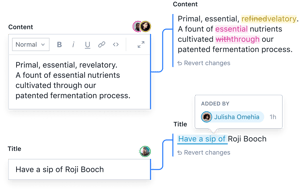
Sanity is a Composable Content Cloud that lets teams create amazing digital experiences at scale. It provides real-time collaboration, live multi-user editing, and track changes. Content creators, designers, and developers can come together while separating content from presentation

| Capabilities |
API
CLI
OSS
|
|---|---|
| Segment |
Small Business
Mid Market
Enterprise
|
| Deployment | Cloud / SaaS / Web-Based |
| Support | 24/7 (Live rep), Chat, Email/Help Desk, FAQs/Forum, Knowledge Base, Phone Support |
| Training | Documentation |
| Languages | English |
Compare Sanity with other popular tools in the same category.
Sanity's flexibility, Interoperabiliy and reliability is what I value most about this CMS
The studio interface is a bit basic/hard for inexperienced editor users. The charges per user are a bit high. Could offer a discount for a large number of users.
The need for powerful, flexible CMS for many editors with the capacity to control core content for our high traffic sites
With sanity, I can create an excellent authoring experience and tailor it to the specific need of our projects. The native integration with Shopify is also great for running headless e-commerce sites with gatsby.js or next.js
There is a small hurdle in getting started with sanity because it's necessary to set up a local dev environment and be somewhat proficient in js. So the content model can only be edited by a developer.
We use Sanity for a content platform that makes extensive use of the great portable text editor. The editor makes it super easy to insert custom elements into posts and has benefits like edit history and collaboration built in.

I like how minimal yet powerful the framework is.
I'd love to have better Typescript support, plus a native solution for i18n
Creating websites in React that rely on a lot of content
Being able to quickly get prototypes up and running as well as giving us an easy to use cms editor out of the box.
I wish there were more articles regarding working with angualr and sanity
Our old cms is confusing and slow to use. It is also not as easy to plug and play with newer technologies.
My favorite thing about Sanity is the flexibility of content first design. The studio allows me to customize for every client. Sanity feels like a developer first CMS, always taking feedback and improving.
I would love a more visual option to creating the content. While most of what we do is written in markdown, being able to see content live would be a huge step forward. Embedding something like this into the Studio similar to Builder.io would be really neat.
With Sanity we can get all of the speed we need to built static and live content. We are more productive than maintaining our own Firebase backend, because we don't have to worry about bugs in our admin interface.
Easy to set up and customise to enable rich experiences for both developers and users. Being able to use Javascript and React means it's a common language between frontend and Sanity which massively helps with the speed of delivery.
It would be nice if there was more typescript support for creating classes based on the schema, however there is a plugin to do this available.
From managing content for sites and blogs to setting up a booking system for some holiday stays, Sanity is flexible enough to allow these to be achieved.
I love the fact that it is super easy to get going with, is easy to use, and to handover to a client afterwards; they don't need to have a tech background to use it
I did find some of the integrations with things like NEXT a bit difficult and a lack of documentation for this.
Sanity easily hosts portfolios and client websites etc. I previously used WordPress, but this makes it so much easier and quicker.

I have worked on so many other cms including traditional and modern headless CMS, and Sanity is the one I use it myself and recommend to all of my clients. It's one of the best CMS out there. The main advantage of Sanity is it gives complete freedom to developers.
There is nothing to hate with Sanity, but it would have been awesome if they fix open github issues faster. Also I would be happy if they released a GUI for creating Schemas while giving the same control for developers.
Modern websites need to be fast. The popularity of React & Next.js makes it easy, but when working on a large project and collaborating with multiple people requires a CMS which usually slows down the entire process. Including developer experience. Sanity makes it better for both developers, editors, and customers.
Easy to use and customizable for longer term blog needs. I've finally found a solution that works.
The editor didn't work with safari initially, but there was a simple fix.
Complex and interconnected blog and newsletter content with a fair bit of sutonstion
Very easy to use and setup. Fits our headless strategy perfectly.
Nothing so far. Will update review if I find anything.
Having a complete CMS that is headless and is affordable and is easy to setup and use.
It's incredibly customizable from top to bottom, well-documented, and easy to integrate into any project
I honestly don't have any criticisms of sanity
GROQ is incredibly powerful!
I love how intuitive sanity is and the ready-at-hand resources they have available on their site. Sanity is user-friendly and flexible, bending and molding to the needs of your business.
Getting in touch with 1:1 customer service is a bit tricky.
Creating a CMS that works for our company in it's rapid-growth state. We needed something that would mold and flex with us.
Incredibly easy to build a headless storefront that's fetching data on Shopify and has a user interface that's easy for everyone on the team to navigate
Everything was actually perfect! I though the domain workspace setup would be challenging, but it wasn't.
Sanity solved the problem of getting a modified version of Shopify data
You can get started quickly by using your goto code editor. It makes it easy to get started, maintain, and it promotes re-use across all your different schemas.
Sanity Studio (the online editor) can sometimes appear slow while typing. Even if I'm on a maxed-out iMac Pro, the cursor sometimes lags, which is a bit annoying but not a deal-breaker for me.
We maintain a pretty big website with a blog, product changelog, support documentation, and other dynamic pages. With Sanity, we can use references to ensure links between pages never break. Editing multiple types of content under the same roof is very helpful to content editors.
While not the prettiest CMS in history, Sanity's simplicity enables it to be one of the most effective in the market. It has everything you could possible need as a writer and will forever find ways to make to make our lives easier
There is no honest 'con' I can give Sanity other than its slightly basic visual interface but this feels like an incredibly picky thing to do but it shows how strong the rest of the platform is
Primarily we're bypassing cluttered and over complicated backend systems and repeatedly finding ways to develop new tech features for sites that will bring even more traffic to them

Documentation and slack community made the experience amazing
I dont really love the studio UI, I feel like there could be some work done there, but if that's the worst you guys are doing a bang up job
Ease of getting up and running has been really nice, customizable content types, but also using sanity has forced me to think about the content a little bit more
- The flexibility in the technology - The friendly customer support - The massive (and friendly) community
- Some lack in preview-options, probably - The flexibility also demands that you know what you're doing. But set up the right way, it's fantastic
- Set up several websites for former clients, now set up our own (https://shiftx.com) with it. Super easy to re-use elements, and will probably look into taking out the content on other platforms in the future, through the API.
I love a lot of the documentation. From building schemas to parsing GROQ queries - a lot of care and time went into them!
There is a moderate learning curve. Heavily nested schemas can be hard to traverse, manage, and understand.
Feeding data into an app. Creating a CMS for both developers and content managers. Creating version-controlled content for releases.
Fresh UX for content creators. Flexible capabilities for developers. Active team behind the Sanity.
Your content is stored on Sanity's servers. There haven't been outages that would have affected us.
We are storing content, both text and images.
I created a couple of headless CMS' for several quick web projects. Sanity was easy to onboard and integrated with all of my existing toolsets. I have only used the free plan, giving substantial headroom for small projects. The single best feature was the ability to customize the CMS to meet the needs of my clients; having a unique CMS allows website owners to quickly and efficiently update their content. Sanity shines in this regard.
Getting Sanity CMS to correctly work with static site hosting services like AWS S3 or Azure Storage can be somewhat problematic. While I haven't 100% researched the bug, having multiple sites on a URL path causes issues when logging in. The easiest fix is just to go 1 level up the URL path and refresh. To Sanity's credit, I haven't reached out to them regarding this bug; it's such a minor issue that we can train our CMS users to overcome.
Sanity allows our teams to create simple, Reactact based websites very quickly. I quickly customized the Sanity CMS codebase to other websites and CMS's.

Sanity is super flexible, and it feels absolutely liberating not to be limited by technical constraints built into a system. It's super easy to build custom components in the provided frontend project, and I also love that Sanity Studio can be hosted anywhere I like. Sanity does support GraphQL but comes with its own super powerful query language, which I love! Overall it's just a joy to work with, and from here on now, it's just "yes, we can do it, all of it!" :)
Sanity could do with some more stable and officially supported community plugins to support more complex editorial requirements such as formatted tables but I guess it's just a matter of time (and more devs)
I am using Sanity as a headless CMS for a NextJS project
Sanity can quickly spin up CMS editor interfaces which makes onboarding non-technical users exceedingly simple while not sacrificing developer experience. Overall the fact that everything is serverless and static makes it much less trivial for maintenance versus traditional SaaS CMS solutions.
Hard to get people to understand the paradigm of structured content first. Often find that traditional CMS users have a hard time grasping structured data outside the context of a conventional webpage paradigm.
Sanity is allowing my team to develop a more structured set of content schemas that I will be able to use across various projects and contexts. This will allow us to create better and more unified web services and reduce one-off maintenance.

There's a lot to love about Sanity, from flexibility to ease of use, or perhaps the satisfaction from customizing and organizing your CMS exactly how you want it. Once you learn the docs and best practices, all the power is in your hands. I love molding my page builder to fit my exact needs for local SEO and marketing sites. I'm so glad I went all-in on Sanity.
I'd say the only downside is a lack of solid Gatsby/Sanity tutorials from start to finish, basic to advanced. The docs are thorough, but sometimes it really helps to just see a finished product and tutorials going through the decisions that were made, any gotchas, and things to keep in mind. I was able to find pieces of content here and there, then figure out the rest on my own, but certainly would have been easier with more tutorials.
With Sanity, I am developing a page builder that fits my exact needs to boost efficiency and speed while building out sites for clients. I've significantly reduced my development time by building various components with Gatsby and using Sanity to swap out the variants.

Sanity, for me, has the perfect mix of being easy to get up and running with, whilst being super powerful and having deep customisation options. Being able to create entirely custom content models is wonderful but, more than that, the ability to create custom input components to modify the editing experience takes it a step further. I've never met a client who can't get to grips with editing content withing Sanity Studio within a few minutes, and that is essential for me
There really isn't a lot for me to say here, to be honest. I would have commented about scaling costs for editors, but Sanity recently took care of that by including unlimited admin users on all plans, which is simply incredible value.
I've used Sanity as a WYSIWYG page builder, a cost and specification engine for a quote builder, and a real-time multi-user voting application for an in-person event. Spin-up time is certainly a huge benefit, as getting a simple schema up and running is really quick, especially once you have done it once or twice before. The flexibility of being able to run everything through the studio, or through a thoroughly documented API, or a combination of the two, is a huge plus, and the real-time streaming API is certainly useful in the right applications. Mostly though, for me the primary benefit is in content modelling: not being tied into a set format and being able to customise the content model easily for each content type helps think about content in new ways, rather than just thinking in terms of pages of a website or brochure.
Sanity Studio provided an elegant way to customize the content editing experience for clients so that it's intuitive, easy to use, and fits the content model based on their unique needs.
The documentation was usually pretty polished and thorough. However, occasionally I'd want to do something that seemed easy, but I couldn't find any examples on how to do it. Luckily, the Slack community is fantastic, and there was always someone willing to jump in and provide help.
I use Gatsby and Sanity as the "goto" technology stack for all new websites I build. I find that it's easy to create a powerful content editing solution for my clients that they can use with minimal training. I also find the developer experience to be superb and it's incredibly empowering to customize every aspect of the CMS in code rather than pointing and clicking in a traditional GUI.
I like how easy it is to make a custom backend.
I hate how difficult it is to differ from the intended "sanity-framework". The Sanity setup seems intuitive enough, yet not that flexible. I see myself as an experienced react developer. But changing the overall look, structure, etc. of sanity, is sometimes a struggle.
Sanity can solve most of the problems I had in the past. Prior to sanity I was working with Wordpress, which I thought was a total nightmare.
I really love the simple user interface and customization options, a perfect headless CMS option for React applications.
I haven't found anything I dislike at this point. The simplicity is what makes it great!
A more secure and user-friendly alternative to Wordpress
Code-based schema, able to run studio locally, real-time collaboration, generous free tier, awesome GROQ API (better than GraphQL)
Small bugs in the UI (these tend to get fixed pretty fast though). The media library isn't quite as fully featured as in some competing solutions.
Storing and fetching structured content in a completely customizable way. No need to worry about hosting.

I tested most of the headless CMS out there, before I finally settled with Sanity. Lots of customization. A modern and visually apealing UI. Would totally recommend! I forgot to mention the very generous free tier.
The lack of a visual model builder is kinda of a bummer sometimes.
I build awesome sites for my clients with JAMstack, modelling interface to exactly what we want and clients ability to manage content themeselves is a priority.
Well integrated with third parties like Netlify and Vercel
Slack support does not run on my Win7 machine any nore!
Hands-on experience in headless CMS. Studio allows loading a website without having to have programming experience