

Unclaimed: Are you working at Sanity?





Sanity Reviews: 4.7/5 — Highly Rated
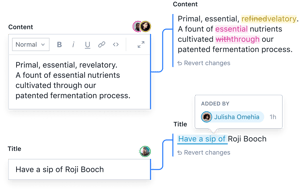
Sanity is a Composable Content Cloud that lets teams create amazing digital experiences at scale. It provides real-time collaboration, live multi-user editing, and track changes. Content creators, designers, and developers can come together while separating content from presentation

| Capabilities |
API
CLI
OSS
|
|---|---|
| Segment |
Small Business
Mid Market
Enterprise
|
| Deployment | Cloud / SaaS / Web-Based |
| Support | 24/7 (Live rep), Chat, Email/Help Desk, FAQs/Forum, Knowledge Base, Phone Support |
| Training | Documentation |
| Languages | English |
Compare Sanity with other popular tools in the same category.
Models and fields can be prototyped in minutes. The content entry system can be customized to an incredible degree.
The modal-upon-modal system is a bit clunky (and could really use "Save" buttons).
We were using Wordpress but got tired of using a CMS that's not meant to be headless. Sanity gives us the flexibility we need and is also very quick to set up.

The flexibility when developing the cms and storing the content from Sanity. It's the best of both worlds. As a developer, I have lots of freedom when structuring the code while not having to think about databases (not my fav topics)
Publishing can be slow sometimes. And when multiple people are working on it, it can happen that because of a published the other developer/branch can't post their work or have to reset it on their side which could break the content again. 5GB of Assets Storing could be more in the free plan
It solves all the problems when choosing a CMS. While the current approach of clicking together components is still a bit of work it's still nice to be able to have a "component like" system. Asset storing till a certain degree.
The fact that the Sanity team has embraced open-source technologies and built their admin in React is excellent. Their YouTube channel has also been a massive help to both our technical and non-technical teams. When test-driving several headless CMS solutions, we noticed that providing a generous free tier to get started with has encouraged the community to create many useful extensions and plugins that other enterprise CMS'es we looked at were lacking.
Some of the documentation around the proprietary concepts, like the "parts" system in V2 of Sanity was sparse; also, we found it harder to write custom controls that plugged into the admin interface in Sanity than other products we evaluated. Luckily these appear to have been addressed with V3 of the platform
Being able to essentially "build" our CMS from scratch to shape the experience for marketing staff has been great for helping them transition away from a legacy CMS, saving time and increasing adoption
Combined with nextjs and Vercel the time from idea to deployed studio is super fast. Groq is also very neat.
The documentation. Or lack there of. Studio design system choices (f.ex using opacity instead of hex values when coloring buttons). I mean.
I really enjoy using groq. The way it lets me do the manipulation of the response data I want before returning anything and the fact that I don't have to write undefined catches for the response json♥️
I love the extensibility of Sanity; we have used sanity on several client projects. There's never been a case where we've not been able to build and deliver on the client's requirements
Honestly, there's not much I would say i "dislike" about sanity. One recommendation would be to clarify some things in the documentation. For example, I had to hack away and find existing standards if i wanted to create custom document actions
Giving us the flexibility to integrate with several systems. Also, the speed at which we can develop has allowed us to easily show clients what is possible with Sanity within a short period.
The developer experience and ability to create easy to use CMS content
The Desk structure builder isn't always the most straight foward thing to work with and can be a little confusing at first.
Building out client website CMSes quickly and efficeiently
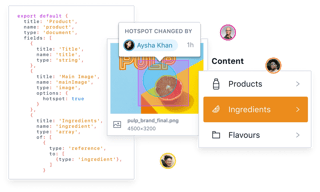
The best part about sanity is how quickly you can have a project up and running. All you need to do is define a javascript object and you're good to go.
The only issue we've had with it is there is no baked-in solution for ordering content and the ones available fall short in terms of UX.
Sanity allows our team to move fast and focus on more important things than the technicalities of content entry
Very good user interface. Easy to use for non-technical people.
Everything needs to be done in code. This makes it very dependent on engineers
Quickly prototyping an entire cms and site
Customizability and dev user experience!
GROQ- I think it's a bit confusing. I'm also a bit confused as to why there isn't a local db- and a default place to view all uploaded assets. I feel like we probably have accidentally submitted stuff while developing that nobody knows anything about, or how to find it.
Customizability!
Very happy with how easy it is to set up. The studio is also very customizable, so creating a good editor experience is easy. The flexibility that comes with headless CMS is also amazing, and Sanity has quickly becomme the CMS i recommend customers, if they dont want the monolithtic approach.
I like groq, but having more functions would be nice. Having SSO oppertunities in Team subscribtion would be really nice, as login options are limited for now. The documentation could probably be better sectioned in what is experimental features. Like shared content now moving out of the enterprise plan.
Sanity is an easy sell when it comes to headless CMS, and creates an excellent developer experience and provides an oppertunity to create a good experience for editors as well.
We can manage text, images, and other media with APIs.
Sometimes data change does not get reflected.
Implemented sanity on an eCommerce site so that anyone who had access can easily edit the page's static contents and messages
It doesn't take long until you can give editors control over any content or feature in your digital solution
There's a lot of creating custom code that you must maintain for features that should be built into a CMS
Sanity is lightweight and gives you control over exactly the content you need to control at that time in a few minutes. No need to do massive migration projects
I love how you can fully customize it to your needs.
The learning curve for development is HUGE. If you're not a hardcore JS developer (I'm not), it's nearly impossible to figure out. Also, the UI is pretty lacking compared to other CMSs I've used in the past.
Using Sanity, we were able to take the front-end of our website off the Shopify platform, and build a much higher-performing website using Next.js. Sanity gives us the customization we so desperately wanted with Shopify.
I like the ease of use in posting to the various websites
Sometimes slow to respond when I have a lot of pages
Solving a lot of different business units being able to send multiple sites out
Very free structure = Swiss army knife for usages, good documentation
Lack of response in Github issues, occasional downtime
A great way for a dev team to empower content teams to provide dynamic content in a structured way
Sanity is very intuitive which makes day-to-day work flow much more efficiently. I like that multiple users can be in a view at a given time, saving my team time. I also like that users have visibility into where in the platform others are present and editing.
One thing that could use improvement is the error codes. It is helpful that Sanity has the ability to flag an error that may impact a downstream item, but it is not always clear how the error can be resolved.
Sanity is allowing us to house many types of content in one platform, allowing many teams to collaborate in one place rather than separately. We have flexibility over where and what we are able to build within the platform.
Ability to modify and add custom validation on top of our Sanity CMS
One of our biggest problems is the lack of validation capabilities and checks that can be run when content is modified. We manage our entire menu via Sanity and when the content team makes mistakes in production it can result in costly outages.
Sanity solves for us the ability for our brands to quickly and reliably modify and maintain our menus for our brands.
Ease of navigation, web based, can open up in multiple browsers which helps in getting things done faster.
Does not have a feature to preview content or schedule the go live of content.
Updating content and sanity does it with ease.
When it's working smoothly, I love that Sanity is always saving my progress as I work.
It seems to have recently improved but I do have issues with random bugs or glitches at times that makes it difficult to work in the platform uninterrupted. It regularly refreshes on its own when I'm inputting my content in a document to publish.
There are fewer interruptions now. This past Spring and Summer, I was often having issues with my content just disappearing or as I'd write, the system would mirror my text in the next line, so as I would type or delete the "copied" version, a few lines below would mirror my actions. I'm thrilled that hasn't happened in a while, and the document platform seems much smoother to use and more intuitive than before. Additionally, the publish time has improved - there was a frustrating lag before that's definitely gotten better, though there's still a bit of a lag.
I can easily build a unique content schema, customize the interface for my content editors, and access the content just about anywhere. I found their query language — GROQ — to be even more flexible and powerful than GraphQL.
While the core functionality is pretty achievable without any knowledge of React, I found that trying to extend the functionality pretty quickly required more React skills.
I am able to provide my content editors with a custom set of fields, content types, and instructions to give them exactly what they need to add and edit content. It makes their jobs so clear and saves me from having to invest time in internal support. And then I am able to deliver that content anywhere I need: to a website, to a map, to an internal resource.
I like the modularity and flexibility of the system. It allows you to fit it exactly to our needs.
You can easily create a mess if you do not have a clear direction on how you want to use the system
Making content controlled by content creators and giving flexibility to inject content in more places
I'm a big fan of developing the schema alongside the rest of my code. Being able to compose my schema alongside my ReactJS in the code editor is a massive advantage. Referencing other schemas and developing complex content models with ease is another bonus.
Documentation is sometimes behind the pace of product releases. In my experience Typescript is not really showcased or documented. Dependency management can be a little too opinionated? Where is Sanity heading with the support of pnpm?
Removing the headache of managing server/database/devops cycle; allowing me to focus on my core competencies - React UI development. Having the hassle of image optimisation and transforms solved in the same product as my content source is really valuable. Building user-friendly interfaces for clients to manage their websites (posting, page creation, site settings and SSG triggers) while offering highly configurable developer options (portable text, blocks, arrays of schemas, custom React components etc).

Sanity is super is super easy to create a custom schema for, I love the ability to customize and add fields, features, and functionality that matches my use cases. I'm easily able to map my schema to components and UX while making content easy to update and scale.
By the nature of the tool, it does take longer to setup at the initial config. As such, it has a higher learning curve and isn't quite as plug and play as other CMS's, though id argue that this is also a benefit coming from a developer lens.
Robust customization of content for complex use cases; my specific use cases requires tying content objects and documents to musical content and educational material. Sanity allows me to create exceedingly custom types to express complex content easily to the user.
I love the fact that we can create our own workflows and dashboard experience for our users.
limited support despite the high monthly spend
We needed a headless CMS that we could code and customise, so we could integrate with other software and services. Sanity is a great solution for this.
Sanity gives our organization the flexibility to define and customize categories to our needs for our apps.
Sometimes I have to reload the screen on Sanity, but that's rare and a minor issue.
Sanity gives us a platform to organize our content for two apps we have created. Given our ability to define the hierarchy ourselves, content entry is easy.
All the user interface is good user friendly and developer-friendly
Few limitations to extending existing features like schedule publishing, and the auto-backup dataset at a specific state. There are a few more features I can suggest.
We are using sanity to update content on our multiple websites which can be done by content editors.
The thing I like most about Sanity is how user friendly it is. The storefront is easy to navigate and allows you to be efficient with your work.
The downside would be some of the bugs that occur when using the platform. Sometimes the platform errors out and you have to start your session over.
Sanity is allowing us to set up content more quickly and efficiently.
We are currently using Sanity for a small greenfield project, and it's been very easy to develop and integrate into our NextJS frontend. Adding content types, fields and their relationships was trivial, and the documentation is usually of a high standard.
Editors using the project have complained the admin UI is a little laggy when typing at speed, but not so much as to make the CMS unusable.
We wanted a lightweight, "serverless" CMS and Sanity so far has delivered on those requirements. The developer experience is certainly quicker than more traditional "form" based administration.
I like most the instant preview. It's a huge help for my team. Marketing people can try out things without bothering the devs. Another thing that makes a difference for me is the CLI to manage datasets.
In my team we had a hard time deploying our website to our own domain and getting that said preview to work properly. Another thing that could be improved is documentation. I spent A LOT of time going through it and it happened several times that I had to cherry-pick parts of articles to get where I wanted.
Team collaboration. Before, marketing had to suggest changes, devs had to implement it and then it would go back and forth. Now it's a breeze in the park. Our website is now complety up to date and devs are happier.
I love how flexible the software is, allowing you to make a truly custom, light CMS environment without any of the bulk that comes with the all-in-one solutions.
The schemas can only be edited via the code, and not in the UI, which is great for reusability, but makes it harder to get up and running quickly when starting from scratch.
Sanity easily allows me to create a CMS I can give my clients access to and be confident they have a simple, user-friendly, experience that is tailored to their needs; where they can easily make changes to the website without any risk of breaking anything.