

Unclaimed: Are you working at Sanity?






Sanity Reviews: 4.7/5 — Highly Rated
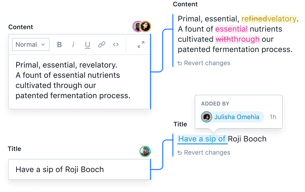
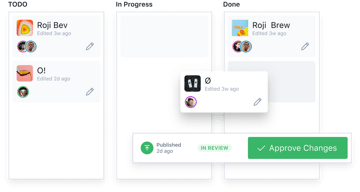
Sanity is a Composable Content Cloud that lets teams create amazing digital experiences at scale. It provides real-time collaboration, live multi-user editing, and track changes. Content creators, designers, and developers can come together while separating content from presentation


| Capabilities |
API
CLI
OSS
|
|---|---|
| Segment |
Small Business
Mid Market
Enterprise
|
| Deployment | Cloud / SaaS / Web-Based |
| Support | 24/7 (Live rep), Chat, Email/Help Desk, FAQs/Forum, Knowledge Base, Phone Support |
| Training | Documentation |
| Languages | English |
Compare Sanity with other popular tools in the same category.
Sanity is the most flexible CMS I've ever used. It's a dream for content modeling and tailoring the interface to users' needs. Sanity's pricing model is fair, and the team is responsive in Slack.
The documentation leaves one hunting around for answers and there are are not many examples of best practices (except some tailored to one specific framework, which is not helpful to those who don't use it).
Sanity gives us the ability to design a an interface that is easy to use, and give our team a content model that is flexible and modular.
GROQ, APIs, UI, structure, documentation, headless.
We had to spend a lot of time upgrading/migrating our advanced custom implementation on Sanity v2 into Sanity v3.
Our content storing and modeling separated from UI. Great experience for our content team to create and publish content without any dev involvement.
Flexible content model and easy configuration. Custom react components makes for endless possibilities and customization.
Limited data filtering and no bulk editing capability.
We use Sanity for all content management of our website and e-commerce store.
You can fully customize sanity according to your needs.
May be there are some premade options that would be great.
I have a portfolio site that includes blogs. Sanity is helping me in managing my content, categories, and authors easily according to my needs.
The ease of managing catalogs and connecting them to the application
I have had some errors that sometimes blocked me from updating a catalog in the administration platform.
The ease of managing catalogs and products, and is implemented quickly to the application.

I love developing custom components and fields for applications
There's nothing I don't like about Sanity's content studio.
Sanity is solving the headless CMS for all of my NextJS applications
I've been using Sanity CMS for several months now, and I have to say that I'm impressed with the platform. One of the things that stands out to me is how flexible and customizable it is. The fact that it's a headless CMS allows me to use it for various projects, from building static websites with Gatsby to creating mobile apps with React Native. One of the things that I appreciate about Sanity is its content modeling system. Creating and modifying content types and fields is easy, and the user interface is intuitive and user-friendly. The real-time collaboration feature has also been a game-changer for my team. It allows multiple team members to work on the same document simultaneously, which has streamlined our workflow and made managing content across different projects easier. I also appreciate the wide range of integrations that are available with Sanity. It integrates seamlessly with popular front-end frameworks like React, Gatsby, and Next.js, which has made it easy to get up and running quickly. Additionally, the API-first approach of Sanity makes it easy to integrate with other tools and services, such as search engines and analytics tools. One thing to note is that while Sanity is a powerful CMS, it has a learning curve. However, the documentation and support resources are excellent, and the community is active and helpful. Overall, I highly recommend Sanity CMS to anyone looking for a flexible, scalable, and customizable content management system. Its real-time collaboration features, content modeling system, and integrations make it an excellent choice for teams working on variety of projects.
I don't see any downsides to it. It's working well so far for our team.
The way we can set up the meta data regarding the field. Its awesome
Sanity has a really nice developer experience allowing us to integrate into our tech stack with ease and enabling us to easily create a fully customised CMS that enables our clients to deliver their content how they want it and without friction
I would like to see a larger ecosystem of plugins, however this isn't a huge negative as the quality of plugins available so far are excellent and I can only see this getting better with the advent of the new Plugin API in v3.
One of the major problems Sanity solves with such ease is the ability to host the studio ui on their platform without having to worry about the maintenance and overhead of this part ourselves. This benefits us in a number of ways by allowing developers to spend more time on writing features using their tech stack of choice.
I can create my schemas using the GROQ query language to access my content and design components in React to consume them with EASE, that the entire backend is react-based and modifiable to suit my needs. The articles and resources are available online in case I encounter situations requiring help.
I don't particularly appreciate how to do tagging is convoluted, in which you have to install and configure dependencies and that it should be something that is native to the software. Also, the dashboard can be more robust. I don't particularly appreciate having to fiddle often using console.log functions to get url images to work.
Keeping my data housed in a single source of truth within the data lake, the GROQ query language makes accessing the data more accessible than SQL statements. It makes my content available to multiple applications with ease.
Sanity is an excellent compromise between editor and developer experience. It can handle both modeling and presenting data in any way you like. That's a massive advantage over other headless products like Contentful and Prismic, which require you to define schemas via the web app. They are definitely pushing the boundary of what headless CMS's are capable of.
I think the v3 launch was a little premature, and integrating the studio into a Gatsby project isn't there yet (at least, I have seen). I want to see more documentation and sample projects related to v3.
The ability to define content architecture in code saves me a considerable amount of time. A clean and refined editorial experience also reduces the training and support that we have to do.

The flexibility in creating your own content structure is uniqe. Both the focus on developer experience with modern technology and the ease of use for content creators are at its best. Its where easy to create complex data structures. Handling of images and media is also where good.
Not to mutch to dislike. But there is always room for improvement. Documentation and examples is good, but there could be even more, since there is so many possibilities in configuration and so on. More official plugins is also a thing to level up the product.
We use Sanity as a headless content platform for our customers. It solves structures and easy of use for our customers without beeing opinionated on how you shoud solve a modern website.

I love the GROQ query language. It lets me structure the response the way I need. I needed to group posts by category on the front end. All I needed was to structure the query correctly and then simply map over the data. Very powerful. And the new CROQ powered webhooks are fantastic!
There is no option for self hosting the content lake. Not a dealbreaker for me, but it might be for someone else. Luckely you can self host the Sanity Studio if you desire.
I mostly build JAM stack websites. The speed and flexibility of the Sanity platform is excellent. The easy integration with modern tools and platforms helps me deliver better experiences for clients.
Love the flexible editorial interface, insane speed, reasonable pricing that scales well, content as structured data, responsive videos with MUX and more: https://www.represent.no/sanity
Not sure I really dislike anything about Sanity, but I guess improvements could be made in terms of "plug-n-play" upgrades/plugins to the Sanity Studio. In the case of our agency we build components and add-ons that we go on to include in all our projects. That does give us a competitive toolbox, having our own "upgrades" to Sanity :)
We use Sanity to develop high-end custom websites and integrations, with the added and obvious value of having the content as structured data that we can reuse across platforms. Here's our latest article answering the 20 most commonly asked questions about Sanity: https://www.represent.no/articles/frequently-asked-questions-about-sanity-cms
Super simple configuration. Very modular/customizable to your needs. Great community & plugins Amazing support Ability to run studio locally and tweak code before pushing Manage your schema inside code - allowing others to review your changes Tag your GraphQL API for different tasks/versions Much much more!
My experience with Sanity was amazing - if checks all the boxes. Most of the time, I can figure out how to do what I want. It would be great if you would be given more datasets and tools to migrate data between datasets (with tweaks on the way, like change mapping, prefix or id).
Manage Content by multiple people, based on role access SSO Access for company History/Revision/Scheduling Content A lot of custom objects withing the schema allowing for different custom components. GraphQL and GROQ integrations with gatsby

Sanity is very developer-friendly without sacrificing what general CMS users need. The ability to create completely custom schemas, workflows and much more is amazing. You are never made to work in a very specific way, so it means that it's extremely flexible to meet your custom needs.
The only thing missing is a better built-in media / document manager. Sanity is so flexible you can write your own plugins or custom build things, but I think a default media manager is a must and would set the bar higher than they already have.
The problem we are solving is to create a much easier to use website / landing page builder. Our content managers don't want to have to reach for the manual every time they use it. Most other CMS' either require that or they just don't meet the needs you have for something a bit out of the box. Sanity meets those needs.
I am a minimalist, so I appreciate that my Sanity setup can be very lightweight, but if I need something more robust, it scales up nicely. I've been using Sanity for simple applications without databases or anything complex, but I'm now looking to scale up one of my larger businesses with search, language options, etc.
I'm very visual, so I would appreciate it if the docs showed more of what the output looks like along with the code in the docs. For instance, Sort Orders shows how to set up the preview to sort by a value (like the rating of a movie) but doesn't show what the output should look like.
Netlify is my preferred host service, so I appreciate that I can use Sanity as a CMS and still host my studio in a subdomain through a single-page web application.
Pretty much everything I think of has already been thought of by them. It's super useful that everything is in Javascript and can be committed to git. Way better than WordPress, that's for sure.
The learning curve is a little steep but worth it. Configuring the desk views is complicated. There's probably a better way to do it other than with chained functions.
Headless websites and applications. I was going to build out a relational SQL database and do everything manually for this next big project, but Sanity handles all of that for us.

Building schemas inside of Sanity Studio is straight forward and creating re-usable components that are shared between documents is an easy way to reduce documentation duplication and provide consistency as the documentation base grows. I have found that Sanity is reasonably flexible to manage and extend as I have become more familiar with the concept of documents as data. Being able to use Portable Text makes it very easy to display on a front end, and provides good value to those who are creating documents.
If you need to restructure your content you may lose data. A simple example: Initial design of a document for an 'organization' included a single address component. Over time we realized that some organizations have more than one address so we decided to implement the address field as an array. This meant that the data we had already entered, while still contained with the structure as an address, needed to be re-entered into the new address 'array' field type. This could only be performed manually, so we took the slow approach of auditing all of our documents and slowly convert from the old address field to the new way which addresses a one to many relationship. The point is, that understanding your design up front and doing that well, will reduce the issues when adding, or combining data at a later time.
We are creating a Caregiver Navigation platform for Caregivers of People Living with Dementia. A one stop shop for all resources available for a Caregiver with loved one(s) at various stages of the disease. We use Sanity to store documents describing various service organizations (hospitals, doctors, housing, research, government entities) and resources (blogs, articles, research, news, video, etc) and present this to the user on the front end. We eventually want to automate the capture of this information via crawlers, and adapt a machine learning recommendation system to the content. As well as capture usage information, recommendation recommendation, and be able to present the right information at the right time to the Caregiver.
The new v3 studio is very customizable and easy to use. Highly beneficial that the studio is decoupled from the actual data storage. The ability to create custom components for fields or wrap default fields with additional functionality enables streamlined editing experiences.
GROQ, while incredible and powerful, can be a big learning curve. We're often writing huge queries with relative uncertainty about performance — hard to know if the queries will scale after a dataset grows in size.
Compared to WordPress, we find Sanity easier to configure (and more approachable by more engineers in our organization), easier to host and deploy, and less rigid (schemaless).
How fast and smooth it is to setup a scalable backend using the framework; the whole documentation, specially the groq cheat sheet is amazingly helpful; and that Sanity mainteners really listen to what the community is asking for.
It is not always safe to upgrade sanity to the latest version. It has occurred to me more than once that the latest version broke something unrelated in the code base.
Sanity takes care of most of the backend work needed for our application. It makes it very simple for our team to scale and introduce new features; allows us to set up a completely new website for a different project in just a few minutes; and to manage access through roles and permissions for editors all across the world.
It's endlessly customizable. The schema required for each item makes it easy to Create a scaffold for structured content, that I as a developer can grab for use any time i need it.
With great customization comes great boiler plate and set up. Everything is dependent on an API call. Which is a blessing and a curse. For Speed, and for mobile use.
I love what they're doing with structured content use case examples
Creating and deploying a Sanity project is fast and easy. Documentation is great. Frequent updates. The Sanity team is very helpful. Creating new schemas, validation, conditional fields and customization is all a breeze.
Enterprise pricing is making it a hard pill to swallow for most clients. Working with different languages can also be a bit tricky.
Lightweight CMS that allows us as developers to work with frontend frameworks like Next.js. Fast and easy proof of concept.
Sanity is user and developer-friendly tool. Easy to integrate, manage and maintain. Focus on providing pure content to display any environment, such as web, mobile or if you want to display your content on the TV
Haven't seen any functionality that I couldn't like it.
Sanity is content as a service system. It solved serving content in a different environment to display. Provides independent content from the displayed area, only focus on creating pure content
The editor and developer experience is good. We can easily create and reuse content and modules.
Documentation is lacking. Getting started is easy, but many details for more advanced use has to be inferred from source code and trail and error
We reduce developer time building specifically tailored sites. Editors save time and can reuse content easily.
UPDATE Nov 2022 - I thought Sanity already had the best developer experience in CMSs and content management in general. Then they released version 3 of the studio, which blew my mind. Everything is even more smoother now, and all of the bit tedious tasks before, such as custom input components, are very straightforward to create. Compared to many other CMSs I have used, I liked defining the schema as code. I enjoy the security of having my schema in version control, and I don't need to fear any of my editors (or myself) accidentally making breaking changes. The developer experience is among the best in all tech!
With Sanity, you have almost unlimited possibilities to model your content. I have seen this cause some over-engineering in the content modeling.
Structured content distributed to different platforms/frameworks etc. I am consuming content from Sanity, for example, in web and mobile applications, GraphQL servers, and websites. Portable Text specification especially has stolen my heart. No more HTML-to-whatever conversions make it an easy and straightforward process to consume the content anywhere!
Best developer environment for headless CMS.
Bit of a learning curve but nothing major!
Best flexibility in custom client CMS for any data models.

Developer Friendly, Fast, and Cost Friendly
Realtime Draft Editing Sometimes have connection Issue
Developer Friendly, Fast, and Cost Friendly CMS compared to others i have used before.
Sanity is very versatile. Very customizable. It allows us developers and web-editors to have a lot of freedom in our workflow. Adding new schemas or editing old ones is really simple. The community on sanity slack is also SUPER amazing. I often turn to the community to get answers to my questions without having to sit there for hours myself trying to figure things out.
I am not a big fan of image handling in sanity. There is no way to sort or search for already uploaded images (especially when choosing an image). There is a plugin that sort of deals with it, but I would love to see it as a built-in feature in sanity. I would also love to see more examples. I found very few examples of, for example, translations. I would love to see not only document and field level translations - but an example of their mix.
E-commerse website for tour booking. We are still in our development stage and mostly working on the key features. Sanity will soon enough give the marketing and web-editor teams the freedom to publish new information without the help of developers. The headache of dealing with an annoying "base set" UI that most other CMS have will also be solved quickly. Sanity also works flawlessly with next.js, which is what we are also using in our solution.
Easy to start and extend with reasonably priced plans. The developer experience is excellent, backed up by good APIs & documentation. I also like the fact that content schemas can be defined as code. No need to click through UI.
Internationalization features should be baked in without additional plugins. Also, I would like to have more information on best practices related to content modeling.
Headless CMS gives freedom for content creation & development as they are not tied together vs. traditional CMSs. Sanity provides centralized content management for different touchpoints. Single sourcing of content - less repetitive/duplicate content.

As a developer the thing I love most about Sanity is the flexibility, both in presenting content to editors and retrieving it for use on the web!
There isn't much to dislike, if I had to pick something I'd say it would be good if there were more official plugins for compex use cases
Sanity allows us to cater the content management experience for very specific use cases and still present it to clients in a pleasing and easy to use interface in the studio.