

Unclaimed: Are you working at Drip?






Drip Reviews: 4.4/5 — Solid Choice



| Capabilities |
API
|
|---|---|
| Segment |
Small Business
Mid Market
Enterprise
|
| Deployment | Cloud / SaaS / Web-Based |
| Support | 24/7 (Live rep), Chat, Email/Help Desk, FAQs/Forum, Knowledge Base, Phone Support |
| Training | Documentation |
| Languages | English |
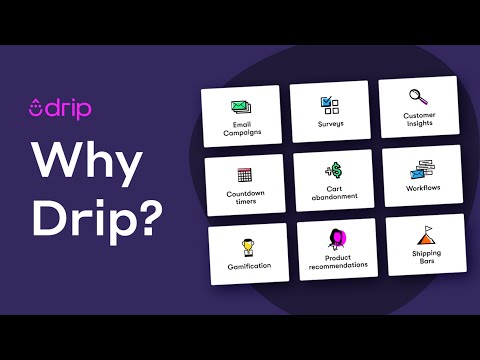

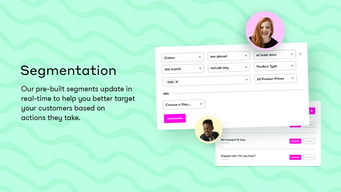
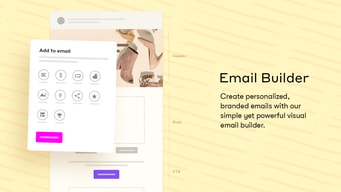
Drip has one plan. Not a cheap tier and an expensive tier — one plan, with every feature unlocked, priced solely by how many people are on your list. At 2,500 contacts that is $39 a month including unlimited email sends, 50 workflows, dynamic segments, onsite campaigns, and the API. In a category built on gating automation behind upgrades, that is a genuinely different structure and the main reason to consider it.
- What it is: An ecommerce-focused marketing automation platform combining email, onsite campaigns, and behavioural workflows.
- Best for: Ecommerce stores that want serious automation without decoding a feature matrix.
- Pricing: One plan scaling with list size. $39/month at 2,500 contacts, published to 100,000, custom above. Verified July 2026.
- The honest catch: There is no free tier at all — only a 14-day trial — and no cheap entry point for a small list.
What Is Drip?
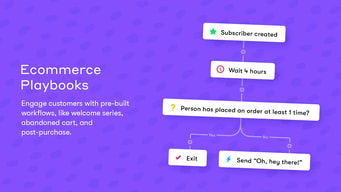
Drip positions itself as ecommerce marketing automation rather than email marketing, and the distinction shows in what it prioritises: behavioural triggers based on what someone browsed or bought, onsite campaigns like popups and forms, revenue attribution per workflow, and a visual builder designed around purchase behaviour rather than newsletter sends.
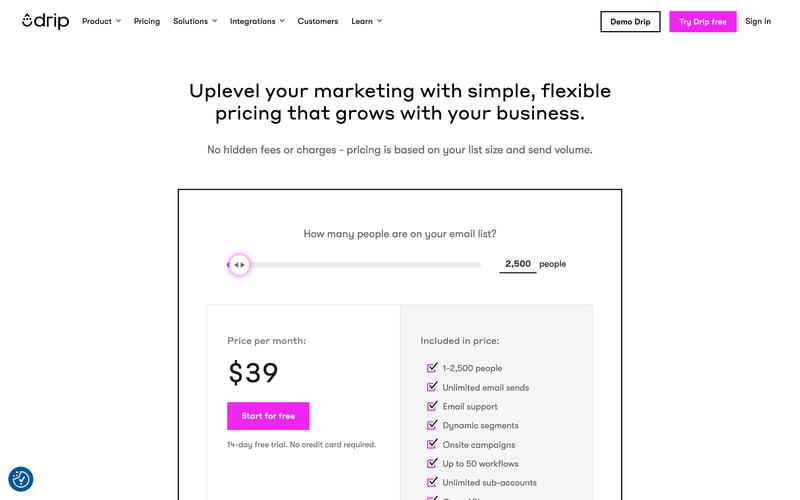
The pricing model follows from that focus. Rather than separating a basic tier from an automation tier, Drip gives everyone everything and charges by list size. Its own page states it plainly: no hidden fees, pricing based on list size and send volume. For a store owner who has been caught by a competitor’s “automation requires the next plan up” wall, that is an immediately legible proposition.
The trade-off is that there is no cheap way in. Where MailerLite and Kit offer free tiers and Brevo starts very low, Drip’s entry point is $39 with a 14-day trial and nothing beneath it.
How Drip Works
- One plan, priced by list size. No tiers, no feature gates, no upgrade path to decode.
- Unlimited email sends at any list size, so frequency costs nothing.
- Up to 50 workflows included, which is generous for a mid-market store.
- Onsite campaigns. Popups, forms, and on-site behaviour capture rather than email alone.
- Behavioural triggers and revenue tracking. Automations driven by browse and purchase data, with revenue attributed per workflow.
- Unlimited sub-accounts and an open API, included at every list size.
Drip Pricing
Captured from Drip’s pricing page in July 2026. The page uses a slider rather than published tiers.
| List size | Price | Included |
|---|---|---|
| Up to 2,500 | $39/month | Unlimited sends, dynamic segments, onsite campaigns, 50 workflows, sub-accounts, API |
| Above 2,500 | Scales with the slider | Same feature set at every size |
| Above 100,000 | Custom | Quoted |
What matters about this structure:
- You are choosing a list size, not a plan. Every feature is available at $39, which removes the most common failure in this category — discovering that the automation you bought the tool for sits two tiers up. Compare that to Constant Contact, where segmentation and automation are tier-gated, or Kit, whose free plan permits one automation.
- Unlimited sends means frequency is free. As with Zoho Campaigns, only list size costs money, so a store emailing several times a week is not penalised. That is the right shape for ecommerce, where triggered flows fire constantly.
- There is no free tier. A 14-day trial with up to 2,500 contacts, then $39. For a store with 300 subscribers testing the waters, that is a real barrier, and several competitors will let you start at nothing.
- $39 is not cheap for a small list. At 2,500 contacts you are paying roughly what Constant Contact charges at 5,000. The value case is the feature set, not the rate — if you will not use workflows, onsite campaigns, and revenue tracking, you are overpaying.
- 50 workflows is the one real ceiling. Generous for most stores, but worth checking if you run highly segmented flows.
- Pricing above 100,000 contacts is quoted. Published rates stop there.
Who Should Use Drip
- Ecommerce stores running triggered flows. The clearest case — abandoned cart, browse abandonment, post-purchase, win-back — where behavioural data drives the automation.
- Teams burned by feature gating. If you have paid for an email tool and then discovered automation costs more, Drip’s structure is the direct answer.
- Stores that email frequently. Unlimited sends make cadence free.
- Agencies managing multiple stores. Unlimited sub-accounts are included at every level.
It fits poorly for newsletters and content businesses, where Kit’s creator tooling and free tier suit better; for very small lists, where $39 with no free option is hard to justify; and for businesses needing only broadcast email, where MailerLite or Brevo cost a fraction.
Honest Pros and Cons
Strengths
- No feature gating whatsoever. Everything included at every list size — the standout characteristic.
- Unlimited email sends. Frequency costs nothing.
- Genuinely good ecommerce automation. Behavioural triggers and per-workflow revenue attribution.
- Onsite campaigns included. Popups and forms rather than email alone.
- Unlimited sub-accounts. Useful for agencies and multi-store operators.
- Simple to evaluate. One number to compare, which is rare here.
Limitations
- No free tier. A 14-day trial and then $39, where competitors offer permanent free plans.
- Expensive for small lists. $39 at 2,500 contacts is above the category norm on rate alone.
- 50-workflow ceiling. Generous, but a real limit for heavily segmented operations.
- Ecommerce-shaped. Less suited to publishers, creators, and B2B nurture.
- Pricing above 100,000 is quoted. No published figure at the top end.
- Trial limits sends, so a full evaluation of deliverability at volume is not possible in 14 days.
Drip Alternatives and How It Compares
- Klaviyo is the ecommerce market leader with deeper store integration and reporting, at higher cost as lists grow.
- Omnisend targets the same ecommerce automation market and offers a free tier.
- ActiveCampaign goes further on B2B and complex behavioural automation, with tier-gated features.
- Kit is the creator-focused alternative, free to 10,000 subscribers with commerce built in.
- MailerLite and Brevo are considerably cheaper for straightforward email.
- Zoho Campaigns shares the unlimited-send model at a much lower price, with weaker ecommerce automation.
For a broader survey, browse our marketing automation directory.
The Verdict
Drip’s pricing is the most honest structure in this category, and that is worth more than it sounds. Feature gating is the standard way email platforms extract upgrades — automation on the next tier, segmentation on the one above, a send cap to push you along — and it makes genuine comparison exhausting. Drip removes all of it. There is one plan, everything is in it, and the only variable is how many people you are emailing. If you have ever bought an email tool and then found the automation you needed behind a paywall, that structure alone justifies a look.
The cost of that simplicity is that there is no shallow end. At $39 for 2,500 contacts with no free tier and a 14-day trial, Drip is more expensive per subscriber than most of the category at small list sizes — you are paying for a full automation platform whether or not you use it. That makes the decision unusually clear-cut: if you will genuinely use behavioural workflows, onsite campaigns, and revenue attribution, the rate is fair and the absence of gating is a real advantage. If you mainly send broadcasts, MailerLite, Brevo, or Zoho Campaigns will do that for a fraction and you should not be here.
The fit question is ecommerce. Drip’s automation is built around browse and purchase behaviour, and its revenue tracking answers the question stores care about — which flow made money. For a Shopify or WooCommerce store running abandoned cart and post-purchase sequences, that focus is exactly right, and Klaviyo is the main comparison worth running. For a newsletter, a creator business, or B2B nurture, the same money buys a better-fitting tool elsewhere.
FAQ
How much does Drip cost?
Drip has a single plan priced by list size, starting at $39 per month for up to 2,500 contacts and scaling upward via a slider, with published rates to 100,000 subscribers and custom pricing above that. Every feature is included at every list size — unlimited email sends, dynamic segments, onsite campaigns, up to 50 workflows, unlimited sub-accounts, and API access. A 14-day free trial is available with no credit card required.
Does Drip have a free plan?
No. Drip offers a 14-day free trial covering up to 2,500 contacts with limited sends, but there is no free-forever tier. This is a meaningful difference from Kit, which is free to 10,000 subscribers, and from MailerLite and Omnisend, which both offer permanent free plans. For a very small list, Drip’s $39 entry point is a genuine barrier.
Does Drip gate features behind higher tiers?
No, and this is its defining characteristic. There is one plan, and automation, segmentation, onsite campaigns, workflows, sub-accounts, and API access are all included regardless of list size. Price changes only with the number of contacts. That removes the most common frustration in email marketing software, where the automation people actually want sits one or two tiers above the advertised price.
Is Drip better than Klaviyo?
They compete directly for ecommerce automation. Klaviyo has deeper store integration, more sophisticated reporting, and a larger ecosystem, and is generally the stronger product at scale — with costs that rise accordingly. Drip is simpler to evaluate and price, includes everything from the entry point, and suits stores that want capable automation without a complex plan structure. For larger stores Klaviyo usually wins; for mid-market stores wanting predictability, Drip is a legitimate choice.
What is Drip best for?
Ecommerce stores running behavioural automation — abandoned cart, browse abandonment, post-purchase, and win-back flows — that want every feature available without decoding a tier structure. Unlimited sends make frequent emailing free, and revenue attribution per workflow answers the question stores care about. It is a weaker fit for newsletters, creator businesses, very small lists, and anyone needing only broadcast email.

Compare Drip with other popular tools in the same category.
It had decent email automation features.
The atribution reporting, the lack of products groups you can add, customer service.
Right now it doesn't solve any problems. Their onboarding and communication for new customers is horrific.
User friendly interface. It's very simple to understand.
Woocommerce integration hasn't worked for some months. Typeform integration needs improvement when working with multiple forms.
Sending automated emails

UX and the overall setup is crisp and clean. Features work exceptionally well. Easy to use.
Slow support. The lack of live chat or ability to talk to someone. I set up the account, went through the painful and time-consuming task of verifying my domain and did everything as they asked. The account got flagged immediately before I could send a single email. It was frustrating. It took me a day to get the limitation removed. I set up the backend integration with Gravity forms, and it didn't work. Contacted support and still hasn't received any support. It's appalling considering the nature of the business. Waiting for a day or two to get a response means we lose money. I wanted to subscribe, but I won't do it because I know I won't be able to count on them in the future if something goes wrong.
Email marketing at scale.
I really like the platform and find it easy to use.
Lately, I've been in contact with support once a week regarding an outage with their service. The only response I get from support is "the outage is out of our control" or "our development team is working on it". If you check their drip status page you will see a lot of issues listed. And they don't even list all of the issues on this status page. This software is not reliable as of November 2020. It has caused me dozens of headaches and thousands of dollars in ad spend because it just breaks on a regular basis. Now, I'm going to have to invest so much of my time to rebuild everything under a new platform. I would not recommend their software since it is not stable. I regret using it.
API Integration with Integromat
My favorite feature of Drip is the ability to utilize tags and visual funnels.
I do not like the lack of features and integrations.
Drip helps you segment and automate your funnel based upon behaviors and actions.
The 24/7 support, branding, marketing, fonts, colours, and email builder
You basically can't do most of the most basic email automation action items for an ecommerce store. Example - Very complicated to set up abandon cart based on product - after 5 hours of trouble shooting the support team can't figure it out. They only do abandon cart by bulk. You can't do a supression list based on people who haven't visited the website. Drip doesn't even have "hasn't visited website" option in their tool.
I actually can't solve that much. I managed to only send one off emails like mail chimp and even after two weeks of diving deep into the tool they can't set up the most basic automation sequences because of the way rules fire, workflows are triggered, tags etc... I have spent about 30+ hours on this tool and they can't perform the basic functions. This was a tool made for devs and not marketers. They invested heavily in branding and marketing but the tool is for basic ecommerce stores that group all their products together.
I loved the product, back when it was working and when customer support was actually there.
Where to start. First, it literally doesn't work. You think it works and then you look closely and notice you have hundreds of subscribers "stuck" in workflows. Automation not actually firing. Emails not going out. You reach out to support and get back an answer in a few days. We're looking into it. Very late but very polite and friendly. Then, it happens again. And again. We're looking into it...
I've been using Drip with a 100K list for several years. They've been my main (only) email and automation platform. I'm in the process of moving.
Just lead scoring and campaign manager accettable
The bounce rate block alla campaign. terrible. The work flow if and else is too rigid
No one
Drip had excellent deliverability rates, decent pricing.
Drip closed my ethereum smart contract related account due to being "adjacent" to the cryptocurrency industry. Yet, they allowed me to use and pay for their service for over a month before closing my account. I had already invested time and money into their API, only to be removed from the service due to arbitrary policy changes.
None. Drip closed my account.