
Unclaimed: Are you working at HubSpot CMS Hub?
HubSpot CMS Hub Reviews: 4.5/5 — Highly Rated
Hubspot CMS Hub is a content management platform that makes website management simple and accessible so users can focus on managing their audience and customers with ease. It lets users create and manage website pages with personalized features. The platform is also optimized for various devices and conversions making it a particularly powerful and easy-to-use CRM system.

| Capabilities |
AI
API
|
|---|---|
| Segment |
Small Business
Mid Market
Enterprise
|
| Deployment | Cloud / SaaS / Web-Based |
| Support | 24/7 (Live rep), Chat, Email/Help Desk, FAQs/Forum, Knowledge Base, Phone Support |
| Training | Documentation |
| Languages | English |
HubSpot CMS Hub Pros and Cons
- Lets users keep all their marketing data in one centralized place
- Extensive integration partners
- Access to Hubspot Academy
- Platform easily scales to your needs
- More expensive than alternative options
- Limited customizablility and configurations

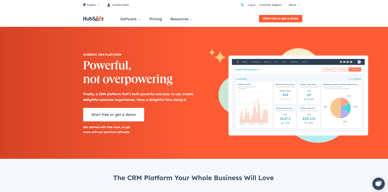
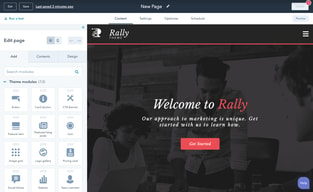
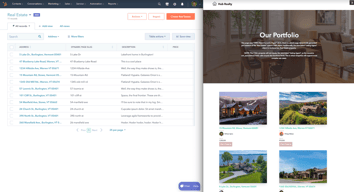






CMS Hub is now HubSpot Content Hub, and the gap between its Starter and Professional tiers is roughly eight times. A three-person team pays about €60 a month on Starter at standard rates and €490 on Professional. There is nothing in between. That cliff, not the feature list, is what decides whether HubSpot is the right CMS for you.
- What it is: A content management system built into HubSpot’s platform, so pages, forms, and CRM records share one database.
- Best for: Companies already running HubSpot CRM or Marketing Hub who want the website on the same system.
- Pricing: Free for 2 users. Starter €20/seat standard (€7 promotional). Professional €490/mo, Enterprise €1,470/mo. Verified July 2026.
- The honest catch: The advertised €7 per seat is a limited-time, new-customers-only rate against a struck-through standard price of €20.
What Is Content Hub?
HubSpot renamed CMS Hub to Content Hub, and the change is more than cosmetic — HubSpot’s own pricing URL for /pricing/cms now redirects to /pricing/content. The repositioning reflects a broader remit than page management: content creation, AI assistance, and multi-format publishing rather than a website builder alone.

Its genuine differentiator has never been the CMS itself, which is competent rather than remarkable. It is that pages, forms, and contact records live in the same database. A visitor fills in a form, becomes a CRM contact, enters a workflow, and their page-level behaviour is visible to sales — with no integration to build or maintain. For companies already inside HubSpot, that is a real advantage no standalone CMS can replicate.
The trade-off is equally clear. Judged purely as a website tool against Webflow or Framer, Content Hub is more constrained and considerably more expensive.
How Content Hub Works
- Native CRM integration. The whole point: pages and contacts share one data layer.
- Priced by Core Seats. Professional includes 3, Enterprise 5, with extras at €45 and €75 a month.
- HubSpot Credits. A newer meter — 500 on Starter, 3,000 on Professional, 5,000 on Enterprise — consumed by AI and certain automated actions.
- Drag-and-drop editing with themes and modules, plus developer tooling for custom builds.
- Personalisation. Content that adapts to CRM data, which is the capability that justifies the price when used.
- A genuine free tier for up to two users, including launching a website.
Content Hub Pricing
Captured from HubSpot’s pricing page in July 2026 in euros; HubSpot localizes currency. Note carefully that the headline figures are promotional.
| Plan | Standard | Promotional | Seats | Credits |
|---|---|---|---|---|
| Free | €0 | — | 2 users | — |
| Starter | €20/seat/mo | €7/seat/mo | Per seat | 500 |
| Professional | €490/mo | €441/mo | 3 Core Seats, +€45 each | 3,000 |
| Enterprise | €1,470/mo | — | 5 Core Seats, +€75 each | 5,000 |

What actually determines your cost:
- Budget from the struck-through price, not the banner. HubSpot displays €7 per seat with €20 crossed out, under a notice reading “Save up to 65% on Starter… New customers only. Select offers available for a limited time.” The €20 is the price you will pay ongoing.
- The Starter-to-Professional cliff is the whole decision. Three seats on Starter is about €60 a month at standard rates. Professional is €490. That is more than eight times, with no intermediate tier, and it is where most Content Hub evaluations actually resolve.
- Professional’s three included seats soften it slightly. At €490 including 3 Core Seats, the per-seat maths is less brutal than the headline — but only if you need three seats and the Professional features.
- Credits are a newer meter worth watching. 500 on Starter against 3,000 on Professional. As HubSpot pushes more AI functionality through credits, this dimension is likely to matter more over time than it does today.
- The free tier is real but capped at two users. Genuinely usable for launching a small site, and a hard stop the moment a third person needs access.
- This is one product in a platform. Most buyers also pay for Marketing or Sales Hub, so Content Hub’s cost is rarely the whole bill — price the bundle.
Who Should Use Content Hub
- Existing HubSpot customers. The clearest case by a wide margin. If your CRM and marketing already run on HubSpot, putting the website on the same data layer removes integration work permanently.
- Marketing teams doing personalisation. Content that adapts to CRM data is the capability worth paying for, and it is genuinely hard to replicate with a standalone CMS plus connectors.
- Companies wanting one vendor and one invoice. Fewer systems, fewer integrations, fewer failure points.
- Small teams on the free tier. Two users and a working website for nothing is a real offer.
It fits poorly for design-led websites, where Webflow and Framer offer far more control at a fraction of the cost; for content-heavy publishing, where WordPress.com is cheaper and more flexible; and for anyone not otherwise using HubSpot, since the integration advantage is the only thing justifying the price.
Honest Pros and Cons
Strengths
- Unmatched CRM integration. Pages, forms, and contacts on one database with nothing to maintain.
- Strong personalisation. Content driven by CRM data, which standalone systems approximate at best.
- A genuine free tier. Two users and a live website, no credit card.
- Included seats at Professional. Three Core Seats bundled rather than charged separately.
- Reliable hosting and security handled entirely by HubSpot.
- One vendor. No integration layer between website and CRM.
Limitations
- An 8x cliff between Starter and Professional. With nothing in between.
- Promotional pricing dominates the page. €7 against a standard €20, new customers only.
- Expensive as a CMS alone. Professional at €490 buys far more website elsewhere.
- Less design freedom than Webflow or Framer.
- Free tier caps at two users. A hard stop for most teams.
- Credits add a second meter whose importance is likely to grow.
Content Hub Alternatives and How It Compares
- Webflow offers far greater design control and is the standard choice for design-led marketing sites.
- WordPress.com is cheaper and more flexible for content-heavy publishing, with a much larger ecosystem.
- Framer suits design-first teams shipping fast, at a small fraction of the cost.
- Wix and Squarespace are simpler and cheaper for straightforward business websites.
- Duda and 10Web target agencies managing many client sites.
- HubSpot CRM is free and the reason most people end up considering Content Hub at all.
For a broader survey, browse our web content management directory.
The Verdict
Content Hub is not really a CMS purchase — it is a decision about consolidation. As a website tool judged on its own, it is competent but constrained, and at €490 a month for Professional it is expensive against Webflow, Framer, or WordPress, all of which give you more website for less money. Nobody should choose it because it builds better pages.
The reason to choose it is that pages and CRM records share one database. A form fill becomes a contact, enters a workflow, and shows up in a sales rep’s view with no integration to build, maintain, or debug. For a company already running HubSpot CRM or Marketing Hub, that removes a recurring category of work, and it is the one thing a standalone CMS plus connectors cannot properly replicate. If you are already in the ecosystem, this is a sensible purchase. If you are not, the price makes very little sense.
Two things to be precise about before committing. The €7 per seat on the pricing page is promotional — new customers only, time-limited, with €20 struck through beside it — so budget from €20. And the step from Starter to Professional is roughly eight times for a three-person team, with no tier in between, which means the real question is not “which plan” but “do I need Professional at all”. Start on the free tier or Starter, and move up only when a specific Professional capability, most likely CRM-driven personalisation, is solving a problem you can name.
FAQ
Is CMS Hub the same as Content Hub?
Yes. HubSpot renamed CMS Hub to Content Hub, and its own pricing URL for /pricing/cms now redirects to /pricing/content. The rename reflects a broader positioning around content creation and AI assistance rather than website management alone. Older reviews and comparisons still refer to CMS Hub, and describe the same product.
How much does HubSpot Content Hub cost?
Captured in euros in July 2026: Free for up to 2 users, Starter at a standard €20 per seat per month (promotionally €7 for new customers), Professional at €490 per month including 3 Core Seats, and Enterprise at €1,470 including 5. Additional Core Seats cost €45 and €75 respectively. HubSpot localizes currency, so check your own market.
Why is the advertised Starter price so low?
Because it is promotional. HubSpot displays €7 per seat with a struck-through €20 alongside, under a banner stating “Save up to 65% on Starter” for new customers only and for a limited time. The €20 figure is the standard ongoing rate and the correct one to budget from, particularly since the discount does not apply to renewals.
Is Content Hub worth it if I do not use HubSpot CRM?
Generally no. Its defining advantage is that website pages and CRM records share one database, which removes integration work entirely. Without the rest of the HubSpot platform you are paying premium prices for a CMS that offers less design freedom than Webflow or Framer and less flexibility than WordPress, both of which cost considerably less.
What is HubSpot Content Hub best for?
Companies already using HubSpot CRM or Marketing Hub that want their website on the same data layer, particularly marketing teams doing personalisation driven by CRM data. It is a poor fit for design-led sites, for content-heavy publishing, and for any organization not otherwise invested in HubSpot’s platform.

Compare HubSpot CMS Hub with other popular tools in the same category.

The number of integrations it has are good. I like the zapier integration
The free service is crippled to the point of uselessness. You will quickly reach the requirements to have a paid service in a few days. Also the paid service rack up charges really fast and it becomes prohibitively expensive.
It is a lead management platform. But it falls short of that. Unless you onyl make 1 sale a month and only have a dozen custoemrs and vendors the CRM will cost you a fortune.
Easy to copy pages, edit and publish. Can get pages live quickly.
Nothing major. Some items require a developer or an experienced user to get formatting right.
Pretty basic. We didn't have a web hosting platform before! Integrated webpages with cta's with CRM
The support of the Hubspot community and many ideas which yet to be implemeted
Many necessary ideas or kind of the date format to be implemeted
Creating the Custom quotes and the custom module for the Website
Hubspot CMS is a great choice for those looking for an easy-to-use content management system. The user interface is intuitive and straightforward, making it easy to navigate and manage your website's content.
some users may find that there is a lot of clicking required to access certain features, and the translation feature could be more user-friendly. Overall, Hubspot CMS is a solid choice for managing your website's content.
Hubspot email campaigns now tie in with our website's landing pages giving us more control over the journey of a potential lead. This gives us a better conversion rate. Conversion from email to lead form to contact is up by 50%
HubDB allows a easy way to create dynamic landing pages.
- If you create dynamic landing pages with HubDB (each row is one LP) you are not able to use campaign tracking - usability is not that good when you are having a lot of data in a HubDB - extended permission management in HubDB would be a great improvement e.g. permission in column level - custom backend interfaces for HubDB would be great, build custom forms or interfaces to populate a HubDB table
We use HubDB to create dynamic landing pages based on the content of HubDB tables. With HubDB we have the possibility to manage a lot of landing pages easily and we can have a strict standard for our landing page layouts.
Flexibility to add content and visuals while keeping a decent website speed when loading.
It is just complex to add the information. To tailor the CMS to your needs, you often need to edit or write CSS/js/HTML code within their portal.
Just having a top website that I can constantly edit as needed and keep track of my visitors
Being part of Hubspot closed-loop reporting system makes this CMS really powerful for lead generation and marketing/sales initiatives.
The flexibility of design is low and frustrating. Mobile optimization is also not as easy as it should be.
Demand generaation for MQLs and SQLs

The fact that the analytics were already nicely integrated and all the MARKETING AUTOMATION SYSTEMS were alreadt nicely integrated.
The fact that you almost feel locked in to the product longterm, and it's limitation with other integrations and templates.
Mainly marketing automation problems, inbound marketing and improved reporting.
The Content Management part of Hubspot is great, especially managing content in various languages
It can be a bit annoying from a developer's standpoint. Some bugs with the local development tools and some things that are restricted.
Content and contact management
It makes building a website (from a template) easy
While it is easy to build a website from a template it is very difficult to customize it to make it more personal. Lots of hoops and obstacles and band-aids to jerry rig a website together.
Having a website, its nice to have it connected to the CRM but it's got a ways to go to be competitive with Wordpress.
HubSpot's abilities as a CRM tool are second to none - easy to manage, excellent reporting tools and fantastic integration with forms and call-to-action buttons. Their email marketing platform is also excellent - really easy to use and to get analytics back afterwards. On top of that, the ability to create automated emails that get sent when someone, for example, downloads a one of our whitepapers, is a very handy addition that saves us lots of time and has resulted in some impressive open rates. It's also very easy to add and manage additional users to our team, and sort out what permissions they have - even giving freelance developers access to certain parts of our accounts has been very simple.
Their website builder tool and CMS options are easily the worst I've ever used. Nothing seems to be logical, a lot of it is very clunky to use, and the off-the-shelf options are really uninspiring. Having previously used Squarespace, Hubspot's website builder tools feel outdated and not very user-friendly. Their blog is also frustrating to use - formatting and font size seems to change quite randomnly and, again, it is not a very good user-experience.
Collecting and processing leads, tracking them through the sales funnel and seeing how hot they are. The ability to track emails - see who has opened them, what they've clicked etc - is great, as is being able to see who is browsing our website in real time. The email marketing tool is also a big help - we can create campaigns in a few clicks, make sure everything is trackable, and have complete control over when we send things.
There are a lot of general features (email, landing pages, forms) and reporting that is useful for my team.
Limitations in the email development platform. Dynamic/smart content functionality is limited to use within only Rich Text fields. Email development isn't flexible, custom coded modules are bulked up with extra and necessary causing a lot of code bloat. Simple features like email forwarding, or displaying preview text within the email is not available.
Being able to create landing pages without a full development team. My team has mentioned reporting benefits but as a developer I do not directly work with that data.
Connection to other tools and easy of use
limited social media features (less than what is native in the social platform) & glitches in the posting features / emoticons
Social Media Management and Scheduling--there are benefits in keeping posts on track and scheduling. Also, their chatbot and web design features are useful.

Hubspot is user friendly and not over complicated. You can get the CRM up and running at a high level without having to pay a company for implementation.
If you have a more complicated set up and like to run very customized reports and workflows, you will hit road blocks due to a lack of features or features that aren't thought through all the way. Hubspot is almost there but will be best for less sophisticated business cases.
We use Hubspot to manage sales and onboarding. It's easy to work out of and keeps the team focused and on track. Reports and dashboards are easy to build out.

I like the thing that everything is connected. You create a CTA and with a few clicks you can add it to a blog post. Then? Analytics works automatically. A lot of cases like this. That's great! It makes HubSpot an easy-to-use tool for everyone, no matter if an employee is experienced or technical.
I don't like the limitations. For example I can't use HTML banners created in Bannersnack. Only JPEG, PNG or GIFs for CTAs in blog posts. Also, the analytics tool is limited so you still need to configure Google Analytics if you need more insights. The worst thing for me is that I can't easily implement structed data or review snippet for SEO.
We use HubSpot for all the inbound marketing. The benefit is everyone from our team can use HubSpot easily, even if he or she is not experienced at all. So: we can work together regardless of our experience with CMSes etc.
Platform that allows sales teams to get started quickly without making much of a change in their existing workflow. Provides tools that can help with blogging, social media, email, landing pages, marketing automation, and web analytics.
Some good features are just available at premium membership. Tools have to be used by your team since it won't automatically do it for you.
Advertising
All the features and possibilities Hubspot provides, like the blog/landing page/website functionalities, the tags and the easy setup.
For advance users (developers) it's quite limited and you really need to think out of the box to fix issues that in other platforms (like Wordpress) would be easier to fix.
Coding issues. For example, having more than one template for blog posts. Hubspot doesn't allow you to change the template in the blog posts so we needed to code something different to make it work in Hubspot.
The support function is fantastic. Always responsive and usually very useful. I've used it frequently as some of the design tools aren't always the most intuitive.
Some simple features seem to be lacking. A word count on Forms Custom fonts without requiring code Centering images The costs are also significant. And have found some of my more account based questions go answered.
Good visibility on traffic. Expanded web content/pages
I really appreciate how easy Hubspot is to use. There seems to be a solution for all my marketing needs.
Outages! They recently had an outage that took about 5 days to fix and are still backfilling data.
Lead tracking and gathering is very easy with Hubspot
Hubspot is a centralized palce to cover the majority of your marketing needs. That can't really be beat.
The tech is beginning to feel older and stale. It isn't bad, yet. But they are in danger of falling behind the competition if they don't hit the restart button soon.
Hubspot allowed us to go from using 5-6 websites to manage all of our different marketing tasks, down to just 2-3. That is a huge simplification that genuinely helps at the end of the day.
It is an organized platform with help readily available at all times.
It can be difficult and tedious to make new website edits without help from HubSpot developers.
It allows us to make quick and small website edits in seconds.
Some flexibility in terms of customization
The UI can get cluttered, not at all transparent or easy to work with collaborators and task management. I want templates for workflows and pipelines that cross out of sales but still need to be monitored by sales. An example would be support teams, technical teams, etc. Also, better reporting capabilities.
At this time, I am not able to solve any of my problems with the platform
It is super user-friendly and easy to add notes and tag them to different companies and people.
Creating quotes and contracts can be confusing.
Tracking conversations, deals, and quotes.
The file organization is set up well. Module system makes it easy to drag and drop elements into your web page. Site traffic data is easy to interpret. Webpage optimization suggestions are nice.
I feel like the CMS market is saturated, and that many competitors offer similar mechanics. HubSpot gets the job done, but it doesn't offer much that I can't find elsewhere for a similar experience.
We're using HubSpot for web design. We have contracted designers to do the heavy coding to create the skeleton, then it's easy enough for our own staff to flesh it out from there.
What I like the best about it is it's just like any other CMS platform, but much easier as you just create the blocks then copy its snippet, even the looping for repeated blocks is done for you.
To be fair, HubSpot is relatively new, so I understand that there's not much out there for debugging errors, documentation for developers is well done but I suggest adding more about debugging and adding more specific details to errors.
Everything is pretty much in here, from building the site, handling trackers and creating emails. These things can be done easily here on HubSpot, especially creating email templates. :D
Ability to use drag and drop features even if they're custom coded, the ease at which users can adjust margins/padding, and background features
The autosave feature will jump the scrollbar back to the top of the screen every 1-2 minutes, makes it difficult to edit a page for an extended period. The drag and drop feature is finicky and doesn't always show the icons needed to access options or remove sections.
We needed a facelift to the website. It's easy to design a new page within the limitations of the pre-set themes, templates, and modals.
It took me a while to get used to it but I do like the 3 different columns on the screen so you can do something to one part and it doesn't change the whole screen
CONSTANTLY having technical issues that I was unable to control nor resolve myself
Once I got used to it then it was quite easy to use and helps in staying organized and love the use of sequences too!
The analytics are great for the sales funnel
The interface building tools are way behind the other website building tools like Squarespace etc. which makes developing pages very slow and frustrating process. Buying a template speeds this up—I would not build a site without a template. With a template, you have very little freedom to tweak sections.
I'm building a site for a client and it solves analytics problems
Easy to integrate with other features of Hubspot.
Tries to do lots of things but it is very complicated and it is not easy to integrate new designs.
Serving the company website.
We use the CRM and CMS. There's a lot to learn, so it's helpful they offer additional calls to tackle different topics with your account manager.
There are a lot of tools that Hubspot has, that are add ons. I feel like we already pay quite a bit and some of the functionality should be included in the package we have. The UI in the CRM changes quite a bit, but they're starting to slow that down a bit.
Using it for all our CRM needs, so helps us keep up with people who are interested in our product.