
Unclaimed: Are you working at Webflow?
Webflow Reviews: 4.4/5 — Solid Choice
Webflow is a visual no-code and low-code platform for designing, building, hosting, and managing websites. It combines website design, CMS, hosting, ecommerce, AI-assisted content, and AEO features, with add-ons for analytics, optimization, and localization.

| Capabilities |
AI
API
|
|---|---|
| Segment |
Small Business
Mid Market
Freelancer
Enterprise
|
| Ease of use |
Advanced
|
| Deployment | Cloud / SaaS / Web-Based, On-Premise Linux |
| Support | 24/7 (Live rep), Chat, Email/Help Desk, FAQs/Forum, Knowledge Base, Phone Support |
| Training | Documentation, Live Online |
| Languages | English |
Webflow Pros and Cons
- Strong visual control and design flexibility without coding.
- Built-in hosting, security, and backups reduce maintenance.
- Webflow University provides learning resources.
- Clean code output and good performance on standard sites.
- Steep learning curve.
- CMS and ecommerce capabilities may be limited for complex needs.
- Some users report slow performance on larger projects.
- Pricing can be difficult to predict once seats, bandwidth, and add-ons are included.

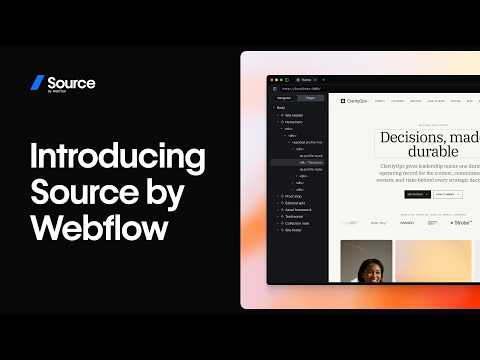








Webflow Review: Is This the No-Code Website Builder You’ve Been Searching For?
The world of low and no-code tools is finally starting to take off. More people now have access to tools that help empower creators to bring their ideas to life, even with limited coding knowledge, and turn them into functional websites, apps, and more.
One such tool leading the pack is Webflow—largely considered one of the best no-code solutions available today. So, does it really live up to the hype?
Let’s find out.
What is Webflow?
Webflow has since expanded with AI-powered design assistance, built-in localization, and Webflow Optimize for A/B testing.
Webflow is (among other things that we’ll cover later) a no-code website builder.
It allows people with no coding experience whatsoever to create beautiful, interactive websites quickly and (relatively) easily. In just a few clicks, drags, and drops, you can have a professional-looking website with all the bells and whistles you could want—from parallax scrolls to e-commerce and beyond.
How Webflow Works
Webflow is what’s known as a “visual website builder”. It’s a system that translates the building blocks of websites (HTML, CSS, and JavaScript) into a visual, drag-and-drop interface that’s more intuitive for beginners.
When you create a website from scratch in Webflow, you’re presented with a blank canvas. From there, you can drag and drop elements to build up your website—buttons, images, text boxes, forms… anything you need. You can also use integrated design tools to tweak the look of your website, add animations and interactions, or preview your work.
When you’re happy with your design, just hit “publish” and your website will go live.
Webflow Key Features
Designer
Designer is where the magic happens, so to speak. This is the interface you’ll use to build your website from the ground up—adding elements and customizing them to your liking.

To add elements to your pages, navigate to the “Add” tab at the top of the left-hand menu and drag the ones you want onto the page. You’ll find a bunch to choose from, including (though not limited to):
- images & videos
- text boxes
- buttons
- forms
- carousels
- CAPTCHAs
- Search bars
You can also add pre-built page layouts like columns, galleries, nav bars, and feature lists from this tab—great for getting the basic structure of your website up and running quickly.

Once you’ve got the elements in place, you can click on them to use Designer’s tools on the right-hand menu to tweak their look and feel. You can change background colors, fonts, borders, and more with just a few clicks.

Every element and setting in Webflow’s Designer falls under a heading that more-or-less describes what it is (or does), but the sheer number of options may still be intimidating for beginners. Luckily, there’s a decent tutorial that walks you through the basics when you create your first site.
Interactions
Interactions and animations are little details that add a ton of life to your website. In Webflow, you can use Interactions to do pretty much anything, including:
- moving
- fading in/out
- scaling
- skewing
- rotating
- toggling visibility
- and more
You can also use a pretty wide array of triggers to set off these interactions—things like first and second clicks, movement, and page scroll. These triggers, combined with the extensive range of actions available in Interactions, make Webflow feel super powerful—even for complete beginners.

Adding these interactions is pretty simple, too. Just click on an element, click on the “Interactions” tab in the top right corner of the design menu, click the “+” symbol, and choose your trigger(s) and action(s). There’s also a handy feature here that will optimize your website by deleting unused or conflicting Interactions.
CMS
Not all website builders offer a CMS, but Webflow does. With a CMS (content management system), you can create and manage content without any code—which is great for content-heavy websites like blogs.
To use the CMS, you just need to populate “Collections” (think of them as categories) with content in the form of “Items”. These Items could be blog posts, products on an e-commerce store, or just about anything else you can think of.

For every Item, you can link data fields that help Webflow make your content fit within the structures you build. There are templates for common content types like blog posts, which include fields for author, main image, title, and more.

Then, when you want to display your content on the site, just pick an element and link it with the Collection you want to show. For example, linking a “Blog Post” Collection with the columns layout is an easy way to create a blog post showcase.

Ecommerce
As a standalone system (without add-ons or plug-ins), Webflow’s Ecommerce feature is decent—but far from the best.

Starting with the good, setup is very easy. The e-commerce system is essentially the same as the CMS system we covered above. You start by creating Collections for “Products” and “Categories” and populating the Items within with thumbnails, photos, price points, descriptions… whatever data points you need. These Items and Collections can then be dragged and dropped wherever they need to go.
While Webflow has continued to improve its ecommerce capabilities with additional integrations and payment options, larger e-commerce businesses may still find the feature set more limited compared to dedicated platforms.
SEO
Last but not least, Webflow offers a few useful SEO tools that are worth mentioning. One of the most useful is the ability to automatically generate metadata using fields from your CMS Collections (e.g., [Brand] | [Product]). This will save you a ton of time if you’re consistently publishing new content within an existing structure.
There’s also a solid 301 redirects management system that makes it easy to migrate old URLs and web pages to new homes.

Finally, the site audit feature can help you identify and fix common SEO issues like broken links, missing alt tags, and poor loading speed.
What Makes Webflow Stand Out From Other Platforms?
Visual Focus
Webflow is focused on design and aesthetics. It’s something the tool does much better than most of its competitors.

Just take a look at the Made in Webflow page—the designs there are much more distinctive, dynamic, and unique than you typically see with no-code website builders. That’s all thanks to Webflow’s impressive visual styling features, like the Interactions mentioned earlier.
Of course, this does come at the cost of beginner-friendliness. Creating a good-looking website is harder with Webflow than it is with simper tools like Squarespace. It’s just that the creative ceiling is higher for those who know what they’re doing.
Educational Resources
On a related note, Webflow is one of the best-documented website-building platforms out there.
Webflow University is filled with lessons, tutorials, and full-on courses that help you learn how to use the tool. There’s also a wide-reaching community of Webflow users on YouTube and Reddit who regularly post guides and answer questions.
And last but not least, there are tons of no-code boot camps and programs that focus on Webflow specifically because of the freedom we talked about above. So, to summarize, there are plenty of options when it comes to learning Webflow.
No Need For Plug-Ins & Add-Ons
One of the biggest advantages of Webflow is that it doesn’t require any plug-ins or add-ons—it’s a standalone platform. That means you don’t need to worry about compatibility issues, third-party security risks, or learning a completely new system just to add a missing feature.
Plus, the platform’s robust feature set means you don’t have to worry about running into any roadblocks with your project. It’s all there… if you know where to look!
Webflow Pricing
Webflow’s pricing depends on whether you’d like to create a standard website or an e-commerce-enabled website.
There are quite a few plans for both:
Standard Websites
Webflow offers a free Starter plan plus paid tiers including Basic, CMS, Business, and Enterprise, each with increasing CMS items, form submissions, bandwidth, and content editors.
eCommerce Websites
Webflow offers Standard, Plus, and Advanced ecommerce tiers with varying product limits, CMS items, and transaction fees.
See Webflow pricing for current rates and plan details.
Webflow Pros & Cons
Pros
- Impressive design and functionality freedom
- Easy drag-and-drop design
- UI is well signposted
- Excellent educational resources
- No need for plug-ins or add-ons
- Great template library
Cons
- The steep learning curve may scare off some users
- Higher price than competing tools
- E-commerce features are underdeveloped
- Technical SEO capabilities are limited
What’s the Verdict?
Webflow is without a doubt one of the best no-code website builders out there. It’s also likely the most comprehensive—with features ranging from hosting to e-commerce. However, this power comes with a price—namely, a steep learning curve.
If you’re curious about the Webflow alternatives out there, Findstack has your back. With in-depth reviews, product comparisons, and use cases, Findstack makes it easy to find the right tools for your business.
Start browsing today and find your dream stack!

Compare Webflow with other popular tools in the same category.
The pre-made Webflow University videos that guide users of all skill sets through basic and advanced Webflow tools are incredible. That's really what puts this site above the rest for me.
I occasionally run into an issue with continuity — I have multiple different editors for our marketing site and it can be a challenge to very clearly track who made what specific changes.
We use Webflow to build and host our marketing website — our site before using webflow was outdated, clunky, and extremely hard to edit. With Webflow, everyone on my team has access to edit the sections they need and can do it with ease.

Logic-based workflows. I can make changes without any dependency or bottleneck of development resources that need prior scheduling and sprint planning. I'm avoiding all thsoe
More comprehensive would have been better. Instead of just minimal-based website design. If I can make a PWA progressive web app with advanced developer level flexibility. I bet I will be a daily user of webflow
We are a small team and getting quality developers for our budget has been really a bottleneck and the time we need to spend to get the resources doesn't make sense in 2022
In this tool, we can create beautiful landing pages, websites, etc with help of the drag and drop component. we can see how our website looks on different devices.
only customer support response is very late and they do not give the live demo.
we have added the HubSpot form with help of API, this tool is easy to use.
The flexibily of the tool to make 95% of the projects that our clients request.
The e-commerce limitations sometimes force us to use tools to convert the Webflow project into a Shopify website.
Creating a website without compromising on design or performance.
Friendly interface to make web designs. Also, Webflow offers a flexible way to handle unexpected situations which can be discussed and tested with your designer.
Startup time, there is an opportunity to speed up the interface.
Webflow helps us to make our website independent from our product. Your website needs quick iterations to get new clients. The Marketing Team can iterate its efforts faster.
This tool is too easy even a non-technical person can easily work in it.
Can't get much support from customer support.
I am a developer and my team does a lot of work without my help, This tool saves a lot of developer time
Very ease to use. Helps you publish your blogs and webpages at lighting speed!
Nothing much as of now. Will be wonderful if the customer support team responds quickly.
Webpages, Blogs

I like that it is a no-code low code solution for non-technical founders which looks great and is easy to build with
haven't been able to figure out domain forwarding yet in the settings and need to since my C-corp went through a rebranding.
Currently, we are creating a new landing page for our private beta
With the use of some great templates, Webflow has allowed me to build and edit professional-looking websites that impress my clients. Although I’m not a designer or developer, I find that pages and sites built with Webflow look better than ones built with WordPress and other builders.
There’s a bit of a learning curve when it comes to creating new page designs, but it’s pretty straightforward. I find the editor a bit clunky and sometimes there are issues with font sizes and spacing. Nothing huge, just annoying.
Creating and editing websites for my company and for my clients. It also allows us to quickly duplicate existing templates.
Webflow has allowed us to take design into reality and create a stunning website from beautifully branded materials. Their CMS platform is really dynamic and allows for the marketing team to upload assets and blogs very quickly. Instead of creating a new page every time for a blog, the dynamic CMS allows for us to build fields and upload information to each field, automatically creating each page. Easily integrate apps into websites, most times "no-code is needed".
It is not a platform for everyone and must have a developer that knows the ins and outs of Webflow. It's not enough for a developer to know HTML, CSS, and JS, it is important that they are knowledgeable on the system to create the best possible CMS system for multiple uses. Also it is expensive.
Was able to create a commercial hub for a software website with forms and other apps. Easily explaining all the different features of our software, and we are able to include a careers page, blogs etc.
It really a game changer and helped me to easily made a responsive website easily.
Pricing can be lower as early adopters are always skeptik.
Creating landing page for a company.

I enjoy that I have the freedom to create and animate complex elements and the Webflow team have a vast selection of video tutorials which are both informative and entertaining!
I sometimes wish there was more content on YouTube from Webflow designers which I can follow. There are a few YouTube channels that create content, and I'd love more to be available. Maybe I should develop a few tutorials.
I am creating custom and intricate web designs to perfectly match the specifications of my clients.
Using webflow makes you insanely fast. There is no more question how to design things, instead the limit is only your creativity. Just focus on UI and UX, webflow takes care of the rest.
The plattform is not gdpr compliant in all aspects and the abilities for clients to make layout changes is not given. Also the Rich Text editor is not very strong.
I built client sites for small and midsize company's. Webflow is the core of my business.

As a Figma user, I like the way of working in a visual environment. To be able to do this for a website/blog is just great. The # of high-quality templates available is also a big plus and made it very easy to finally update our website. We came from two WordPress websites before, and to start creating a new version was always something left on the table, as it is too cumbersome to do. With Webflow, I am sure keeping the website updated with what we do will be far more accessible than before.
Currently, there are no real downsides. Sometimes I have a hard time fixing things as my HTML/CSS knowledge is somewhat limited, but this has little to do with Webflow itself. Figuring out how it works with the documentation at hand is easy to get past most obstacles.
We have been pushing a new website update forward for months now, given the big effort it requires with WordPress, the tool we used before. Coming across a WebFlow advert, we immediately figured out that might be the solution for us no longer postponing an update, with success.
I love the CMS. Why it took so long for a web platform to build a CMS that's straightforward for both designers and clients to use is beyond me, but Webflow's is fantastic.
One downside is the lack of more advanced features, such as form customizations (conditional forms). The interactions builder is also somewhat buggy sometimes. I also wish there were more hosting plans for power users.
Collaborating with non-technical clients to create content quickly and efficiently is a breeze in Webflow.

I like their University videos, They are teaching Webflow with enjoyable and understandable language. I'm enjoying the class when I was in the video.
I'd like to see an email campaign builder and custom email domain in Webflow.
My code knowledge is very low and I can't create my portfolio myself. I'm solving with Webflow.
No code, very graphical, easy to use and onboard collaborators
Seems like Webflow may not be the best fit for websites with huge amounts of traffic but it is not a problem that we will run into.
Very easy to use and get multiple people collaborating on the same platform

The opportunities for customization are what drew me to Webflow and why I've never left. As a designer, I was able to build my portfolio and land a dream job in my favorite city with absolutely no coding experience. And if I ever need design help, Webflow offers an extensive catalogue of tutorials so I never feel stranded.
I feel like I need a web design crash course to help me streamline my web building workflow. This is particularly relevant when I create new modules and neglect organizing the naming conventions. Additionally, I need some help standardizing web design across different device sizes (i.e. mobile, tablet) but after one year of Webflow, I already feel more confident. This has less to do with Webflow and more to do with web design in general.
The primary problem I am solving has to do with individuality and originality. Squarespace templates all look the same. I felt that my Squarespace site prevented recruiters and clients from seeing the real me. The benefit now that I've resolved this with Webflow is I have come to better understand my digital identity as a designer – if anything, Webflow has helped me discover this and refine it.
I like the ability to design the way I want.
The community has suggested many features; I would like to see a faster rollout of new features and a cost reduction.
No more wireframing. I design directly in the product: benefits - speed and an easier sell to clients.

Webflow has the best GUI web development interface I've used. It's fantastic for rapid visual iteration, has built-in staging hosts, produces remarkably clean code, and can export code for further modification and hosting elsewhere.
I dislike the reverse CSS cascade from desktop down to mobile (and the inability to customize that). A number of the features don't work without Webflow hosting, which is limiting. I wish there was more opportunity to edit the code on hosted projects (vs exporting to edit). Options to publish directly to a GIT repository would be amazing.
There's no faster way I know to convert existing UI/wireframes to code. I'm able to rapidly explore interface/design options well beyond what tools like XD or Sketch can do. I use Webflow's symbols to store and manage larger chunks of customized content. Their "collections" is a good basic database with easy import from .csv and similar exchange formats. Webflow has some very nice interactions and enables a number of scroll-triggered animations, lottie, and other rich interaction types.

Webflow is the most authentic tool for making amazing websites. This is the authentic and reliable tool for creating mind blowing sites. It has so many outstanding features and abilities for managing the various designs of your site. Furthermore it does not require HTML coding. It can be perfectly used for hosting own portfolio website.
Initially this product seems to be difficult but if you are aware of coding then this software will extremely prove beneficial to you. It is quite expensive. It is quite difficult to learn completely. It is found to be difficult in navigating.
We can design anything of our own choice. Another thing which I like about it is that it offers regular product updates that are found to be very helpful to us. I like its impressive functionality the most. This is the most comprehensive tool and it has outstanding data storage capability.

Super friendly and way better than Wordpress when it comes to the pros Fast hosting and freedom of design Many integrations So many templates and cloneables to speed up the process
Pricing for e-commerce is too high, plus its not easily editable once you create an e-commerce page you can't delete it. Not suitable for all the use cases and it gets very pricey to customize it
Making websites for clients is easier now since you just hand off the billing to them and webflow makes this swift. Ease of turning figma or mokcups into a pixel perfect design with granular editing . So many inspirations from the huge community since it belongs to a bigger community which is the no-code
I love how Webflow allows a lot of customization within each template. You can start from scratch or use a preexisting template for easier use. The templates are easy to start from and use. In addition, the page animations are really cool and make the website feel premium.
I do not like how the program is hard to use at times. It is way less intuitive than other website building programs, but does not matter if you have any sort of coding background. That being said, if you know how to code this is a great program to use. Another thing that I dislike is that the hosting itself is pretty expensive (compared to other programs that are free or cost less).
I use Webflow personally to host my own portfolio website. I like how it feels distinct and customized without looking messy. In addition, I am able to personalize all aspects of the website to fit my own look and feel.

Easy to use, Clean Interface. Code generation is really good.
Everything is good but the pricing is too high.
Developing a website for my business. Benefits - It's easy to use, doesn't require much time to get hands-on.
It optimizes the creation of web pages with excellent coding, the design is totally new and stable. Every job or project I do my clients love, from landing page edits to simple multiple design creations.
Definitely the learning curve is very high, to overcome the difficulty of training should only be committed to the software.
We guarantee our website creation projects when we use Webflow, we are sure to be doing a professional job thanks to its system of functions. Totally incredible for web development. Our website is maintained with Webflow.
Your particular website creation tools have taken care to focus my company's actions on the path to programmatic success, thanks to the fact that their disposition of methods has brought stability of imminent progress for my organization, Due to its Intelligent Editing Service I was able to obtain a professional planning of the resources of my company, where I was able to achieve impressive achievements, this software being the guarantor of multiple management qualities.
When building a page layout, there should be a proportion of adjustable models, in which an information acceptance and emptying format is handled, where the time to make modifications and page layout creations can be reduced, making it more Operational development of the text and multimedia functionality of the information contained in the company is practical, so this assisted design tool should be used in web flow software.
Manage to build important compliance of web page creation with the help of web flow system, a software that has efficiently interpreted the technical support of the consolidation of effective content development processes, where your relational professionalism of page creation It has generated a systematic stability system of the digital efficiency of my company, creating visualizable and important information, which leads the system of my company to the formation of strategies and effective progress.

The great design tool that allows you to work responsively even on mobile. Using this you can just thinker when you get a great idea regardless of where you are. Great CSS management (easy control over styles and animations), the integrated CMS is also a huge plus. They provide free SSL certificate which is a rare thing, as most services charge you at least 50$ for it. They also have a good variety of templates for people that like to start work from something other than a blank slate.
Harder to use in the beginning than other website builders, but after the initial learning period you get to enjoy more control over what you are making. For some reason it's still not 100% compatible with Firefox. Other than that I don't have any complaints.
I am using Webflow to create professional websites for my business. Honestly, it's probably in the top 3 website builders just by taking into consideration the amount of customization that it enables you to perform. I highly recommend it.
Webflow is a site builder that isn't based around templates like a few others, so you do need some skill to make good websites, which is perfect for designers. They allow lots of flexibility so you can also add your own html, css, javascript etc. which opens up possibilities for extra functionality. There's an easy way to add interactions and animations without coding.
The pricing structure is quite confusing, with different plans for sites and accounts. The hosting is also far too expensive, it's very hard to convince a client to pay for it when you can get the same elsewhere for 1/10th of the price. There is a CMS option which seems useful, but you can't export these items to host elsewhere.
I'm able to quickly make unique websites without templates or themes, that are exactly how I designed rather than having to force something existing to look how I want. I'm able to design sites how I want, then implement that design, rather than working with a template in mind, or having to manipulate a theme to be how I want it.
Weblow is an easy to use web design program that you are able to use straight from the website. There are no extra downloads needed for the program which allows for easy editing wherever you are. Coding experience isn't needed in order to properly use the program, and there are plenty of tutorials provided for users on the website.
While the program does offer tutorials for learning, it would be nice if there was a step-by-step sample website available upon purchasing. There are a lot of new tools to learn all at once, and it definitely takes some getting used to in order to begin choosing the right tools you need for your project.
While it is nice to know the basics of coding, it isn't needed in order to learn Webflow. In fact, learning these basics are integrated along the way if websites are being built from scratch.

There are a lot of website builders that abstract away a lot of the technicality of developing a site. Webflow does one better by embracing CSS and giving the designer tools to easily manipulate their design.
The Editor (the view the client gets) is very limiting and hard to sell to a client. They usually want more control over their designer and its hard to balance what a designer should do and what freedom to give the client.
How to develop websites that require less development, while still having a professional look. This is possible with Webflow because it gives the designer direct tools to build a website.