

Unclaimed: Are you working at HostGator?
HostGator Reviews: 3.7/5 — Good for the Price
HostGator is a popular web hosting service packed with powerful tools and is known as an easy-to-use and straightforward website builder. Popular among bloggers and small business users, make no mistake, HostGator is still packed with numerous, feature-rich hosting plans, shared hosting options, and easy-to-use tools that are perfect for novice webmasters. Notably, Hostgator also has outstanding uptime with reliable customer support.
| Company | Endurance International Group |
|---|---|
| Year founded | 1995 |
| Company size | 1001-5000 employees |
| Headquarters | Burlington, Massachusetts, United States |
| Social Media |

| Segment |
Small Business
Mid Market
Enterprise
|
|---|---|
| Deployment | Cloud / SaaS / Web-Based |
| Support | 24/7 (Live rep), Chat, Email/Help Desk, FAQs/Forum, Knowledge Base, Phone Support |
| Training | Documentation |
| Languages | English |
HostGator Pros and Cons
- 99.99% uptime guarantee
- One-click WordPress install with cPanel transfer
- Unmetered bandwidth
- Exceptionally fast site loading speed
- Really user-friendly UI
- No free backups
- Just one website available on the cheapest plan
- Constant upselling on the system
- Has only two data centers
- Not the most affordable for renewals


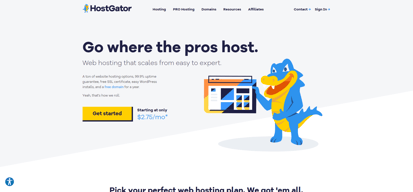
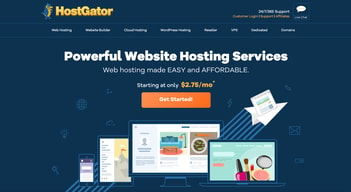






HostGator advertises shared hosting from $3.75 a month and renews it around $10.99 to $21.99 depending on plan — roughly three times the introductory rate. That is the defining fact, and it is the same structure Bluehost and SiteGround use. What makes HostGator’s version worth examining separately is what sits alongside it: aggressive add-on marketing, “unlimited” plans with limits that are not advertised, and billing complaints that persist past cancellation.
- What it is: Shared, VPS, and dedicated web hosting, aimed squarely at beginners and small sites.
- Best for: Cost-sensitive buyers who will budget from the renewal rate and decline the upsells.
- Pricing: Hatchling from $3.75/mo renewing ~$10.99, Baby from $4.50 renewing ~$16.49, Business from $6.25 renewing ~$21.99. Reported July 2026.
- The honest catch: “Unlimited” shared plans carry undisclosed file-count limits, which is a real constraint on busy sites.
What Is HostGator?
HostGator is a long-established budget host built around one proposition: get a small site online cheaply and without technical knowledge. The plan names — Hatchling, Baby, Business — signal the audience precisely, and the product delivers what that audience needs: one-click installs, cPanel, and support that answers.
Its ownership history matters more than it usually would. HostGator was acquired by EIG in 2012 and now operates under Newfold Digital, the same parent as Bluehost and Network Solutions. That is worth knowing because choosing between HostGator and Bluehost feels like a comparison and is closer to a preference — the two sit inside the same company, with similar pricing structures and similar renewal behaviour.
The strongest genuinely positive signal is the 45-day money-back guarantee, which is meaningfully longer than the 30 days most competitors offer, and live chat support that reviewers consistently describe as fast.
How HostGator Works
- Introductory pricing on long terms. The lowest advertised rates require a 36-month commitment paid upfront.
- Renewal at standard rates. Roughly three times the introductory figure, published in HostGator’s own price chart.
- cPanel and one-click installs. Conventional shared hosting tooling, familiar and well documented.
- “Unlimited” storage and bandwidth on Baby and Business, subject to limits discussed below.
- Add-ons sold hard. SiteLock security and similar extras are marketed persistently.
- 45-day money-back guarantee, longer than the industry norm.
HostGator Pricing
HostGator blocks automated capture, so figures below are third-party reported for July 2026 and vary somewhat between sources.
| Plan | Introductory | Renewal (36-mo term) | Increase | Sites |
|---|---|---|---|---|
| Hatchling | ~$3.75/mo | ~$10.99/mo | ~2.9x | 1 |
| Baby | ~$4.50/mo | ~$16.49/mo | ~3.7x | Unlimited |
| Business | ~$6.25/mo | ~$21.99/mo | ~3.5x | Unlimited |

What actually determines your cost:
- Renewal is roughly three times the advertised price. This is disclosed in HostGator’s price chart rather than hidden, but the introductory figure is what the marketing leads with. Evaluate the renewal rate and ask whether $10.99 to $21.99 a month is fair for what you are getting — because that is the price you will pay for as long as you stay.
- The cheapest rate requires three years upfront. Longer initial terms buy the deepest discount, so the low price and the long commitment are the same decision. Month-to-month is dramatically more expensive, with Hatchling reported around $17.59.
- “Unlimited” is not unlimited. Reviewers report undisclosed file-count limits on the unlimited plans — an inode cap in practice. For a site with many small files, that ceiling arrives well before storage does, and it is not on the pricing page.
- Add-ons are pushed persistently. SiteLock in particular draws repeated complaints. None of it is required; decline it and the base product is unaffected.
- Billing complaints are specific and recurring. Multiple reviewers report charges continuing after cancellation. Cancel in writing, keep the confirmation, and check the following statement.
- The 45-day guarantee is genuinely better than average, and the right way to test performance before the long term locks in.
Who Should Use HostGator
- Beginners launching a first site. The clearest case — cPanel, one-click installs, and fast live chat lower the barrier meaningfully.
- Cost-sensitive buyers with realistic expectations. If $10.99 to $16.49 a month is acceptable to you, the first term is simply a discount.
- Small brochure sites. Low traffic, few files, no growth expectations — where the limits never bite.
- People who value phone and chat support. Response times are consistently praised.
It fits poorly for sites with many files, where the undisclosed inode limits cause problems; for anyone who dislikes upselling, given how persistently add-ons are marketed; and for performance-sensitive projects, where reviewers report load times degrading over time.
Honest Pros and Cons
Strengths
- Genuinely cheap to start. From $3.75 a month on a long term.
- 45-day money-back guarantee. Half again longer than the industry standard.
- Fast live chat. Wait times reported under five minutes.
- Beginner-friendly. cPanel, one-click installs, and extensive documentation.
- Unlimited sites from the Baby plan. Useful if you run several small projects.
- Long-established. Mature infrastructure and a large support knowledge base.
Limitations
- Renewals around 3x the introductory rate. The dominant and most consistent complaint.
- Cheapest pricing needs 36 months upfront. The discount and the commitment are inseparable.
- “Unlimited” plans have undisclosed file-count limits. A real ceiling that is not advertised.
- Aggressive add-on marketing. SiteLock especially.
- Billing complaints past cancellation. Reported often enough to be worth guarding against.
- Inconsistent performance. Reviewers report page load times degrading without site changes.
HostGator Alternatives and How It Compares
- Bluehost is the closest comparison and shares HostGator’s parent company, Newfold Digital — so it is less of an alternative than it appears. It does carry WordPress.org’s recommendation.
- Hostinger is also WordPress.org-recommended, generally cheaper, and uses the same promotional-then-renewal model.
- SiteGround has stronger support but steeper renewal increases, reported around five times.
- Namecheap is cheaper on domains with free WHOIS privacy, and its hosting renews at roughly double rather than triple.
- WordPress.com offers managed hosting with far more transparent renewal pricing.
- 10Web bundles managed WordPress hosting with AI site generation.
For a broader survey, browse our web hosting directory.
The Verdict
HostGator does what a budget host should do: it gets a beginner’s site online cheaply, with cPanel, one-click installs, and support that responds quickly. The 45-day money-back guarantee is genuinely better than the industry norm and gives you a real window to test performance rather than take it on faith. For a first website with modest traffic, it works.
Price it from the renewal, because that is where you will spend most of your time. Roughly three times the introductory rate — around $10.99 for Hatchling, $16.49 for Baby, and $21.99 for Business — is the honest number, and the cheapest version of it requires committing three years upfront. That is the same trade the whole shared hosting category offers, so the question is not whether HostGator does it but whether its renewal rate is competitive against Hostinger and Namecheap at the same tier. Often it is not.
Two things distinguish HostGator’s version of this model, and neither is favourable. “Unlimited” plans carry file-count limits that are not disclosed on the pricing page — a site with many small files can hit that ceiling long before storage becomes an issue, and discovering it after committing to three years is unpleasant. And the billing complaints are specific rather than vague: charges continuing after cancellation come up often enough that the sensible precaution is to cancel in writing, keep the confirmation, and check your next statement. Finally, note that Bluehost is not really an alternative — Newfold Digital owns both, so switching between them changes the brand rather than the company.
FAQ
How much does HostGator cost after the first term?
Reported renewal rates on a 36-month term are approximately $10.99 per month for Hatchling, $16.49 for Baby, and $21.99 for Business, against introductory rates of roughly $3.75, $4.50, and $6.25 — an increase of around three times. Month-to-month billing is considerably higher again, with Hatchling reported near $17.59. HostGator blocks automated access from our infrastructure, so confirm current figures at checkout.
Are HostGator’s unlimited plans really unlimited?
Not entirely. The Baby and Business plans advertise unlimited storage and bandwidth, but reviewers report undisclosed file-count limits — an inode cap — which can be reached well before any storage limit on sites with many small files. This is not stated on the pricing page and is one of the more commonly reported surprises, particularly for larger WordPress installations with extensive plugin and media libraries.
Who owns HostGator?
Newfold Digital, which also owns Bluehost and Network Solutions. HostGator was acquired by EIG in 2012, and EIG became Newfold Digital following a 2021 merger. This is worth knowing when comparing HostGator against Bluehost, since the two brands share a parent company and use broadly similar pricing structures rather than representing genuinely independent options.
What is HostGator’s refund policy?
HostGator offers a 45-day money-back guarantee, which is longer than the 30 days most hosting competitors provide and a genuine point in its favour. Given that the lowest advertised prices require a 36-month prepayment, that window is the sensible period in which to test real performance. Separately, reviewers report billing continuing after cancellation, so cancel in writing and verify the following statement.
What is HostGator best for?
Beginners launching their first small website who want cheap hosting with familiar cPanel tooling and responsive live chat support. It suits low-traffic brochure sites where the undisclosed file limits will never be reached. It is a weaker choice for file-heavy sites, for performance-sensitive projects, and for anyone unwilling to decline persistent add-on upsells.

Compare HostGator with other popular tools in the same category.
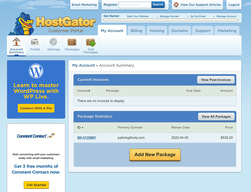
I think the best part that they have going for them is their dashboard after you're logged in. Everything is organized very well and users can easily find which site to work with, where the CPanel is, the domain settings, and the customer service chat section.
Of all things, I dislike the site speed of my clients' sites that are hosted on Hostgator. I don't know for certain, because their customer service denies it, but it's kind of like a pay to play philosophy. I'd need to "upgrade" to get a faster site. Not cool.
As a website developer, Hostgator gives me a one stop shop option for clients who don't know much about domains or hosting. Here they could manage it all in one place and not be overwhelmed. Another benefit they give is quick response Customer Service. I've never waited more than a few minutes to get a response.
Hostgator offers hosting plans on Linux and Windows platforms. The best thing about their plans is that they are quite economical. The performance of the hosting servers is good. For higher performance, they offer plans under the "PRO Hosting" services. Setting up a website was hassle free. They offer good discounts for long term plans.
Hosting renewal prices are a bit on the higher side. It would be good if they could offer good discounts on renewals too.
Building client websites and hosted the same on HoasGator.
I've used many web hosts for WordPress sites with various clients over the years. The Hostgator cPanel integration made installation and management of a recent site quick and easy. I'll be using it for my next clients requiring an easy affordable hoting provider. From the Hostgator dashboard, I can launch the full-featured cPanel interface I am familiar with to manage all aspects of the site behind the scenes.
Like most hosting providers, Hostgator promotes numerous free offerings when creating a new account. Many of these functions are easily addressed using free WordPress plugins. I've discovered that cancellation for some of these features can be challenging, requiring support tickets and interaction with staff for actions that should be easily accomplished via cPanel.
HostGator allows me to quickly and easily set up website hosting accounts for clients with no server management expertise. This allows me to easily install software, configure email addresses, and manage files for them while providing access to their dashboard for billing and support as necessary.
Hosting is very affordable, easy to set up, they offer a ton of solutions out of the box.
My websites would occasionally have long response times randomly throughout the day and we did not have an increase in traffic to justify these long load times. Come to find out some other users who we were sharing a box with would run scheduled tasks every so often and it would cause everything to go slow.
Host various websites using different technologies
The dashboard is clearly arranged - there are many functions and extensions available, which are installed directly via the admin area. I'm glad that the provider does this - so I can be sure that I'm installing the right application and that it's from a secure vendor.
The customer service works with tickets, which means for us that we always have to wait quite a long time until we get an answer. An additional domain was only activated after 3 days.
I especially appreciate the very fast loading time of our homepage. Our internal analyses have shown that the bounce rate on our homepage has decreased thanks to the fast loading time.

Easy to use interface, low prices, good server load and up time, and more options and automation. Huge choice of domains.
The customer support in night time at India in terrible. Hours of waiting time, with agents disconnecting calls in middle and waiting again for hours is the rust thing I faced with Hostgator.
Using Hosting for some of my and clients websites.
I like that HostGator has both domain registration and web hosting packages. We don't have to go to two different places to get those products. They also have all the common security tools, like SSL certificates, to improve search engine rankings and help keep our websites secure and free from malware. I think that HostGator has been very friendly for our content management systems. Our pages generally load pretty fast through HostGator, except for the occasional page that processes lots of data or contains lots of media.
I think my only complaint is that the interface of HostGator is probably not as clean and modern as some other web hosts' account portals. The pricing isn't so bad, but there aren't very many promotional deals that we can take advantage of like we can at other web host offers I've seen online.
We have created many quality business websites that we've used for marketing and for posting blog posts for a variety of different subjects. We have gotten generally good page loading speeds from HostGator, even with the more standard hosting packages. Instead of having to log in all the time, HostGator keeps us up-to-date with account activities.
There are many convenient account management within HostGator. Most of the services can be activated within a few minutes or so. The basic hosting plans have a good amount of bandwidth, storage space and other features that make it suitable for most common website installations. I like that HostGator stays up-to-date with most of web framework languages so we can create dynamic websites either from scratch or use a content management system.
I think that the speeds on HostGator are probably not among the best compared to other leaders in web hosting. There aren't as many features that allow us to optimize websites for search engines and other marketing needs. I think we can run most applications that we would need for common websites, but I feel like they could probably have more available to us.
The websites that we host on HostGator are used throughout our business for internal purposes, marketing and several business-to-business needs. We can get decent page loading speeds for the price that we're paying. Even though they're not the fastest speeds possible, they are fast enough to run the types of pages and content that we post most of the time. Having a solid up time is very important for any business, and HostGator has been pretty good at providing that for us.
Hostgator gives you a lot of cheap options that for simple deploys is ideal, also the promotions they put sometimes can get you almost 3 years for the price of one including a SSL certificatate, so if you work as freelance it's going to give to your clients a really cheap deployment. Now regarding to the Dashboard is really simple, the curve of learning is almost zero. As a developer you can give a quick training and let a non technical resource to be managing the web server after the end of the project.
Something I dislike about Hostagor are they Shared Solution, If you are a developer working with web solution that implements framework DO NOT buy the shared hosting solution, because you are going to find a lot of roadblock at the moment of implement. In example I have tried to deploy tool made with Symfony 2.* and 3.* and I have had the issue of trying to install all the need libraries with composer and find a limit of memory, and even I have need just like 500Kb the solution by the support team was "Buy the VPN solution"
Deployment of Web Pages, Mail Server, Online stores, among others.
I like that HostGator offers a full range of web-related services that allows our company to register a domain (with or without privacy), have an ample amount of web server space, and email accounts that are reliable with extensive settings options. The pricing for most HostGator products are generally competitive and can often be discounted using promotional codes found online or through emailed newsletters. The support staff at HostGator has been very helpful at following through on service issues and allowing us to provide feedback on their support.
I find some of the HostGator account options a bit difficult to work with. Updating certain items in the DNS settings can be a bit complicated to understand. The repercussions of setting things wrong can mean extensive website or email downtime. The support team has been helpful for fixing things, but I wish some of the DNS and hosting account processes could be more straightforward for the average user.
HostGator has been a solid and reliable place for us to host many web-related business materials such as websites, single promotional pages, web forms and documents that we link to from third-party platforms like social media, collaboration software and message boards. We were able to acquire our HostGator services for very reasonable prices, which I think makes their services among the most valuable we have in our business.
I like that HostGator provides a wide array of services that can fulfill most of the web-related needs that smaller businesses have nowadays. They offer quality shared hosting plans, email accounts and domain names for pretty competitive prices. When I had problems changing some settings in my account, HostGator was able to quickly guide me in the right direction to get things set up properly. Both their email and phone support is adequately responsive and helpful.
Some pages that we run, especially those that have lots of different dynamic coding elements, tend to run slow. Though caching plugins can help with loading times, there are certain pages that run slowly regardless. Though HostGator is generally helpful overall, they haven't always been helpful when it comes to this particular performance issue.
We have been able to use HostGator for a wide range of marketing efforts. We can host web pages with products and service details, host email and register domain names. We sometimes use specialized domain names that are tailored towards the content of a landing page. This makes it easier to find and remember by users. HostGator has given our websites very good uptime, which allows leads and customers to maintain continual access to our business information.
I think HostGator offers a good variety of web services, like business email, website hosting and domain registration, for very reasonable prices. Their website design is easy to navigate and search for services and domain names. I like that there are many deals out there with coupon codes, so every so often we can search and find good deals to use for new domains and hosting plans. The control panel in HostGator gives us all the access we need to manage and maintain all of our services. We can easily change DNS settings for domains and add new email addresses to our hosting account.
Like other leading web hosts that have been around for a while, HostGator standard shared hosting plans tend to load pages slow - especially pages generated from CMS platforms like WordPress. Also, though the pricing is generally pretty good, it's not the cheapest out there, so if you're really looking to manage your budget, HostGator might not be the ideal choice.
HostGator has been a solid partner for hosting many of our web assets, like websites, landing pages and email. We can count on them to respond quickly to services requests or help walk us through technical issues we may be experiencing. HostGator has given us good uptime, so our customers and leads can almost always access our web assets successfully.
I like that HostGator offers a wide variety of web-related services with reasonable pricing. Signing up for standard services like domain name registration, web hosting and email is very easy. The instructions are clear and there are very rarely any technical issues experienced. HG's technical support is highly responsive and knowledgeable. They don't try to upsell as much as some other web hosting companies I've worked with in the past.
I think HostGator is mainly suited for small businesses with basic web hosting needs and not very suitable for more complex web implementations. You can install common website CMS applications like WordPress, Joomla and Drupal, but doing more customized backend programming can be difficult.
HostGator has been a solid platform for hosting websites, landing pages, email and adding redirect links to third-party web assets. We can create many branded marketing materials that our customers and leads can easily access. Most of the services we use through HG are well within our budget, so they really help us to establish a robust web presence for a relatively low cost.
HostGator's page loading speeds tend to be pretty good compared to other big name web hosting companies. I like that HostGator provides a full range of services, like domain registration, email hosting and website hosting. They offer a wide variety of tools that give us great control over our web assets. We can easily manage our own DNS records and add new email addresses and web software through HostGator's control panel.
There's not much to dislike about a service that is generally straightforward, but if I had to pick something to dislike, I'd say that HostGator isn't as flexible and fast as some of the newer up-and-coming web hosts like SiteGround. From my experience so far, HostGator doesn't run WordPress installs as efficiently.
HostGator has given us a reliable platform for domain registration and web hosting. We don't only host full websites, we also host single web pages. The uptime is usually very good and support team has been very responsive whenever issues arise. They've basically served as our own staff members.
I like that HostGator has been in business for many years and offers a wide range of domain and web hosting services. I sometimes get low price offers from newer companies, but I tend to stick with HostGator for our main hosting needs since they've been reliable. Their account features are straightforward and easy to manage.
When tested, the loading times for some HostGator pages are not always as fast as some web pages we host at other companies. It can sometimes be difficult to make account updates to various software versions.
HostGator has been a solid provider of web hosting for many of our media assets. We host websites, landing pages and various testing apps for analysis purposes. We haven't experienced any major downtime or other negative account issues.
We have a Online coaching website which we are hosting on HostGator. Their customer experience is too good and they provide immediate and effective resoltuion to query. Their hosting plans are also cheap. They also provide domain service and SSL Service. Their speed of the servers are too good and website loads in less time compare to other service providers. They provide 5 free email accounts for every domain pruchased/.
Sometimes they have a downtime which lasts longer than usual and your site is down. Purchasing and renew of the domains is costly. Other than these two things I don't find anything unusual.
We are using their service to host our website with a 3-year plan. Their service is good and it works really well for us. sometimes our shared web servers works really slow and that disappoints us but other than that all are good.
Host Gator is a fairly large and well known hosting company utilizing cPanel. The interface is easy to use and it is simple to create additional websites using the stored scripts. There is many open source software projects you can install in your domain and non-technical users would be able to understand how to login to the correct path once the software is installed.
After the initial purchase your hosting fees do increase and you are now paying 100+ annually as long as you want to retain your domain and website not go down. The site will also charge your credit card automatically, though I guess this is preferred to your website going down if you don't remember to renew.
Corporate website, communications are published on this website for stakeholders. We use WordPress just to public documents, program changes, program updates and advisories, which all need to be updated periodically. There was a scenario prior to me starting to work at this company where the responsive part of the website had gotten hacked and porn pictures were uploaded to our webpage. The previous employee was able to get it resolved with help from HostGator support fairly quickly (this was prior to me starting) and she added the sitelock product to our site and applied updates the website. I also use HostGator for my own personal domain but have not been using it recently and just renewing every year for my domain.
Easy to use and good access to support through chat. There are also a lot of videos guides on YouTube.
There is a bit of a learning curve if you are new to using technology and building website. You may not have the correct verbiage to explain a problem to a chat agent. There is usually a long wait time if you need to call, but the chat is a lot faster.
Easy place to host sites . I can buy my domains and host all under one umbrella and I don't have to transfer domains.
What´s really exciting about hostgator is that it´s really reliable when it comes to Uptime, and it´s really cheap compared to other hosting providers (and even cheaper if you look for discount coupons on the internet). I really enjoy how easy it is to connect your domain name with hostgator inside the hostgator panel, and I also love its one.click installation feature, that allows you to install wordpress websites in a couple minutes, with only a few clicks.
I don´t like that sometimes hostgator workers can be rude and unknoledgeable; and also, they charge a lot for giving you backups for your own websites! What I mean is, if your website is light and has no much information, then you´re ok with hostgator, but if you have a big website with tons of information, you´d better hire a third party back-up service, because if something is messed up, Hostgator will charge you for re-installing your own files.
Hostgator helps me host my website so that everyone can get to know me, and see the services, information and knowledge I have to share with the world. I can say that hostgator does most of the heavy duty job so that I only have to worry about designing and adding content to my website, and this is a great help for home enterpreneurs like me.

I like the customer service that HostGator offers its customers and resellers.
I dislike the amount of time it takes sometimes for the tickets to be responded to, especially when they're busy. I also dislike the per dedicated IP address fee - one of the most expensive I've seen.
I needed a way to be a web hosting provider and found HostGator's reseller service as a great way to offer the service to my clients.
- Relatively cheap prices for their shared hosting plans comparing to other similar services. - Unlimited of everything ( unlimited Bandwidth, Disk Space, Sub Domains, FTP Accounts, MySQL Databases, and Emails) - Their promotion codes and huge discounts for the first timers. - They are providing you with cPanel to manage your hosting, which is a huge add-on over some other similar services who use Plesk or their own developed panel. - Their good customer service and up-times! (During my experience with them over a span of five years i never faced a single outage). - Quick installer for the commonly used CMS and platforms that saves you big time going through complications of such installations. - Clean Energy Powered!
- Technical support need improvement , you normally wait in line for relatively long time before you get an assigned an agent to address your issue. - Their website and domain management platform has many bugs here and there, it needs some work to mitigate such imperfections. - I really hate that the promotions and discounts are always for first timers and nothing for their current or loyal customers! - Their servers do suffer from relatively large TTFB due to the diversity of good and bad codes over the shared web-hosting.
If you are looking for a reliable, affordable, open hosting company for your WordPress, Joomla, Drupal, Email System, Custom PHP website – you’ll do well with HostGator.
Easy to use, Less spam and promo traps than Godaddy. Low Cost reseller hosting.
Multiple logins are a frustrating, one login for billing and another for cpanel. I understand the reasoning but would like to see a future social sign in option.
The ability to quickly deploy landing pages, websites and email address using reseller accounts.
Hostgator comes to mind when you say the word shared hosting(just as godaddy and others). My experience with hostgator has been pleasant. It's easy to configure and uptime is great, haven't had performance issues (unless i had so much traffic that i had to migrate to a vps or cloud hosting solution, but that's nothing to blame to a shared host)
My only complaint with this shared host and every other shared host is for better root capabilities and git integration out of the box.
Hosting blogs, landing pages, news sties, etc..
Competitive pricing, solid servers, and ease of use
Really don't have much to dislike about it
Lead generation + Contact Management
From the new era of cloud based software, Hostgator have made the difference in that segment, not only for small or individual plans but for all the needs they cover. Hostgator has excellent shared and dedicated web hosting plans suitable for the different costumer needs. I used the Hatchling plan with an affordable price per month and it gave me unlimited disk space, bandwidth, databases and email adresses. When I started with Hostgator the most important feature was the installation and data migration from old server, they made this very easy, with the quick install and migration tools. The most important to all of entrepreneurs or web maker like me is this, HostGator guarantees 99.9% uptime (which is 8 downtime hours per year). My only doubt concerns the security breach, mainly with the emails. They really have a good costumer support 24 hours a day, although sometimes we are on hold for a lot of time. The new feature wordpress hosting provides host services to sites and blogs worldwide and seems to work pretty good. If the servers services don´t start crashing (because they had that problem recently), it could be a sucess. I love Hostgator services, I have no more concerns about bandwidth, storage, databases or something else, Hostgator make this very important needs unlimited.
One of poor services are the email security needs more improvements. Other think is the scalability.
Maintenance and support 24/7
Host Gator offers a great variety of choices for hosting, from web hosting to cloud hosting to even wordpress hosting. But it does not stop there. Host Gator provides several different packages of varying prices for each different form of hosting to fit your need perfectly. Host Gator also has a weebly site building software for those that are not incredibly talented in web development. HostGator is also very cheap compared to other services.
However, the company does fall short in terms of support and customer service. I had to wait a week for a single ticket to be resolved and many more have had similar struggles from my research for why they take so long into responding. That truly is the only thing I disliked about this service.
I used it to host my personal website and it is a cheap to have it up for people to see.

Host Gator is very affordable whether you are just hosting 1 small page, or several. Their CPanel allows an easy solution for managing various aspects of your page such as email addresses, files, SEO, and even analytics. It is very easy to get started too. It also has an available website builder for those who need a simple few page site. It's not the best nor are the designs the best, but it is great for someone who just needs a site to be able to be found on the internet.
Their support is not very good. There have been several times we have had to contact them about something and then have to wait days and days for a response, and some of the times the response is as simple as, sorry we can't help you such as we experienced when our site has security issues arrise. Some times the support is really good. It really depends what the issue is, how you contact them, the rep you get and how long it takes them to get back to you.
Not provided

I had used their hosting in 2022 for one of my website and I love their support and guide videos related integration and their problems. There customer support is very active and had a great experience with them.
Nothing to dislike about. Good hosting if you want to host a local busiess site. I did not test it for high traffic.
Hosted local business website for my client.
User friendly Easy to use Excellent customer service
Site performance is not the best Restore from Backups needs to pay an additional fee
Fixing SIte performance Technical support Affordable price
HostGator is a reliable web hosting provider with a user-friendly interface. Their customer support is commendable, offering quick responses and assistance. However, occasional server issues and performance fluctuations have been reported. Overall, it's a decent choice for beginners and small businesses, but users with high traffic websites might want to explore more robust options.
Nothing yet when find will let you know .
HostGator solves the problem of web hosting by providing reliable services, making it easier for individuals and businesses to establish an online presence. This benefits users like you by offering a platform to host websites without the need for extensive technical expertise. The user-friendly interface and customer support help streamline the process, allowing you to focus on your content or business rather than dealing with complex hosting issues.