

Unclaimed: Are you working at Adobe Commerce?
Adobe Commerce Reviews: 3.9/5 — Good for the Price
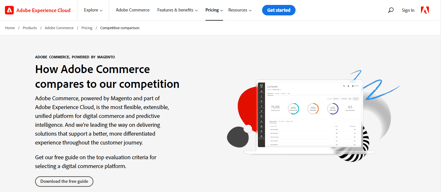
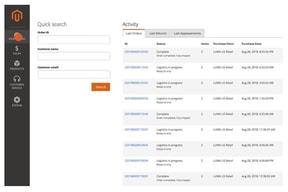
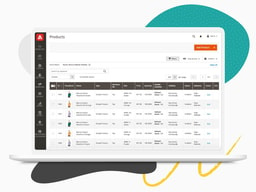
Adobe Commerce (formerly Magento) is a hosted and open-source product and is one of the biggest website builders today, with major blue-chip brands like Nike and Cisco among its roster of clients. The Adobe Commerce environment is also scalable, however, it does require some coding knowledge to maximize. The platform has a lot of customization options and offers trigger-based automated marketing features and automatic cross-selling and upselling features.

| Capabilities |
AI
API
CLI
|
|---|---|
| Segment |
Small Business
Mid Market
Enterprise
|
| Deployment | Cloud / SaaS / Web-Based, On-Premise Linux, On-Premise Windows |
| Support | 24/7 (Live rep), Chat, Email/Help Desk, FAQs/Forum, Knowledge Base, Phone Support |
| Training | Documentation |
| Languages | English |








Compare Adobe Commerce with other popular tools in the same category.

Flexibility, Customization and Scalability
Learning curve due to it's extensive feature and licence cost
Ecommerce website and product management
The customization if critical for today's online businesses. With even more competition from Amazon, you need to be able to compete in a content driven search world. Cookie cutters like Shopify and BigCommerce are not driving the conversions for small businesses. You need to set yourself apart from the pack and Magento helps you do that.
Magento needs to have a omni-channel solution, so more things can be done under one hood, and not so piecemealed out. To have a listing solution for marketplaces and then to integrate with SAGE Accounting would be the ideal solution for me. The other drawback for me is PRICE! They are getting too expensive for a small business, which is really sad, as they were built with the sweat of a small business, but we are being priced out of the solution. So Sad!
Brought customization into an easy to use solution. We have very custom functions and Magento was able to do all that for us. The big problem now is the PRICE! Stop pricing out the small businesses that really need you.

Customer Management with attributes, Products attribute management, inbuilt cache, promo options and ERP integration with Magento make it best in all e-commerce.
Magento commerce is all good but if I feel these some functionality required there - Vendor platform with separate cache flush - There should be some scheduler in between db - Backorder functionality should be there - Order pre quote should be there.
Adobe commerce update there security patches so that it can be protected with cyber attack, integration with ERP also make this easy, Nowdays PWA is best part I see in Magento
Adobe Commerce provides frameworks for both community and Enterprise customers. This is one-stop solution for the whole eCommerce experience.
Sometimes hard to customize some features. Also sometimes performance issue.
B2B features. Business intelligence dashboards. Marketing tools. Content management. Customer loyalty tools
It is very organized and very easy to use.
Sometimes there are glitches in the system.
How to best use e-commerce when a user.

User Friendliness, Every Function Is Well Organised.
It's Sync Services Are Very Lame To Use.
Organizing Best Possible Shopping Experience For My Consumers
Magento is a successful web development tool for website creation. We can create a large website for business. It is a one time investment in business because if we go with wordpress and core php websites then in the future we need to think about changing the website platform. Due to no pages and services, websites take extra time to load. Currently, customers can't wait for this. So Magento is the best and most secure web development tool for our eCommerce business. We can update products images, and content and create product categories to manage several products easily.
It is very easy to integrate with Google Analytics and search console to check website traffic and backlinking. We can install a separate plugin to optimize website meta tags as well.
We have been using the Magento website development tool for our business for a long time. Magento Web development tool is very secure for businesses to create websites and blogs. It is easy to develop websites online and we can assign multiple users to handle multiple tasks on the website. Magento is very fast and user friendly for business. We develop our eCommerce business portal and now we can easily update our products pages, content and much more. It is too secure and no one can easily crack the code of a website.

Its customizatble, Scaleable Can be integrated to different ERPs Plugins Available to add new features.
The coding on it sometimes get tough, but once you get hold its amazing
Easy order management Incresasing businesses
The product is highly customizable and comes up with new features basis the new technology trends in the market such as headless architecture. Also it is easily integrable with third party solutions and the marketplace offers great plug and play
Since it gives a lot of flexibility due to customization, the companies looking for quick implementation or agility, might find it a limiting solution. UI could be enhanced better.
Omnichannel retail commerce. The benefits include centralization of the product inventory, orders and customer data across the offline and online stores of the business.
Magento provides a wide range of functionality built-in, and has an extensive marketplace of extensions that allow unlimited extension of functionality. Also the possibility of customizing the code means any type of enhancement or integration is possible.
It does require a helpful vendor or competent software engineer to get the most out of Magento. Would be great to be able to install themes and extensions as easily as Wordpress...
Online commerce automation. Integrating with third party 3PLs. Multiple store fronts with multiple currencies easily handled. We also support multiple payment methods including direct debit, buy now pay later and credit card.

We had a large catalog of products to organize and I appreciated all of the customization options that were available to me. I also liked the granular data we were able to pull just using Magento alone. Utilizing this tool gave us valuable insights into our customers and their habits which we were able to translate into increased sales. We also had customers from all over the world - particularly in India (US based) so Magento enabled us to increase our reach and to grow our international sales as well.
One thing that I disliked about Magento is that it can be a little confusing at times. There are many customizable options available but their user guides are not the most helpful in assisting you to get the most out of these tools. It usually took quite a bit of troubleshooting on my own to get things to work and see the benefit. I found integrating with Mailchimp to be particularly difficult.
I am not currently using Magento Commerce. But using it previously enabled our team to organize a large catalog of products and run promotions which increased user experience and sales. Additionally, as mentioned above we also had many international customers, especially in India. As a US-based company, Magento enabled us to increase our reach and to grow our sales across the globe.
I love the UI of Magento. Very easy for anyone to learn the CMS.
When I used it, I didn't like that you couldn't schedule content. I believe you can now.
Magento helped my team solve the poor user interface on the front end of the site.
Aligns well with our website, makes assisting customers easier, love like managing customer accounts are quick and easy to locate
Certain functions need approvements but our company is constantly making improvements, overall easy to use
any specific member issues get taken care of efficiently and makes members overall experience with our company great!
Magento is open-source and robust, if you can think of it you can build it here and have it developed. The platform allows for scale and company growth. Essentially, Magento is scalable and future-proof. I would highly recommend any company to use the platform for any company old and new.
Cost! The platform requires development and if you are not a developer it might not be worth your time. Developers can be expensive especially for new businesses. One can also use the developer partners that work with Magento. They know the platform very well and can assist in building the website of your dreams.
All! Magento is my team's number resource and the nucleus to everything we do.
I like that I am able to navigate through memberships, pricing, credits and being able to manage with ease
I don't like the delays that may occur when updates are in progress
Being able to adjust refund, or review any transactions in Magento is helpful, because we are able to assist right away, without having to submit request from other departments.
Your good service and professionalism is a good coomeerce
nothing, all good in services and the try for the clients
The quality of my products and selling
Smooth access, ne click accessible and completely user friendly.
It has a limitations for a good software like this.
To sell our products as a ecommerce website.
It is free to get started and easy to use. Self-host on any PHP web hosting is the best. Also that it’s a perfectly scalable system, I can switch up from 10 products to 100,000
The user interface could be more artistic. The theme seems boring at times but not an issue. Also not very SEO friendly I would say. Because the learning curve is so much longer for developing in Magento, it had been a time-consuming process trying to get modifications made.
Managing my business sales and communication with my online customers. Tracking down reports and shipping charges etc.
Magento Commerce is a best platform to design and develop business website. We can create unique websites for our clients with security. It gives responsive templates to design website and improve the user view on multiple devices. It provides advance functionality to users like drag and drop tool to manage content and images. We can customize whole website according to client requirement and complete our web development task on time. We can sell products on multiple market places easily.
Magento is good solution for large and small size ecommerce business. We can add products online and customize website design to improve business sales.
It was a good experience with Magento software. We used Magento commerce for our client websites to develop a secure website. It gives multiple advance option to design a custom website. We worked for our business clients and manage their ecommerce business website on Magento platform. It is easy to design website and manage web content on cloud. We can upload products and set price to sell on website according to sales. If we need to create product page we can easily design and we can track purchase inventory for business.

Magento comprises a broad assortment of computerized publicizing tools for instance product investigations, rule-based up-selling and strategically pitching, directed customers-based progressions segmentation, and SEO endorsements. It allows the customers to investigate online store by referencing various classifications, hues, and expenses. It conveys the clients a list of things to get and a support motor. The creative variant of Magento approves the clients to deliver and deal with various stores and custom pages with copious media records and pictures.
Magento works on PHP, it is grown simply like an endeavor Java application. Thus, one of the fundamental disadvantages of that will be that substantial burden the executives turn out to be somewhat dangerous here and there. It is exceptionally overpriced for little stores. It requires overwhelming servers for legitimate working, which makes it slower. There is a contribution of comprehensive data on the off chance that you need the most extreme functionalities, so it requires a great deal of time to work.
Magento is an amazing shopping basket tool that is collected as an open-source key arrangement controlled by eBay. It offers extraordinary adaptability to the organizations while setup and taking inclusive management of the stores. The amazing record following and solid consolidation of Magento with eBay is the significant explanation behind different organizations that pick Magento to develop their stores. It empowers the users to customize the back-end of the executives of the media content.

Magento consists of an extensive variety of digital advertising tools for example product analyses, rule-based up-selling and cross-selling, targeted clients-based advancements segmentation, and SEO approvals. It permits the clients to explore online store by mentioning different categories, colors, and costs. It delivers the users a wish list and an endorsement engine. The innovative version of Magento authorizes the users to produce and handle numerous stores and custom pages with abundant media files and images.
Magento operates on PHP, it is developed just like an enterprise Java app. So, one of the main drawbacks of that is that heavy load management becomes slightly problematic sometimes. It is highly costly for smaller stores. It requires heavy servers for proper functioning, which makes it sluggish. There is an involvement of thorough information if you want maximum functionalities, so it requires a lot of time to operate.
Magento is a powerful shopping cart tool that is assembled as an open-source key solution possessed by eBay. It offers incredible flexibility to the businesses while configuration and taking overall handling of the stores. The remarkable record tracking and strong incorporation of Magento with eBay is the major reason for various businesses that pick Magento to construct their stores. It enables you to personalize the back-end management of the media content.

The platform is really easy to use, allows you to sell your products, creating invoices, keep track of payments and allows you to build a front end web, so your customers can buy the products for themselves! saving you time so you can use it for developing more business
some reports in the platform are not so easy to read, it takes a little bit of time to get familiar in this area.
Providing access to the B2B platform to our customers, so instead of spending time creating orders from customers, they can do it for themselves, and you can just use that time to leverage more business development and account management
It has such a diverse range of extensions. We loved working with it and it streamlined or Ecommerce site and usage went up. We do like magento and will be upgrading to Magento 2.0
If it gets overloaded it will just stop sending emails. Our Webmaster hasn't figured out exactly why. They are discontinuing Support for this version. it still works for our current needs but We will be forced to upgrade.
We have used this for a few years now and as a eCommerce platform it has served all our needs. the extensions have been very useful in expanding the range of the program.
This platform is so versatile. The open source extensions have worked out very well for us. Its been stable. It is easy to navigate. Our customers have loved it form the moment we switched over.
Security patches are about to end. An Upgrade to 2.0 will be mandatory. This has lead us to look into different platforms to see if there is another suited better for our needs.
This was a great Ecommerce platform. I wish they would continue with support so I didn't have to migrate up.

This is the best software for costumization. The one of the important thing in this software that is it is the best marketing and it provide the best service of the costumer for very easiest way. We also deal with the costumer with the better way. You can also build a branded mobile sites that connects with your website. It is the best for e-commerce site magento is also optizimed to work with thousands of products, tons of traffic, and a big number of sales.
This is an expensive software because it's all features are outstanding and also difficult so everyone cannot use this features. The one most important problem is that software, that should be fixed with an upload sometime are not. Its search functionality is very limited and this software is available for free, if you want to get a reliable and qualitative costumers. But conclude that this software is very efficient and also easy to use. This is the best marketing software and best platform for our business.
This is the best managing software and the great platform for our costumers. It provide the best sales price of our costumers. I use this software because it makes my life too much easy and all the features are outstanding. I recommended to use this software because it is more reliable and efficient software.

Magento is a complete e-commerce software for businesses. Magento is full featured and open-source e-commerce platform. It is easy to navigate and easy to learn. The best thing of this software is that it is a very powerful software that allow web developers to create almost any possibilities. It is very different software as compared to its competitors. Bu using this software, we can easily handle it. All of its features are very valuable for everyone. Hence, it is the great software for beginners.
The biggest problem of this software is that it is very difficult for us to maintain the different e-commerce platform. The another difficulty that you faced while using this software is that for the beginners, it is very difficult software because the new users cannot easily use this efficient software. All of its features and functions so outstanding and not easily understandable. But to conclude that, it is the best e-commerce platform.
Magento is very simple and affordable software. By using this software, we can easily use this software. All of its features are so amazing and easy to use. This software is very helpful for anyone. I recommend this efficient software for small business companies because small business companies can easily afford this software.

This is the best software for marketing and use for the best customization of e-commerce platforms. The one of the most benefit of this software is that we can also transfer our payment to the other software. It provides the best e-commerce site and provide the best service to our customers. It alos provides very simplest way to deal with the regular customer. The most important thing is that, it provides a great security of our system software. Magento is an expensive software and it's all features are very outstanding. It's all features are also difficult so everyone cannot use this feature. This software is very helpful for our business.
It is very user friendly but sometimes we can't use this software because it's all the features are very difficult so everyone cannot use this software. This software provides the best e-commerce site compare to the other software. Its security protection is very bad, and they cannot protect our system, so our all the data and documents automatically gets deleted. But to conclude that it is not difficult to use and most of the people use this software because it is very friendly and help for our business.
Magento is the best marketing software and best for small businesses or companies. My experience for using this software is extremely positive and I use this software for my daily official work. It is the best e-commerce software and I can easily deal with our customers and provide the best service according to the market. It has saved my lot of time and it makes my life very easy. Magento is very friendly and reliable software. We use this software in a more efficient way because it’s all features are very outstanding and easy to use.
The one of the best great advantage of this software is that the customization can be easily to any extent from everything. Magento is a customizable software. Magento provide the free and the paid membership. Magento is very fast, accurate and perfect for the parts seller. The another best advantage of the Magento is used for the e-commerce platform in the world. Magento is a open source plat form. The flexibility is the biggest point and it makes so easier to look and analyze the performance of the websites to get it a real time information. Magento e-commerce platform is a great and have to power lunch from small to large business.
The one problem of that this software is that we faced the set up and the customization process of the Magento is very difficult. The other problem is that it required a lot of time to customize a magneto software. The inter price of this software is very expensive. Magento does not have the many features to attract the business. Therefore customization of pretty is very difficult as compared to other e-commerce platform. Hence, the big problem of this software is that it can lead to searching of our websites.
Magento is very useful and it is so easy to use software. This software our mostly used in e-commerce. Magento is one of the world leading e-commerce platform. Magento e-commerce platform is a great and have to power launch for small to large business. This feature is easily accessible. One of the most interesting feature about this software we can easily find out relevant websites. Magento provide the many tools and the organization technologies to promote e-commerce store.

It is the best marketing software and it provide the best service of the costumer for very easiest way. We also deal with the costumer in a better way. It can provide guaranteed security to your costumers as all transactions are secured with robust data encryption. Magento is also optimized to work with thousands of products, tons of traffic, and a big number of sales. In other words, it’s for the bigger e-commerce store out there. The one of the biggest advantages of that software, Magento is a perfectly scalable system, so you can switch up your programs.
This is an expensive software because it's all features are outstanding and difficult so everyone cannot use this feature. It can't provide the best support of our customers. The one most important problem is that software, that should be fixed with an upload sometime are not. Its search functionality is very limited, and this software is available for free, if you want to get a reliable and qualitative costumer. This software creates the different problem of our system. It cannot provide the best security of our system and can't save our information in this software. But conclude that this software is very efficient and easy to use. This is the best marketing software and best platform for our business.
This is the best managing software and the great platform for our customers. It provides the best sales price of our customers. I use this software because it makes my life too much easy and all the features are outstanding. I recommended to use this software because it is more storage software and great efficient software. I personally use this software and my all the observation is almost positive. I really like to use this software.
The Magento is a great platform engaged with a lot of useful tools and features that can cover all things related the functionality that the system provides. There is a great functionality and tracking of customers orders etc. The Administration console can be a little complex to navigate at first access time but will offer the customization that you needs, so everything is thought and designed for your necessity generating bigger optimization value.
Magento can only be hosted on dedicated servers.
It is flexible. You have the chance to create anything in Magento because it has been designed in a way that you can customize anything you want.