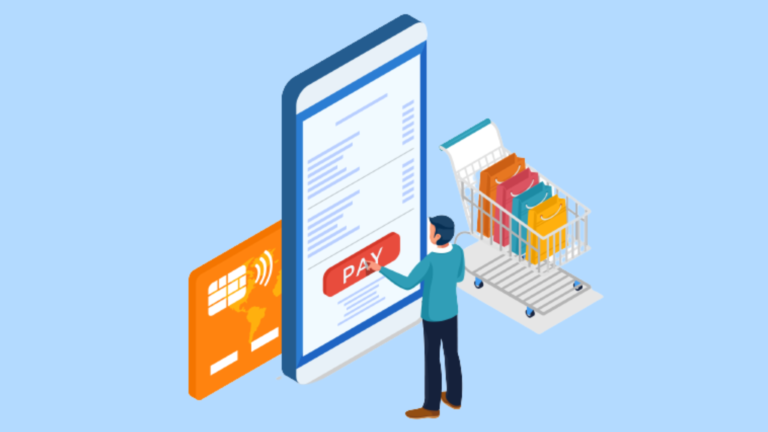
E-commerce platforms are comprehensive software solutions that allow businesses and individuals to sell products and services online. These platforms provide the tools needed to build an online store, manage a product catalog, process payments, handle shipping, and run day-to-day operations from a single centralized system. Whether you are launching a small direct-to-consumer brand or managing a large multi-channel retail operation, an e-commerce platform serves as the foundation of your digital storefront.
The scope of modern e-commerce platforms extends well beyond a simple shopping cart. Today’s solutions combine website building, inventory management, order fulfillment, customer relationship tools, and marketing capabilities into one integrated package. This convergence means that merchants no longer need to stitch together dozens of separate tools to run an online business. Instead, the platform handles everything from the moment a visitor lands on the store to the point where a package arrives at their door.
Choosing the right ecommerce software is a consequential decision. The platform you select will influence your store’s performance, the experience your customers have, and the ease with which your team can manage operations as demand grows. Understanding what these platforms offer, who they serve, and how they differ is the first step toward making a well-informed choice.
Building and running an online store involves a great deal of complexity. E-commerce platforms reduce that complexity by providing a unified environment where merchants can manage every aspect of online selling. Below are the primary benefits that drive businesses to adopt these solutions.
Faster Time to Market
Launching an online store from scratch requires building a website, integrating payment processing, setting up a product catalog, configuring shipping rules, and much more. An e-commerce platform bundles all of these capabilities together with pre-built templates and guided setup workflows, allowing merchants to go from concept to live store in a matter of days rather than months. This speed advantage is particularly valuable for seasonal sellers, new product launches, and businesses that need to respond quickly to market opportunities.
Centralized Operations Management
Without a dedicated platform, merchants often end up managing inventory in one tool, orders in another, customer data in a spreadsheet, and marketing campaigns across multiple dashboards. E-commerce platforms consolidate these functions so that a single update to a product listing automatically reflects across the storefront, inventory counts, and any connected sales channels. This centralization reduces errors, saves time, and gives merchants a clearer picture of how their business is performing at any given moment.
Built-In Payment Processing and Security
Handling financial transactions online requires compliance with payment card industry standards and robust security measures. E-commerce platforms include built-in payment processing integrations that handle encryption, fraud detection, and PCI compliance on behalf of the merchant. This means store owners can accept credit cards, digital wallets, and alternative payment methods without needing to build or manage their own payment infrastructure.
Scalability as Your Business Grows
A well-chosen e-commerce platform can support a business from its earliest days through to high-volume growth. These platforms are built to handle increasing traffic, larger product catalogs, and more complex fulfillment requirements without requiring a complete rebuild. Many offer tiered plans or modular add-ons, so merchants pay for what they need now and can expand capabilities as revenue and complexity increase.
Access to Multi-Channel Selling
Modern consumers shop across many touchpoints, including websites, social media, online marketplaces, and even in-person. E-commerce platforms increasingly support multi-channel selling, allowing merchants to list products on additional sales channels directly from the same backend. This unified approach ensures consistent pricing, accurate inventory counts, and a coherent brand presence regardless of where the customer chooses to buy.
E-commerce platforms serve a wide range of users, from solo entrepreneurs to large enterprises. The specific needs and priorities vary by segment, but the underlying goal is the same: to sell products or services online effectively.
Small Business Owners and Solo Entrepreneurs
Independent sellers, artisans, and small business owners use e-commerce platforms to establish an online presence without hiring a development team. These users typically prioritize ease of use, affordable pricing, and attractive storefront templates. They need a platform that handles the technical details of hosting, security, and payment processing so they can focus on sourcing products and building a customer base. Many small business owners also rely on built-in marketing tools such as email campaigns and discount codes to drive early traction.
Direct-to-Consumer Brands
Brands that sell directly to consumers rather than through traditional retail channels depend heavily on their online store as the primary revenue driver. These merchants need strong branding and customization capabilities, robust analytics to understand customer behavior, and tools for managing subscriptions, bundles, or loyalty programs. Performance and page speed are critical for these users, as conversion rates are directly tied to the quality of the shopping experience.
B2B and Wholesale Sellers
Business-to-business sellers have unique requirements that consumer-facing stores do not. They need support for bulk pricing, custom catalogs for different buyer groups, purchase orders, net payment terms, and account-based access controls. A growing number of e-commerce platforms now offer dedicated B2B functionality or modules that allow wholesale sellers to manage these workflows alongside a standard consumer storefront.
Retailers Expanding Online
Brick-and-mortar retailers that want to add an online channel often look to e-commerce platforms that integrate with their existing point-of-sale systems. These users need real-time inventory synchronization between physical and online stores, unified customer profiles, and the ability to offer services like buy-online-pick-up-in-store. The platform becomes the bridge between offline and online operations.
Dropshippers and Marketplace Sellers
Merchants who operate a dropshipping model or sell primarily through marketplaces use e-commerce platforms as a hub for managing product listings, supplier relationships, and order routing. These users need strong integration capabilities with third-party logistics providers and marketplace APIs, as well as automated workflows that reduce manual intervention when fulfilling orders they never physically handle.
E-commerce platforms can be broadly divided into several categories based on how they are hosted and managed. Understanding these distinctions is essential when evaluating which type best fits your technical resources and business goals.
Hosted (SaaS) E-Commerce Platforms: These are cloud-based solutions where the platform provider manages hosting, security, software updates, and server infrastructure on behalf of the merchant. Merchants pay a recurring subscription fee and access the platform through a web browser. SaaS platforms are popular with small to mid-sized businesses because they require no technical expertise to maintain, offer built-in reliability, and provide a predictable cost structure. The tradeoff is that customization options may be more limited compared to self-hosted alternatives, as merchants work within the constraints of the platform’s architecture.
Self-Hosted (Open-Source) E-Commerce Platforms: These solutions give merchants full access to the source code and the freedom to host the store on their own servers or a hosting provider of their choice. Open-source platforms offer maximum flexibility and customization potential, making them a strong choice for businesses with dedicated development resources. However, the merchant is responsible for server management, security patches, performance optimization, and upgrades. This approach can deliver a highly tailored store but requires ongoing technical investment.
Headless E-Commerce Platforms: Headless platforms decouple the frontend presentation layer from the backend commerce engine. This architecture allows developers to build completely custom storefronts using any frontend technology while relying on the platform’s APIs for commerce functionality such as product data, cart management, and checkout. Headless solutions appeal to brands that need full creative control over the customer experience or want to deliver commerce across unconventional touchpoints like mobile apps, voice assistants, or in-store kiosks.
The feature set of an e-commerce platform determines what you can do out of the box and how much additional tooling you will need. While the specific capabilities vary across providers, there is a common set of features that most platforms share, along with more advanced capabilities that differentiate the stronger offerings.
Standard Features
Product Catalog Management
The product catalog is the backbone of any online store. E-commerce platforms provide tools to create and organize product listings with titles, descriptions, images, pricing, variants (such as size and color), and inventory quantities. Most platforms support categories and tags to help customers browse and filter the catalog efficiently. Good catalog management also includes the ability to manage digital products, bundles, and product options without requiring custom development.
Shopping Cart and Checkout
A reliable shopping cart allows customers to add items, review their selections, and proceed to a streamlined checkout process. Standard checkout features include guest checkout options, saved customer addresses, multiple shipping methods, tax calculation, and the ability to apply discount codes or gift cards. A well-designed checkout flow reduces cart abandonment and directly impacts conversion rates.
Payment Gateway Integration
E-commerce platforms integrate with one or more payment gateways to process credit card transactions, digital wallet payments, and other methods such as bank transfers or buy-now-pay-later services. Most platforms support major gateways and include at least one default option that merchants can activate without additional configuration.
Order Management
Once an order is placed, the platform provides tools for tracking its status, processing fulfillment, generating packing slips and invoices, and handling returns or refunds. Order management dashboards give merchants a real-time view of pending, shipped, and completed orders, helping them stay on top of fulfillment workflows.
Basic SEO and Marketing Tools
Most e-commerce platforms include foundational SEO features such as customizable page titles, meta descriptions, URL slugs, and image alt text. Many also offer built-in tools for email marketing, discount codes, abandoned cart recovery emails, and basic analytics dashboards that track revenue, traffic sources, and conversion rates.
Responsive Storefront Design
Templates and themes provided by e-commerce platforms are designed to be mobile-friendly by default, ensuring that the storefront renders properly across desktop, tablet, and smartphone screens. Given that a significant share of online shopping now occurs on mobile devices, responsive design is a baseline requirement rather than a premium feature.
Key Features to Look For
Advanced Inventory Management
Beyond basic stock tracking, more capable platforms offer multi-location inventory management, low-stock alerts, automated reorder points, and real-time synchronization across sales channels. For merchants selling across multiple storefronts or marketplaces, advanced inventory tools prevent overselling and simplify warehouse operations.
Extensibility and App Ecosystem
The best e-commerce platforms provide a marketplace of apps, plugins, or extensions that allow merchants to add functionality without custom development. These ecosystems typically include solutions for advanced shipping rules, accounting integrations, customer loyalty programs, product reviews, live chat, and much more. A healthy app ecosystem is a strong indicator that the platform can grow with your business over time.
Multi-Currency and International Selling
For merchants targeting customers in multiple countries, support for multi-currency pricing, localized tax rules, translated storefronts, and international shipping options is essential. Some platforms handle currency conversion automatically, while others allow merchants to set specific prices for each market. Duties and import tax estimation at checkout is an increasingly important feature for cross-border sellers.
API Access and Custom Integrations
Merchants with complex operations or unique workflows benefit from platforms that offer robust APIs. API access allows developers to connect the e-commerce platform with enterprise resource planning systems, custom fulfillment tools, third-party analytics platforms, and other business-critical software. Strong API documentation and developer support are hallmarks of platforms built for growing and technically sophisticated businesses.
Selecting an e-commerce platform is a decision that will affect your business for years. Beyond comparing feature lists, there are several strategic considerations that should guide the evaluation process.
Total Cost of Ownership
The sticker price of a monthly subscription is only one component of the true cost. Merchants should also account for transaction fees charged on each sale, the cost of premium themes or templates, fees for third-party apps or plugins, and potential development costs for customization. Some platforms offer lower base prices but charge higher transaction fees, while others include more features in the subscription but cost more upfront. Mapping out the total cost of ownership over a multi-year period provides a more accurate comparison.
Migration and Platform Lock-In
Moving an established store from one platform to another is a time-consuming and often painful process. Product data, customer records, order history, SEO rankings, and URL structures can all be affected during a migration. Before committing to a platform, it is worth understanding how easily data can be exported, whether URL redirects can be managed during a transition, and how dependent your store will become on platform-specific features or proprietary technologies that do not transfer to other systems.
Performance and Reliability
Site speed and uptime directly impact revenue. Slow page loads increase bounce rates, and downtime during peak shopping periods can result in significant lost sales. When evaluating platforms, look at their track record for uptime guarantees, the quality of their hosting infrastructure, and whether they offer built-in content delivery network support. Performance should be assessed under realistic conditions, including how the platform handles traffic spikes during promotional events or seasonal peaks.
Long-Term Flexibility
A platform that works well today may not be sufficient as your business evolves. Consider whether the platform supports the selling models you may adopt in the future, such as subscriptions, wholesale, international expansion, or omnichannel retail. Evaluate the platform’s product roadmap and how responsive the company is to emerging trends in online selling. Choosing a platform that provides room to grow reduces the likelihood of a costly re-platforming exercise down the line.
E-commerce platforms are often the centerpiece of a broader technology stack. Depending on the size and complexity of the business, merchants typically use several related categories of software alongside their e-commerce platform.
Payment Processing Software
While e-commerce platforms include payment gateway integrations, dedicated payment processing software provides more advanced capabilities for managing transactions across channels. These tools may offer enhanced fraud detection, chargeback management, recurring billing for subscriptions, and support for a wider range of regional payment methods. Businesses with high transaction volumes or complex billing models often supplement their platform’s built-in payment tools with specialized payment processing solutions.
Inventory and Warehouse Management Software
For merchants managing large catalogs or shipping from multiple warehouse locations, standalone inventory and warehouse management software provides capabilities that go beyond what most e-commerce platforms offer natively. These tools handle bin-level tracking, pick-and-pack workflows, barcode scanning, demand forecasting, and integration with third-party logistics providers. They are particularly valuable for businesses that have outgrown the inventory features of their e-commerce platform.
Email Marketing and Marketing Automation Software
Although many e-commerce platforms include basic email marketing features, dedicated marketing automation tools provide far more sophisticated capabilities. These platforms support advanced segmentation, behavioral triggers, multi-step email workflows, A/B testing, and detailed campaign analytics. For merchants who rely on email as a primary revenue channel, integrating a purpose-built marketing automation solution with their e-commerce platform delivers measurably better results.
Customer Support and Helpdesk Software
As order volumes increase, managing customer inquiries through a shared inbox becomes unsustainable. Helpdesk and customer support platforms provide ticketing systems, live chat, chatbots, knowledge bases, and multi-channel support capabilities. When integrated with the e-commerce platform, support agents can view order history and customer details directly within their helpdesk, allowing for faster and more personalized responses.