

Unclaimed: Are you working at Wrike?
Wrike Reviews: 4.2/5 — Solid Choice
Harping on its versatility, Wrike is a project management software that features highly customizable dashboards and workflows and team-specific automation to give businesses a project platform that adapts to their current ways of working and not the other way around. Wrike’s functionalities involving over 400 tools revolve around giving a 360-degree view of projects, true interdepartmental collaboration, approvals acceleration, smarter data use, efficient workload management, and enterprise-grade security. Wrike has more than 30 well-documented use cases involving more than 15 departments and teams. Wrike also has a proprietary AI-powered capability called Work Intelligence that catalyzes results through smart automation and project risk prediction.

| Capabilities |
API
|
|---|---|
| Segment |
Small Business
Mid Market
Enterprise
|
| Deployment | Cloud / SaaS / Web-Based, Desktop Mac, Desktop Windows, Mobile Android, Mobile iPad, Mobile iPhone |
| Support | 24/7 (Live rep), Chat, Email/Help Desk, FAQs/Forum, Knowledge Base, Phone Support |
| Training | Documentation |
| Languages | English |
Wrike Pros and Cons
- Easy to use Gantt charts
- Customizable dashboard and schedule
- Comprehensive reports and insights
- Time-tracking tools included
- Excellent customer service
- A little pricey
- Can be difficult to get used to at first
- Frequent reports of unresponsive support
- Recorded incidents of unreliable software functionality


Wrike Review: Is It the Right Project Management Tool for Your Business?
Wrike has been empowering professionals and teams to better manage their work since its launch in 2006. It’s a comprehensive solution for professional service providers, marketing teams, and agencies. But all this versatility comes with a high price tag.
Is it worth it? In this Findstack review, we’re going to find out.
What is Wrike: A Quick Overview
Wrike has introduced Work Intelligence, an AI engine that powers risk prediction, task automation, and smart recommendations.
Wrike is an all-in-one work management platform that helps teams collaborate, plan projects, delegate tasks, and track progress. The platform offers a range of plans designed to meet the needs of almost any kind of business. Whether you’re a solopreneur or a department head at a Fortune 500 company, Wrike has a plan for you.
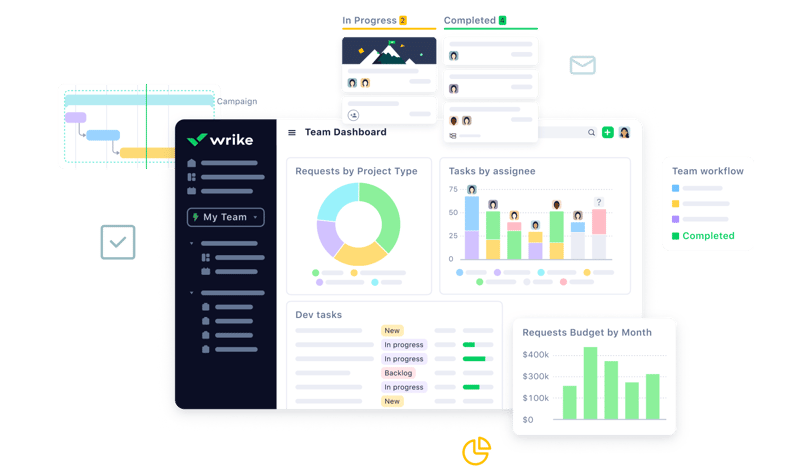
Wrike’s power lies in its ability to support both project management and collaborative work, which explains its appeal to a wide range of industries. The tool boasts a user-friendly dashboard that’s pretty simple to set up. It’s also very easy to create tasks, assign them to team members, set due dates, and track their progress.
Getting Started With Wrike
Wrike is one of the more intuitive project management tools for a new user to get started with—especially compared to competitors like ClickUp.
Wrike is available to users via web browser, desktop application, and mobile application for both Android and iOS devices.
To get started with Wrike, new users have the option to register for a free account using their business email. Once the email address is verified, users will be redirected to Wrike’s homepage to complete the initial registration process—which involves a guided walkthrough.
How Wrike Works: Key Features
Dashboards
If you’ve ever used a project management tool, Wrike’s Dashboards will feel very familiar.

For every project you create in Wrike, you can create Dashboards to display, manipulate, and analyze the project data that you’ve collected within it. They essentially give you an overview of project KPIs, metrics, due dates, and progress at a glance—saving you the hassle of seeking out each piece of data at the source.
When you create a Dashboard, you can start with a template or build one from scratch. If you go the latter route, you have quite a bit of flexibility thanks to a modular design and a wide selection of interactive widgets, including:
- Assigned tasks
- Overdue tasks assigned to you
- Overdue tasks that you assigned
- Tasks you’re following
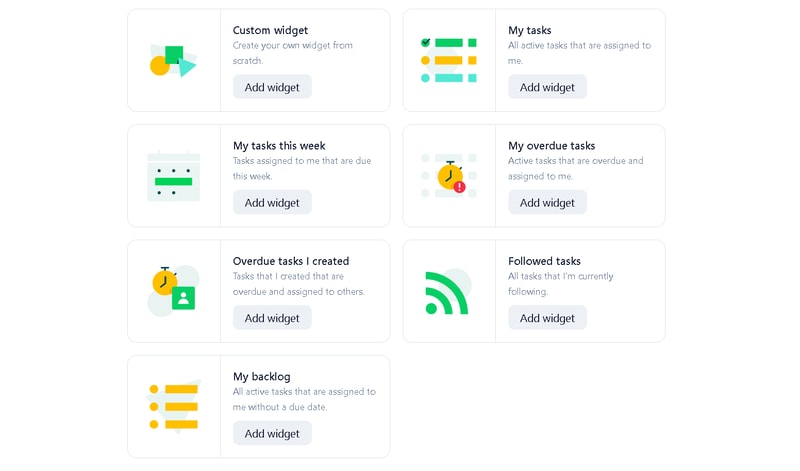
Wrike is unlike a lot of project management tools because everything you need is right at your fingertips. You don’t need to navigate to another window to see it all.
Automation
Like most modern project management tools, Wrike features an automation engine that works in the background to synch related tasks, assign workloads, and ensure tasks are completed on time with botted @mentions and comments.
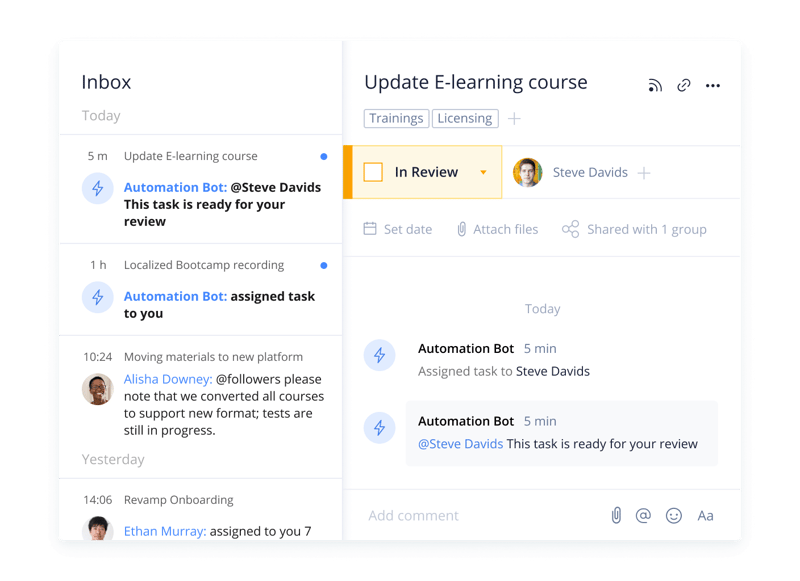
Wrike’s automation engine may not be the most complex or versatile on the market, but it’s intuitive and practical. There’s no feature bloat here—every feature is sure to get some use.
Integrations
On a related note, Wrike’s automation capabilities are supported by 400+ integrations with third-party tools. Pretty much every tool category is covered, including:
- CRM
- Communication
- BI
- Calendar
- CMS
- Storage
- Accounting
- Reporting
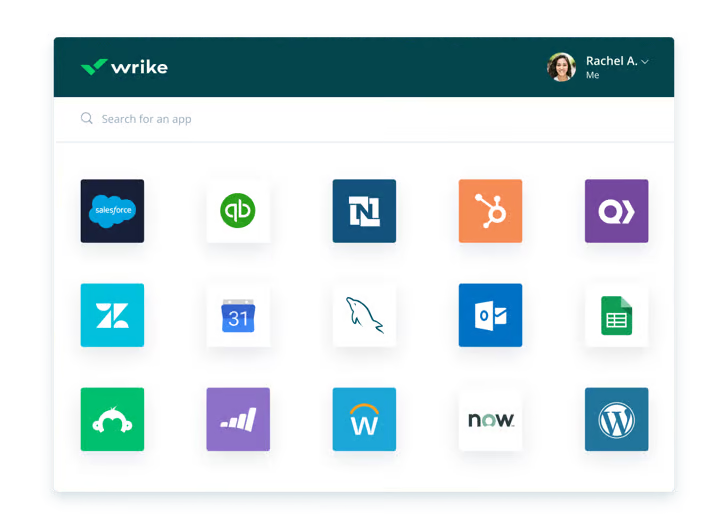
Integrating Wrike with other tools in your stack is a great way to cut out some busy work from daily workstreams and improve productivity. It’s also a surefire way to minimize human error.
Live Analytics
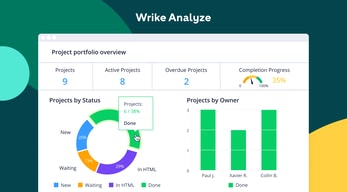
Wrike automatically updates every report, chart, and dashboard every 15 minutes, so you never miss a thing. 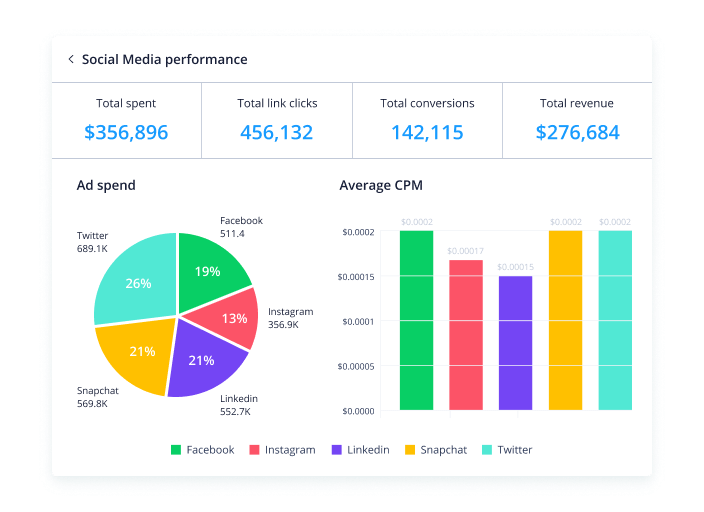
That’s a huge benefit—it means project managers don’t need to manually collect and input data from multiple sources to draw meaningful insight. Less time on busy work means more time analyzing the data for patterns, trends, and inefficiencies.
This feature is also great for project managers who are juggling multiple projects. They get a real-time overview of project statuses, team workloads, pending approvals, and tasks waiting to be assigned, so they can easily prioritize work and make meaningful progress.
Customizable Forms
Wrike has a custom form builder that you can use to create almost any kind of form—from simple team surveys to content request forms.
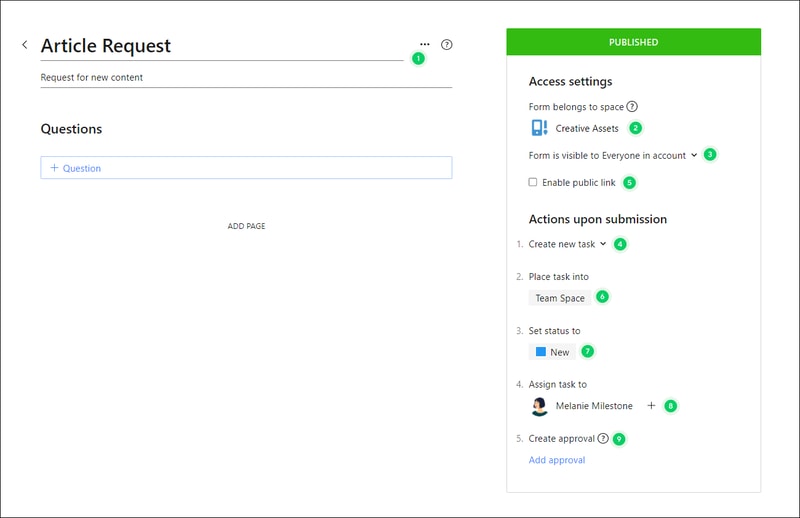
Wrike’s forms are fully customizable, and you can take advantage of role-based access controls to grant or deny access to certain pages or sections. Plus, when you create a new form, it can automatically assign tasks, set due dates based on the submission date, and populate subtasks.
Enterprise-level project management tools
Wrike offers advanced project management tools that you can access on your Home workspace to help you measure key performance indicators.
These tools include time tracking to assist in managing billable hours, visualizing cost and budget calculations, and business intelligence to assess project risk. While these tools are particularly useful for large enterprises with complex needs and a variety of teams, they can also be beneficial for small businesses that plan to scale.
In addition, the platform allows you to share files and publish assets with enterprise-grade security. The sheer number of features may be overwhelming for teams new to project managers, but Wrike provides great walkthroughs and tutorials. You may even discover features by accident that end up accelerating your workflows.
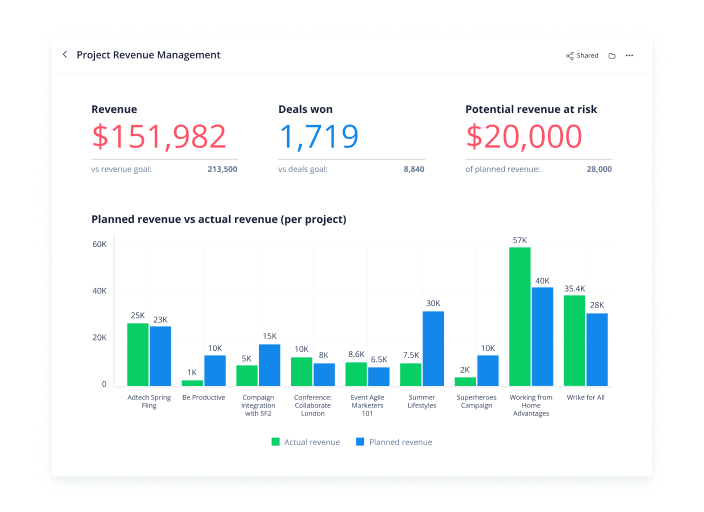
Wrike offers pre-built templates based on team roles to simplify task creation. Some of these templates include:
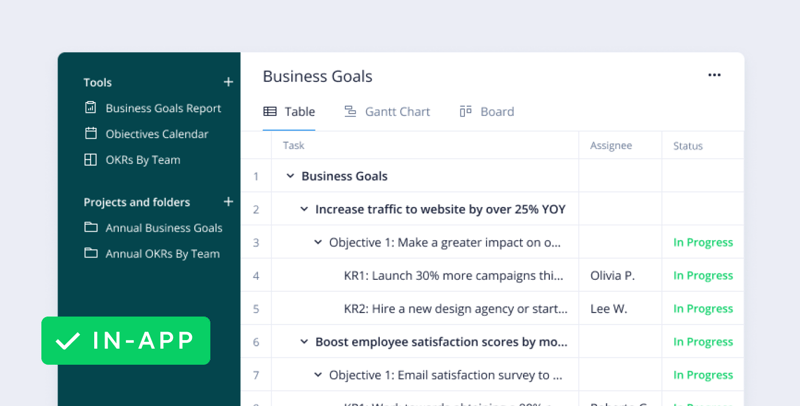
- Project performance templates
- OKR templates
- Weekly to-do list templates
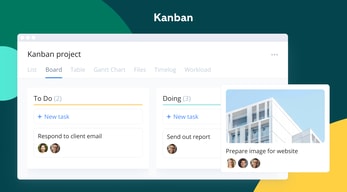
- Kanban board project templates
- Agile and IT templates
- Content operations templates
- Quarterly business review templates
- Ticketing and help desk templates
Collaboration Tools
Wrike—like most project management tools—is designed to make it easier to collaborate with your teams.
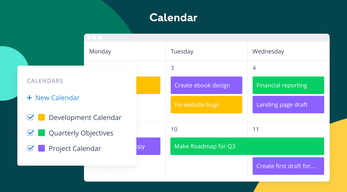
All team members have access to a global or project-based live stream of task activity, so nobody is left behind. Team members can easily communicate on specific tasks via comments and notes so that conversations are kept organized. Shared team calendars can be added to the dashboard to help with awareness of progress and submission dates. 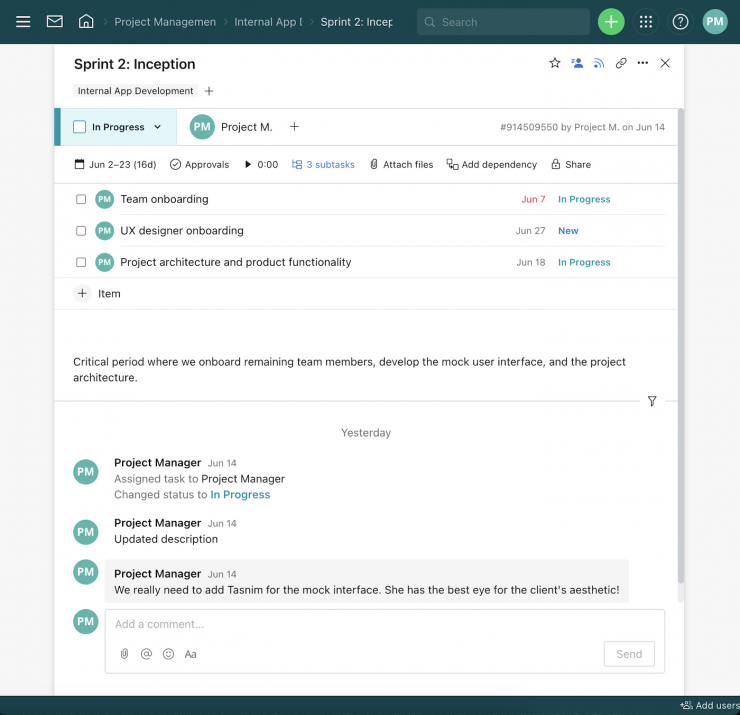
You can also invite third parties such as clients, vendors, or contractors, at no extra cost, to view the status of their projects and provide input that goes towards successful project completion.
Wrike Use Cases
Wrike’s use cases are quite impressive. Over 20,000 companies in over 140 countries have relied on Wrike to streamline their planning processes. These are companies that span a range of industries, including:
- SaaS
- Technology
- Healthcare
- Education
- financial services
- Construction
- Manufacturing
- Retail
What makes Wrike stand out from other project management platforms?
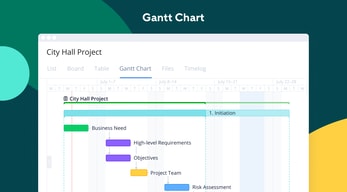
Wrike’s easy-to-create (and even easier-to-understand) Gantt chart view sets it apart from many other popular project management platforms. Plus, Wrike offers a range of other views, such as List, Board, Table, File, and Timelog. While this isn’t unique to Wrike, it isn’t super common to have that much flexibility,
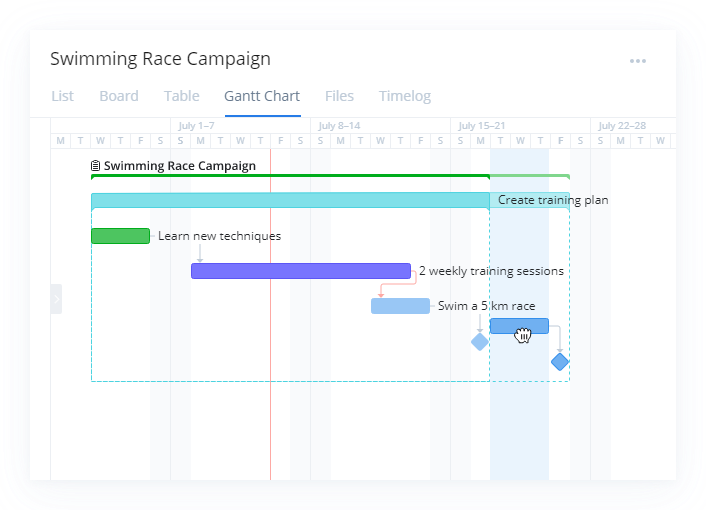
Overall, Wrike’s differentiating factor is the ease with which you can use it to manipulate project data to gain new perspectives and insights.
Wrike Pricing
Wrike offers a total of five plans, starting from a basic Free option, all the way up to an advanced Pinnacle option for large enterprises with complex needs.
Here’s a breakdown of the plans: 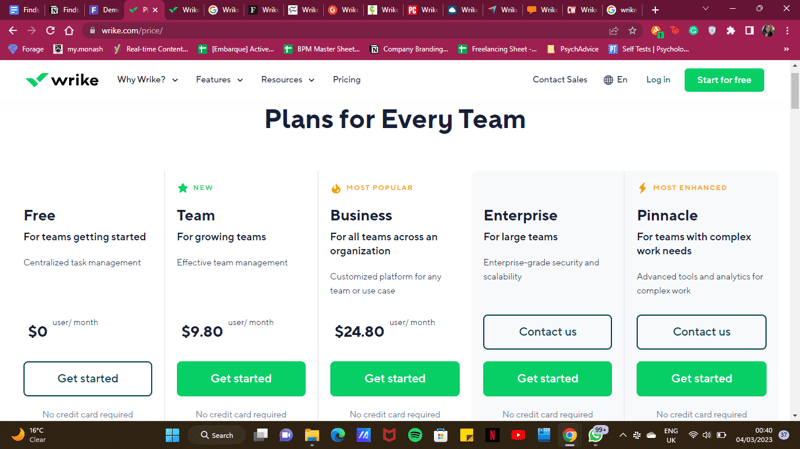
- Free : Wrike’s free plan is suitable for small teams that are just starting with project management software. However, it has limited feature options, including limited storage space, and excludes Gantt charts, time-tracking, and many customization tools.
- Team : Tailored for small teams that want to plan and collaborate on projects. This plan includes the Gantt chart view and the option to integrate with a wide range of services.
- Business : Provides access to advanced project management tools. The Business plan has everything you may need for project management for a large team.
- Enterprise : The Enterprise plan has custom pricing because Wrike will draw up a plan depending on your business needs. It is a plan to consider for large businesses that require more security controls.
- Pinnacle : This plan is for large businesses with complex work needs, including billable hours tools, job roles, and tools for planning and tracking effort put into different projects.
See Wrike pricing for current rates and plan details.
Pros and Cons of Wrike
Pros:
- Wrike offers plans for everyone, from small teams to large corporations.
- Real-time analytics are updated every 15 minutes.
- Wrike offers department-specific solutions which help different departments across your business align and communicate projects on one platform.
- Special customization is available for professional services and marketing and creative teams.
- Wrike offers training resources to help you get started on the platform.
- The free plan offers up to 2 GB of storage.
- It supports eight languages.
Cons:
- Although the project dashboards are user-friendly, those new to project management software may find Wrike overwhelming due to the wide array of features.
- Wrike’s costs can be a burden for mid-sized teams – there are cheaper project management tools with roughly equivalent features.
- Many of Wrike’s useful advanced features are offered as add-ons that can effectively double the price of the tool.
- The mobile app is not as user-friendly as other project management apps (e.g., Click Up). Managing tasks from the mobile app is not as smooth as using a desktop, and you may find that you’re unable to move and edit tasks.
- The interactive Gantt chart view is only available in the paid plans.
- The time-tracking in-app timer is only available on the Business plan and higher, and even small collaborative teams should be able to benefit from this feature.
Is Wrike right for your business?
Wrike is a comprehensive project management platform that also functions as a collaborative work management tool, making it ideal for businesses of all sizes. If you offer professional services or are part of a marketing or creative team, you can certainly benefit from Wrike’s highly customizable features.
It’s important to note that Wrike can be a bit pricey—especially with add-ons. Plus, it may be a bit overpowered for small teams who are looking for simple project management capabilities. That said, it’s a solid tool for managing multiple departments and complex projects.
If you want more insight and information into other project management software, Findstack has more helpful reviews you can take a look at.

I like how everyone can be assigned a task and there's a comments thread to leave my colleagues messages. It helps us keep everything on track.
It can be hard to find things from past projects once completed
It helps us all keep track of our individual assignments and it allows us to see where a project is among the tasks.
Es una gran herramientas que sirve para administrar el trabajo indivivual y del equipo de trabajo. Tiene una interfaz grafica muy simple e intuitiva que permite gestionar tareas diarias, proyectos. Asignar a quienes corresponda, tambien permite agregar alguna descripcion a la tarea, asignar una fecha de inicio y termino a la misma. Permite llevar un perfecto control de las tareas en curso, tareas pendientes, tareas finalizadas, canceladas, etc.
El unico problema que le veo a Wrike, es que aveces cuando cambio de estado las tareas, se me dificulta volver a encontrarlas para saber si quedaron en el estado correcto o no. Ya que me ha ocurrido en las de alguna oportunidad, que estoy arrastrando una tarea para cambiarla de estado, la dejo en el estado requerido, pero despues no la logro visualizar en primera instancia.
Nos ha ayudado bastante a todo el equipo de trabajo, ya que es un gran apoyo al momento de designar, ordenar, planificar tareas y proyectos. Antes de Wirke, nuestro equipo de trabajo solo utilizaba planillas Excel para llevar un registro de todas las tareas y sus avances, lo cual era bastante complejo.
Wrike has been beneficial in terms of keeping tabs on all the various requests out there. It's been great from not only a prioritization standpoint but also in terms of managing against deadlines.
I still haven't figured out how to mute some Wrike Task updates. It can be overwhelming the amount of email that hits my inbox via Wrike.
Wrike helps with task and project organization, communication, and prioritization.
Mangaging tickets in an organised manner is the best in Wrike accoridng to me.
I feel whenever I update any ticket or Project ticket then even I should receive an email notfiction, currently which I am not able to.
Navigations are good in Wrike and it help us in filtering the tickets plus also helps us to pull the report of type which I need.

So easy to use and works great. I feel effective when I use Wrike.
some areas are not very intuitive or easy to navigate to
Solves the problem of having to track things via email. Wrike is not the central place for all things related to my projects. It is a huge game changer. Not sure I can go back to before Wrike.
It's project management function which helped me track and monitor my tasks.
It's working well for me, I don't dislike anything about it
meeting the deadlines and collaborating with other users
The ability to manage my tasks and build dashboards that fit my needs and help me manage my time effectively.
Nothing, really. It has always been super easy to use and requires little training to understand
Hours tracking to report back to our clients, keeping all communications in one place, all feedback in one place, and helps me manage all of my clients/projects in one place
Amazing UI and customer service. Very easy to use
Not a fan of the task system. Its too cluttered.
Helping us kee track of billable hours.
requests, worksflows, dashboards and gantt diagrams.
that I can't get analytics for the whole organization.
Visibility, Workflows, tickets and requests.
Fanatastic and Attractive UI. Straight-forward when it comes to trackking, assigning and monitoring projects.
Nothing. I have no dislikes to state about this platform.
Project tracking, monitoring. Workflow automation.
I love the fact that it keeps me on track! Wrike allows me to see the big picture and the details of all my work. The process, the progress, and much more! I love how it makes it so easy to collaborate with other people on projects! It is very easy to use!
I dislike how the new way way to track time is located. But other than that, Wrike is headed on the right direction! They are very good at listening to people's feedback!
Keeping up with a vast amount of projects, and tasks. It is saving me precious time. It also helps me to see thru the Gant Charts, timelines, and pie graphs how each project is going along as a team.

Wrike creates a platform to organize the stuff of business. From personal to-dos to mission-critical projects, there is the ability to put everything in Wrike. Wrike's forms ensure the necessary information is collected (and organized) for the start of every project. Blueprints ensure the projects are kicked off with the right tasks and phases. And the automations take out the mind-numbing, repetitive tasks of project management. The icing on the cake is everything is customizable to fit your specific business needs.
The only drawback I've found with Wrike is the integration with other platforms. Other PM software have more abilities to integrate with your tech stack. However, Wrike's built-in features take away the need to add other software in many cases.
We had a paper form-based employee submission program that took >3 hours per week to maintain. Ideas took 33 days on average to implement and 100+ submissions were forgotten and not acted on (way past due). After implementing Wrike, the weekly maintenance time has decreased to <1 hr. Ideas are acted upon in <5 days and the past due list is currently 20 ideas. We're also tracking our savings now (because Wrike sends automated reminders), and we have save $40,000 (annualized) through our employee submission program. And this was just the beginning for us. We are continuing to add functionality as Wrike helps to keep track of corrective actions, management actions, knowledge management, and miscellaneous projects.
Wrike holds all of the project information in one spot. You can manage your team, documents and vendors without needing spreadsheets or other systems.
The downside of Wrike is the amount of space each user gets. Space to hold attachments and data needs to be more significant to fully use Wrike long term.
Wrike allows project managers to coordinate with the estimation and production team seamlessly. It allows hand off of project tasks while allowing the big picture to be seen.
Intuitive interface, great automation capabilities.
Can't think of anything! Great tool, would recommend.
Sprint planning!
Wrike is serious about one thing: making great work management software. They aren't trying to replace your CRM. They aren't working hard to be clever and catchy, and they're not trying to gain your approval by taking up the newest, most popular political cause. Most importantly, they aren't a walled-garden, insulating your data and processes from the rest of your stack. They just build great software, and their great software actually *works*, really, really well. They're serious about it too. No one at Wrike has ever said those words to me, but they don't have to: you can tell when you interact with them and when you use what they've created. It simply goes without saying; they aren't messing around. If that was all, I would be overjoyed, but it actually gets better. Their customer service is top notch. Here's an insight for you: we are Microsoft Partners and their customer service for end users is *better* (more responsive, higher quality, lower time-to-solution) than Microsoft gives us. Their customer service is the highest quality, lowest effort help I receive from any company I deal with, and we have close partnerships with several major corporations. None of them *feel* as invested in having happy customers as Wrike does.
I used to enjoy sitting around complaining about how ClickUp lost tasks and screwed up my workflow. Sadly, Wrike took away all that joy I experienced while bellyaching about my work management software.
The experience of work managment has become as easy and intuitive as using my iPhone or MacBook, and that's a first. My team and I can get work done without experiencing obstacles to our productivity. One feature I love, in particular, is how a folder, project, or task can "live" in multiple locations. If you're familiar with Linux, I like to think of this functionality like a "symbolic link". I may be on Team A, and Team B has a group of work their doing that I have a stake in, so they will add my space, folder, etc., as a "location" for the work they're doing. Suddenly, and without any additional work, I have direct access to the branch of work they've shared with me. I can work on it just as I would any of my other work, and there is no duplication of effort. This is pure genius. From a managerial perspective, Wrike truly shines. I can easily derive all of the necessary data to properly bill for our work and manage staff and their workloads. Not only can I easily calculate and manage utilization and realization rates, but I can do so in nearly real-time. So fantastic!!
Wrike has been really helpful for our team! What I like most is that we can see each other's work, chime in on projects, make changes, and also, view associated and attached documents. Super helpful and very user friendly.
So I think one of the downsides of Wrike is that sometimes it can be hard to navigate. For example toggling between Tools and Projects can be annoying so it would be really great if you could see both simultaneously on the same screen or window.
As a team we mainly use Wrike for project management and also collaborating on projects. It really helps that we can update Wrike live and don't have to constantly ask other teammates what they have or have not done.
All-encompassing project management platform. It seems to anticipate our needs (i.e. every time we wish we had a certain feature we realise Wrike already has it!). Absolutely everything we do integrates with it, click on a mail and it's in Wrike for example. The team love it. We are by no means using all the features available to us but we are growing in our use gradually. The mark up and version control was the first game-changer, time tracking too.
We're in South Africa with an unstable currency so the cost is becoming extremely high
Growing agency, working remotely, needing to keep track of and coordinate projects, people and tasks
How customizable the set up is. As we reviewed different software options, we found that Wrike was really a blank slate that we could set up to perfectly fit our workflow and needs. And, it was easy to set up.
Sometimes there are software glitches, but that is going to come with anything.
Wrike allows us to track all projects happening within the creative and ad ops teams. It helps with resource allocation, time management and creating schedules. It also centralizes all of our project communications. In summary, it keeps all of our projects and communications organized.
I love the custom fields and custom item types and blueprints. The rules automation is outstanding as well. My favorite part of Wrike though is reporting through Wrike Analytics.
Wrike Analytics is a brilliant and awesome tool but it occasionally has some minor glitches to deal with. Analytics is tremendous overall though and well worth it.
Wrike helps us manage our projects by allowing us to easily create a project using one of several blueprints, and then manage those projects with the benefit of outstanding automated rules. We will also use Wrike for executive reporting of our outstanding projects.
Wrike is pretty awesome in terms of user experience it provides.
Pricing plans of Wrike could be better planned.
Wrikes solves the bug tracking related problems.
Wrike is a great software for when you have a small-medium budget, but one needs a robust solution. We keep track of projects and tasks with the general status and custom fields. We can even review PDFs in the proofer, which makes sure the job has the history in one central location. The reporting is superb. One can extract data from even the custom fields. It is a super powerful tool in an intuitive package.
Our team over in China reports slowness with the software, but they often report slowness with US websites so I'm not sure if this is a widespread concern.
We have so many tasks and Wrike allows us to see everything at a glance. It also allows us to have a thorough history of a job in one spot. We love that we can even proof documents right in Wrike.
Wrike provides the best collaboration across teams. Sharing, following and cross-tagging are great features that allow users to be able to access items in various ways. I also love how you can personalize your Wrike to fit your needs. All the information may be the same, but how that information is viewed can be different for every person.
Sometimes the platform can be glitchy, and/or slow. Wrike is constantly updating the platform and that can be troublesome, especially when dealing with users that do not like change.
Wrike allows team members to know what's happening with a project or task without utilizing outside tools such as email and chat software. It also allows individuals outside of Wrike to collaborate when needed. The amount of emails, chat messages and confusion around projects has been eliminated with the use of Wrike.
There are many features to help with project management. It makes it easy to collaborate with your team, especially if you are a remote company. There are many features to keep you and your team on track.
They recently went to a new platform experience which I don't personally care for as much as the older experience. They removed the simple feature to filter and it makes it a little more difficult to navigate.
I think the biggest problem that Wrike has helped us solve is effort versus production hours. It helps us to track how much time should be spend on a project versus the time that's actually spent. This helps us ensure that we are charging appropriately for our customers.
I love how Wrike keeps me accountable for my work and is a great system for me to make sure I can check off everything I need to do.
It can be a bit confusing based on how departments want their systems set up. If our work is different, I may not be able to use their ideas and it won't help me in the long run.
It is helping me make sure all of my work is documented and easy to find. It helps me stay organized and I am able to finish all my work in a timely manner.
Love how easy it is to use the system. i can assign one task to many users and add subtasks to one user.
Security. you have to pay more for basic security features
Helps me create a process where i have one central place to track my projects and tasks
I love that Wrike allows me to collaborate seamlessly with my team. I can easily tag them to have a look at something, or pass a project off to them entirely. I can also privately message them.
I wish I could get notifications at a specific time, i.e. during work hours only. It's either always on or always off. I don't want notifications on the weekend!
I actually haven't encountered any "problems" while using Wrike. Even the scheduled downtimes take place outside of work hours, so those have not affected my workflow.
The Wrike platform offers the flexibility to tailor projects and spaces according to the unique needs of important stakeholders.
The request forms can get lost, and have limited customization as compared to a google or smart sheet request form. Sometimes the system and task take a long time to load.
Better project tracking and overall project portfolio management. Better internal collaboration, and reduction of email communication for project updates.
Of all the project management tools that I have used, Wrike is by far the best. They have so many useful tools built right into the platform, as well as integration options available to enhance your team's efficiency. The tool is very intuitive and really allows you to customize your processes to your team. I have used Wrike across multiple organizations, and although there are many things done similarly, I was able to fully customize the way the teams I supported worked from group to group based on their specific needs.
Because Wrike is such an advanced and customizable tool, it can be difficult for some team members to get a grasp of. Expansive training and support materials for your organization's instance of Wrike is key.
Our ability to work together on projects and tasks effectively as a team. Everyone has access to the program at all times, so whatever level you are, from coordinator to vice president, they are able to check in and see progress.
There are a lot of platforms out there that help track projects for an individual or a small group. What Wrike has done for us that is key is enable us to build multi-team workflows and managed projects across multiple business lines
Reporting and dashboard features are very robust but there are a couple gaps that have been a problem for me.
Biggest benefit for us has been the ability to capture all the information we need to complete a complex project at creation and work collaboratively between business lines.
Task management, Alerts, the ease of use with the ghant charts. Wrike makes it easy to wash rinse and repeat with similar projects always kicking off, you can start a net new one from a template and make custom edits. From here it's really easy to change dates that effectively change the entire project so it's easy to see where a risk is going to be associated.
It lacks certain features, that to the end-user seem like they should have been a part of the build. You can read about some nice features in the community, but it seems as though the release schedule is somewhat slow.
It is helping our team ensure that task get done in a timely manner by the appropriate party, and when dates need to move, it makes it easy to move phases of projects that could have an impact on delivery