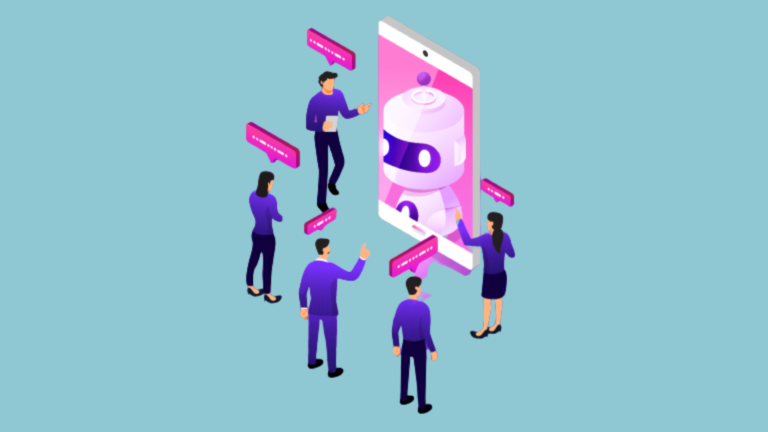
Chatbots software enables businesses to deploy automated conversational agents that interact with customers, employees, and website visitors through text-based or voice-based interfaces. These virtual assistants can handle inquiries, guide users through processes, qualify leads, and provide support around the clock without requiring a human agent to be present. By leveraging natural language processing and predefined conversation flows, chatbots software transforms how organizations communicate at scale, reducing the need for manual intervention in routine interactions while maintaining a responsive and personalized experience.
At a fundamental level, chatbots software works by interpreting a user’s message, determining intent, and generating an appropriate response. Some platforms rely on rule-based systems where conversation paths are mapped out in advance using decision trees, while others incorporate conversational AI and machine learning to understand and respond to a broader range of inputs. Modern bot builder platforms often combine both approaches, allowing businesses to create structured flows for predictable scenarios and leverage NLP-powered intelligence for more complex or open-ended interactions.
The scope of chatbots software has expanded significantly in recent years. What began as simple FAQ bots has grown into a category that encompasses sophisticated virtual assistant platforms capable of handling multi-turn conversations, integrating with enterprise systems, processing transactions, and learning from past interactions to improve over time. Whether deployed on a website, within a mobile application, across social messaging channels, or embedded in internal business tools, chatbots software has become a critical component of modern digital communication strategies.
Why Use Chatbots Software: Key Benefits to Consider
Chatbots software delivers measurable advantages across customer experience, operational efficiency, and revenue generation. The technology has matured to the point where the benefits extend well beyond simple automation, touching nearly every aspect of how businesses engage with their audiences.
Around-the-Clock Availability Without Staffing Costs
One of the most significant benefits of chatbots software is the ability to provide instant responses at any hour of the day, every day of the year. Unlike human agents who require shifts, breaks, and time off, a chatbot is always available. This constant availability is particularly valuable for businesses that serve customers across multiple time zones or industries where inquiries frequently arrive outside standard business hours. Customers no longer have to wait until the next business day for a response to a straightforward question, and businesses avoid the cost of maintaining overnight or weekend support staffing solely for routine requests.
Significant Reduction in Operational Support Costs
Deploying chatbots software allows organizations to handle a substantial volume of repetitive inquiries without proportionally increasing their support headcount. Questions about order status, account settings, return policies, and basic troubleshooting can be resolved entirely by a well-configured chatbot, freeing human agents to focus on complex or high-value interactions. This reallocation of resources leads to measurable cost savings over time. Many organizations report that chat automation handles a significant percentage of incoming support volume, which translates directly into reduced labor costs and improved agent productivity.
Consistent and Accurate Responses Across Every Interaction
Human agents, no matter how well trained, inevitably vary in how they handle similar inquiries. Chatbots software eliminates this inconsistency by delivering the same accurate, approved response every time a particular question is asked. This consistency is especially important for regulated industries where compliance-related messaging must be precise, and for brands that want to maintain a uniform voice across all customer touchpoints. Automated conversation flows ensure that every visitor receives the correct information, reducing the risk of miscommunication and the support tickets that follow from it.
Faster Lead Qualification and Higher Conversion Rates
Chatbots software is increasingly used as a front-line tool for lead qualification and sales engagement. When a visitor arrives on a website, a conversational AI agent can proactively engage them, ask qualifying questions, and route high-intent prospects to a sales representative in real time. This approach is far more effective than passive lead capture forms because it creates an interactive experience that keeps the visitor engaged. By gathering key information through a natural conversation flow, chatbots software helps sales teams prioritize their efforts on the most promising opportunities while ensuring that no potential lead goes unattended.
Scalable Customer Engagement Without Bottlenecks
Unlike human support teams that have a finite capacity for simultaneous conversations, chatbots software can handle hundreds or thousands of interactions at the same time without any degradation in response quality or speed. This scalability is particularly valuable during peak traffic periods, product launches, or marketing campaigns that drive sudden spikes in visitor activity. Instead of overwhelming the support queue and frustrating customers with long wait times, a chatbot absorbs the increased volume and maintains the same level of responsiveness that visitors would experience during normal traffic conditions.
Who Uses Chatbots Software
Chatbots software serves a wide spectrum of industries, team functions, and organizational sizes. While the applications are versatile, certain groups and business contexts derive especially strong value from deploying automated conversational agents.
Customer Support and Service Teams
Customer support teams are among the most active users of chatbots software. These teams deploy virtual assistants to handle first-line inquiries, triage incoming requests, and resolve common issues without human involvement. By automating responses to frequently asked questions and routine processes like password resets or order tracking, support teams can dramatically reduce their ticket backlog and focus their agents on the nuanced, emotionally sensitive, or technically complex issues that truly require human expertise. The integration of chat automation with existing helpdesk workflows ensures a seamless escalation path when the chatbot reaches the limits of its capabilities.
Marketing and Growth Teams
Marketing professionals use chatbots software as a conversational engagement tool that replaces or supplements traditional lead capture mechanisms. Instead of relying solely on static forms, marketing teams deploy conversational AI agents on landing pages, blog posts, and campaign-specific pages to engage visitors in real-time dialogue. These automated conversations can segment visitors based on their responses, deliver targeted content recommendations, book meetings with sales representatives, and nurture prospects through personalized follow-up sequences. The interactive nature of a chatbot conversation typically generates higher engagement rates than conventional form-based approaches.
E-Commerce and Retail Businesses
Online retailers leverage chatbots software to assist shoppers throughout the buying journey. From answering product questions and providing size recommendations to processing returns and tracking shipments, a well-implemented chatbot serves as a virtual shopping assistant that is available on every page. For e-commerce businesses, where cart abandonment rates are a persistent challenge, a proactive chatbot that engages hesitant shoppers with relevant information or incentives can have a direct and measurable impact on revenue. Chat automation also helps e-commerce companies manage the high volume of repetitive inquiries that come with seasonal sales events and promotional campaigns.
Human Resources and Internal Operations Teams
Chatbots software is not limited to external customer-facing applications. Many organizations deploy internal chatbots to support employees with HR-related questions, IT troubleshooting, onboarding procedures, and policy lookups. These internal virtual assistants reduce the burden on HR and IT departments by providing instant answers to common questions about benefits, time-off policies, system access, and company procedures. For large organizations with distributed workforces, an internal chatbot provides a consistent and always-available resource that employees can access without waiting for a response from a busy department.
SaaS and Technology Companies
Software companies frequently embed chatbots within their applications and marketing sites to support user onboarding, answer product questions, and guide trial users toward activation milestones. Because SaaS businesses typically operate with a self-serve model, the ability to provide in-context assistance through a conversational interface is critical for reducing churn and accelerating time to value. Chatbots software also enables SaaS companies to scale their support capacity as their user base grows without a proportional increase in support headcount.
Different Types of Chatbots Software
Chatbots software encompasses a range of platforms that differ in their underlying technology, complexity, and intended use cases. Most solutions in this category fall into one of the following types:
-
Rule-Based and Decision-Tree Chatbots: These platforms allow businesses to build automated conversations using predefined flows, branching logic, and scripted responses. The bot builder interface typically uses a visual drag-and-drop editor where non-technical users can map out conversation paths, set conditions, and define responses for specific user inputs. Rule-based chatbots are predictable, easy to control, and well-suited for scenarios where the range of possible inquiries is relatively narrow and well-defined, such as appointment booking, order status lookups, or FAQ handling. While they lack the flexibility of AI-powered systems, they offer reliability and transparency in how conversations are handled.
-
AI-Powered and NLP-Driven Chatbots: These platforms use natural language processing and machine learning to understand the meaning behind a user’s message rather than relying on exact keyword matches or predefined paths. Conversational AI chatbots can handle a much wider range of inputs, manage context across multi-turn conversations, and improve their accuracy over time as they process more interactions. They are particularly effective for businesses that need to support complex or unpredictable inquiries where scripted flows would be insufficient. The trade-off is that AI-powered chatbots require more initial training data and ongoing optimization to perform well.
-
Hybrid Platforms Combining Rules and AI: Many modern chatbots software platforms offer a hybrid approach that combines the structure and control of rule-based flows with the flexibility of conversational AI. These solutions allow businesses to use scripted paths for well-defined scenarios while falling back on NLP capabilities when a user’s input does not match an existing flow. This approach provides the best of both worlds, ensuring predictable handling of common inquiries while gracefully managing unexpected questions or phrasing variations.
Features of Chatbots Software
Chatbots software platforms vary widely in their feature depth and sophistication. Understanding the distinction between standard capabilities and more advanced features is essential for selecting a platform that aligns with specific business requirements.
Standard Features
Visual Conversation Builder
The core of most chatbots software is a visual bot builder that allows users to design conversation flows without writing code. These editors typically use a drag-and-drop interface where users create nodes representing messages, questions, conditions, and actions, then connect them to define the conversation path. A well-designed conversation builder makes it possible for marketing, support, and operations teams to create and modify chatbot flows independently, without relying on developer resources for every change.
Multi-Channel Deployment
Modern chatbots software supports deployment across multiple communication channels from a single platform. A chatbot built once can typically be published on a company’s website, within a mobile application, and across popular messaging platforms like social media channels and business messaging services. Multi-channel deployment ensures that customers can interact with the chatbot wherever they prefer to communicate, and businesses can maintain a consistent conversational experience across all touchpoints.
User Input Recognition and Intent Matching
Whether through keyword matching, pattern recognition, or NLP-based understanding, every chatbot platform needs the ability to interpret what a user is saying and match it to an appropriate response or action. Basic platforms rely on keyword triggers and button-based inputs, while more advanced solutions use natural language understanding to detect intent, extract entities such as dates, names, or product types, and handle variations in phrasing. Effective input recognition is the foundation of a useful chatbot experience.
Integration With Business Systems
Chatbots software that operates in isolation has limited utility. Standard integrations with CRM systems, helpdesk platforms, email marketing tools, e-commerce platforms, and calendar applications allow the chatbot to pull and push data in real time. For example, a chatbot might look up a customer’s order status by querying an order management system, or create a support ticket in a helpdesk tool when an issue cannot be resolved automatically. These integrations transform a chatbot from a simple messaging interface into a functional extension of the business’s operational infrastructure.
Conversation Handoff to Human Agents
Even the most capable chatbot will encounter situations that require human involvement. A clean and seamless handoff process is a standard requirement for any chatbots software. When a conversation exceeds the chatbot’s capabilities or a user explicitly requests human assistance, the platform should transfer the conversation to a live agent along with the full context and transcript of the interaction. This ensures the agent can pick up where the chatbot left off without asking the customer to repeat themselves.
Analytics and Conversation Reporting
Built-in analytics dashboards provide visibility into chatbot performance metrics such as total conversations handled, resolution rates, drop-off points within conversation flows, average session duration, and user satisfaction scores. These reports help teams identify which flows are performing well, where users are getting stuck, and what new intents or topics the chatbot should be trained to handle. Data-driven optimization is essential for maintaining and improving chatbot effectiveness over time.
Key Features to Look For
Advanced NLP and Conversational AI Capabilities
For organizations that need their chatbot to handle complex, open-ended, or context-dependent conversations, advanced natural language processing capabilities are a critical differentiator. Look for platforms that support intent classification, entity extraction, sentiment analysis, and contextual memory across multi-turn conversations. The best conversational AI systems can handle misspellings, slang, and ambiguous phrasing while maintaining an accurate understanding of what the user needs. These capabilities separate basic FAQ bots from sophisticated virtual assistants that can genuinely resolve problems and guide users through complex workflows.
AI Training and Continuous Learning
The most effective chatbots software platforms include tools for training and refining the AI model over time. This includes the ability to review conversations where the chatbot failed to understand the user, tag and correct misclassified intents, and feed new training data into the model. Some platforms offer automated suggestions for new intents based on unrecognized user messages, making the improvement process more efficient. Continuous learning capabilities ensure that the chatbot becomes more accurate and capable as it accumulates real-world interaction data, rather than remaining static after initial deployment.
Personalization and Dynamic Content Delivery
Advanced chatbots software can tailor conversations based on information about the user, such as their location, browsing history, account status, or previous interactions. This personalization goes beyond inserting a first name into a greeting. It can include recommending specific products based on past purchases, adjusting the conversation flow based on the user’s segment, or proactively offering assistance related to a feature the user has been exploring within an application. Dynamic content delivery transforms the chatbot from a generic responder into a contextually aware virtual assistant that feels genuinely helpful.
Workflow Automation and Action Triggers
Beyond conversation, some chatbots software platforms can trigger automated workflows and actions based on what happens during a chat interaction. For example, when a user expresses interest in a product demo, the chatbot can automatically book a meeting on a sales representative’s calendar, send a confirmation email, and update the lead’s record in the CRM, all without human involvement. These workflow automation capabilities extend the value of the chatbot beyond communication and into operational efficiency, making it an active participant in business processes rather than just a messaging interface.
Important Considerations When Choosing Chatbots Software
Selecting the right chatbots software requires careful evaluation beyond feature checklists. Several practical and strategic factors can significantly influence whether a platform delivers real value or becomes a source of frustration.
Ease of Setup and Non-Technical Accessibility
The speed and simplicity of getting a chatbot live is a critical consideration, particularly for organizations that do not have dedicated development resources to allocate to the project. Evaluate how intuitive the bot builder interface is, whether conversation flows can be created and modified by non-technical team members, and how much initial configuration is required before the chatbot can handle its first interaction. Platforms that require extensive coding, complex API configurations, or prolonged training periods before delivering useful results may not be practical for teams that need to move quickly. The best chatbots software strikes a balance between simplicity for basic use cases and depth for teams that want more advanced customization.
Quality of NLP and Language Understanding
Not all NLP implementations are created equal. The effectiveness of a chatbot hinges on how accurately it can understand user intent, particularly when users express themselves in unexpected ways. Before committing to a platform, test its language understanding with a range of realistic inputs, including misspellings, incomplete sentences, colloquial language, and edge cases relevant to the specific use case. Platforms with weak NLP will frustrate users and generate a high volume of misrouted or unanswered conversations, ultimately undermining the purpose of deploying chat automation in the first place.
Scalability and Pricing Structure
Chatbots software pricing models vary significantly across the market. Some platforms charge based on the number of conversations or messages processed, others charge per active chatbot or per seat, and some offer flat-rate plans with usage limits. It is important to understand how costs will scale as conversation volumes grow, particularly if the chatbot is deployed on a high-traffic website or across multiple channels. A platform that appears affordable at low volumes can become prohibitively expensive at scale if the pricing model is not well matched to the organization’s usage patterns. Additionally, consider whether the platform can handle traffic spikes without performance degradation or unexpected overage charges.
Data Security, Privacy, and Compliance
Chatbot conversations frequently involve personal data, account information, and sometimes sensitive business details. The chosen platform must provide robust security measures including encryption of data in transit and at rest, secure storage of conversation logs, and compliance with relevant regulations such as GDPR, CCPA, and industry-specific standards. For organizations in healthcare, finance, or other regulated sectors, additional certifications and data residency options may be required. Understanding where conversation data is stored, who has access to it, and how long it is retained is essential for maintaining customer trust and meeting regulatory obligations.
Chatbots software is typically deployed as part of a larger technology ecosystem. Understanding the related software categories helps ensure that a chatbot implementation integrates effectively with the tools and systems already in use across the organization.
Live Chat Software
Live chat software and chatbots software are closely related and frequently used together. While chatbots handle automated conversations, live chat provides the human agent interface for real-time messaging. Many organizations deploy chatbots as the first point of contact, then route conversations to live chat agents when the inquiry requires human judgment or empathy. The integration between these two categories is one of the most common and important connections in the customer communication stack, ensuring a smooth transition between automated and human-assisted interactions.
Help Desk and Customer Support Platforms
Help desk software provides structured workflows for tracking, prioritizing, and resolving customer issues through ticketing systems. When a chatbot encounters an issue it cannot resolve, the ability to automatically create a support ticket with the full conversation transcript ensures that the inquiry is properly tracked and routed to the appropriate team. Tight integration between chatbots software and help desk platforms prevents issues from falling through the cracks and provides support teams with complete context when they pick up a conversation that started with the chatbot.
CRM and Sales Engagement Tools
Customer relationship management platforms are the central hub for customer and prospect data. Integrating chatbots software with a CRM ensures that lead information captured during chatbot conversations, including contact details, expressed interests, and qualification data, is automatically recorded in the appropriate customer or prospect record. This integration is particularly valuable for sales-oriented chatbot deployments where the virtual assistant qualifies leads and schedules meetings. Sales engagement platforms that automate follow-up sequences can also be triggered by chatbot interactions, creating a seamless pipeline from initial conversation to sales outreach.
Knowledge Base and Self-Service Platforms
Knowledge base software provides a structured repository of articles, guides, and FAQs that customers can access independently. When integrated with chatbots software, the chatbot can search the knowledge base in real time and surface relevant articles in response to user questions. This integration significantly expands the chatbot’s ability to provide helpful answers without requiring every possible response to be manually scripted into the conversation flow. For organizations with extensive documentation, connecting the knowledge base to the chatbot creates a conversational self-service experience that is more intuitive and engaging than traditional search-based knowledge portals.